



ANALYTICS DEEP DIVE
Isaac Paredes Agrees to $9.35M Arbitration Deal With Astros: WAR Projections, Statcast Profile, and What the Advanced Numbers Say About His 2026 Outlook
February 5, 2026
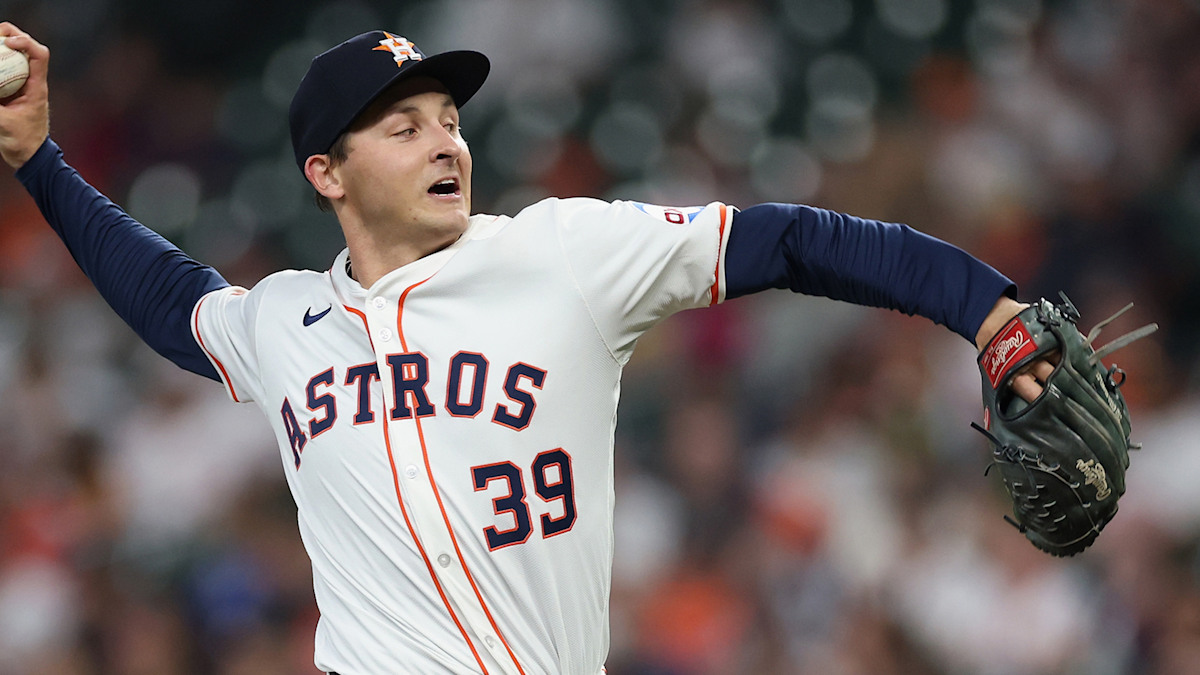
The Houston Astros and infielder Isaac Paredes have avoided arbitration, agreeing to a one-year, $9.35 million deal that includes a $13.35 million club option for 2027. The agreed salary split the difference between Paredes' $9.95 million ask and Houston's $8.75 million offer. From a pure analytics standpoint, this is one of the more interesting arbitration outcomes in baseball this year, because Paredes' traditional numbers and his underlying metrics tell slightly different stories.
The Traditional Stat Line: In 2025, Paredes slashed .254/.352/.458 with 20 home runs in 102 games for the Astros. Those are solid numbers. Good enough to earn an All-Star selection as a replacement for Jose Ramirez. Good enough to justify the $9.35 million salary without much debate. But the surface numbers are where the easy analysis ends.
The Statcast Profile, Where It Gets Complicated: Paredes' 2025 Statcast numbers reveal a profile with real tension between his outcomes and his underlying batted-ball data. His average exit velocity of 87.4 mph is league average at best. His hard-hit rate of 33.6% ranked well below the MLB mean. His barrel percentage of 6.3% is modest for a player whose primary value comes from his bat. These are not numbers you typically associate with a 20-homer hitter.
Here is where it gets analytically interesting. Paredes posted a .353 wOBA against a .320 xwOBA. That 33-point gap suggests he outperformed his batted-ball quality in 2025, meaning some of those results were driven by sequencing, timing, and a healthy dose of situational fortune rather than raw impact. His BABIP ran higher than expected given his exit velocity profile, which raises the question: can he replicate that production in 2026?
WAR Projection and Value Assessment: Despite the concerns in the Statcast data, Paredes still projects as a 2.5 to 3.0 fWAR player for 2026 based on his plate discipline, positional versatility, and proven ability to produce in a lineup slot that generates counting stats. He walks at an above-average rate, he does not chase excessively, and he can play both third base and second base. At $9.35 million, that puts his cost per projected win in the $3.1 to $3.7 million range, which is well below the free-agent market rate of roughly $8 to $9 million per win.
The $13.35 million club option for 2027 includes a fascinating wrinkle: it converts to a mutual option if Paredes finishes top-10 in MVP voting. This is Houston's hedge. If Paredes breaks out into a true star-level performer, they keep him at a discount. If he regresses toward his Statcast-implied true talent level, they maintain the flexibility to decline.
Regression Risk Versus Breakout Potential: The bear case for Paredes in 2026 is straightforward. His 2025 wOBA outran his xwOBA by a significant margin. Players with that kind of overperformance tend to come back to earth the following season. If you adjust his batting line to match his Statcast-expected metrics, you are looking at something closer to .240/.340/.420 with 15 to 17 homers. Still a useful player, but closer to a 2.0 fWAR contributor than a 3.0.
The bull case is equally compelling. Paredes was limited to 102 games in 2025 due to a hamstring injury. Before going down, he was slashing .259/.359/.470 with 19 homers in 94 games, a pace that projected to roughly 27 homers over a full season. A healthy 162-game sample could push his WAR above 3.5, especially if he maintains his All-Star-caliber first-half production. His plate discipline, including a walk rate that consistently sits in the 10 to 12 percent range, gives him a high floor even if the power dips slightly.
Context Within the Astros Lineup: Houston finished 87-75 in 2025, a competitive but not dominant record. Paredes slots into a lineup that includes some of the game's best hitters, meaning he will see better pitches hitting in front of and behind other dangerous bats. Lineup protection is one of those factors that traditional metrics struggle to capture but that can meaningfully impact a hitter's outcomes.
The Astros' decision to structure this deal with a club option rather than pursuing a multi-year extension tells you something about how their analytics department views Paredes. They believe in his floor but want more data before committing long-term. Paredes becomes a free agent after the 2027 season regardless, so this is effectively a two-year audition window where the data will either confirm him as a cornerstone piece or reveal him as a productive-but-replaceable contributor.
The Bottom Line on the Numbers: At $9.35 million, Paredes is being paid roughly at market rate for an arbitration-eligible player with his track record. The analytics suggest mild regression risk from his 2025 output, but even the pessimistic projection gives Houston a player worth his salary. The optimistic projection, one where he stays healthy for 150+ games and his first-half 2025 performance proves to be his actual talent level, makes this deal look like a bargain. For a front office that runs its decisions through expected value calculations, the math checks out either way. This is a fair deal that both sides can live with, and the club option gives Houston the asymmetric upside that smart organizations always want to capture.
150th AnniversaryFebruary 2, 2026
One hundred fifty years ago, the National League was founded. Now, statistical analysis reveals the Senior Circuit holds a tangible edge. ZiPS projections rank the Dodgers as baseball's best team for the fifth time in six years. NL teams project for +4.2% higher collective WAR than AL teams.
📈 106.2 Wins (LAD)🏆 150 Years NL📊 +4.2% WAR Edge
WAR AnalysisFebruary 1, 2026
The Giants signed three-time batting champion Luis Arraez. His career 5.8% strikeout rate ranks lowest among active hitters. Models project 2.4-2.8 fWAR.
📊 2.4-2.8 fWAR🎯 5.8% K Rate
FeaturedFebruary 1, 2026
Shohei Ohtani won't pitch in the WBC. Our model now projects 5.2-6.0 fWAR pitching plus 5.8-6.4 fWAR hitting. Combined 11.0-12.4 total WAR ranks first in baseball.
📊 11-12.4 WAR🎯 11.2 K/9
Rotation AnalysisJanuary 30, 2026
Teams with early report dates historically show 0.3-0.5 better rotation ERA in April. Dodgers (Feb 13) rank last among contenders despite leading in rotation fWAR (18.4).
📅 Feb 10-13📊 18.4 fWAR
Defensive MetricsJanuary 30, 2026
Harrison Bader's 2-year, $20.5M deal brings elite center field defense. Career +34 DRS projects to 1.8-2.2 dWAR annually. Giants now project for 81.3 wins.
📊 1.8-2.2 dWAR💰 $20.5M / 2yr
xFIP AnalysisJanuary 29, 2026
Chivilli's raw 2.89 ERA becomes park-adjusted 2.42 ERA. His 94.6 mph fastball and 28.4% whiff rate project to improve at sea level. xFIP: 2.55-2.85.
📊 2.55-2.85 xFIP🎯 28.4% Whiff