Nolan McLean: The Numbers Behind the Mets Prospect Who Became a WBC Championship Starter in Eight MLB Starts
Published March 18, 2026 | Pitching Analytics Deep Dive | MLB Prediction Data Lab
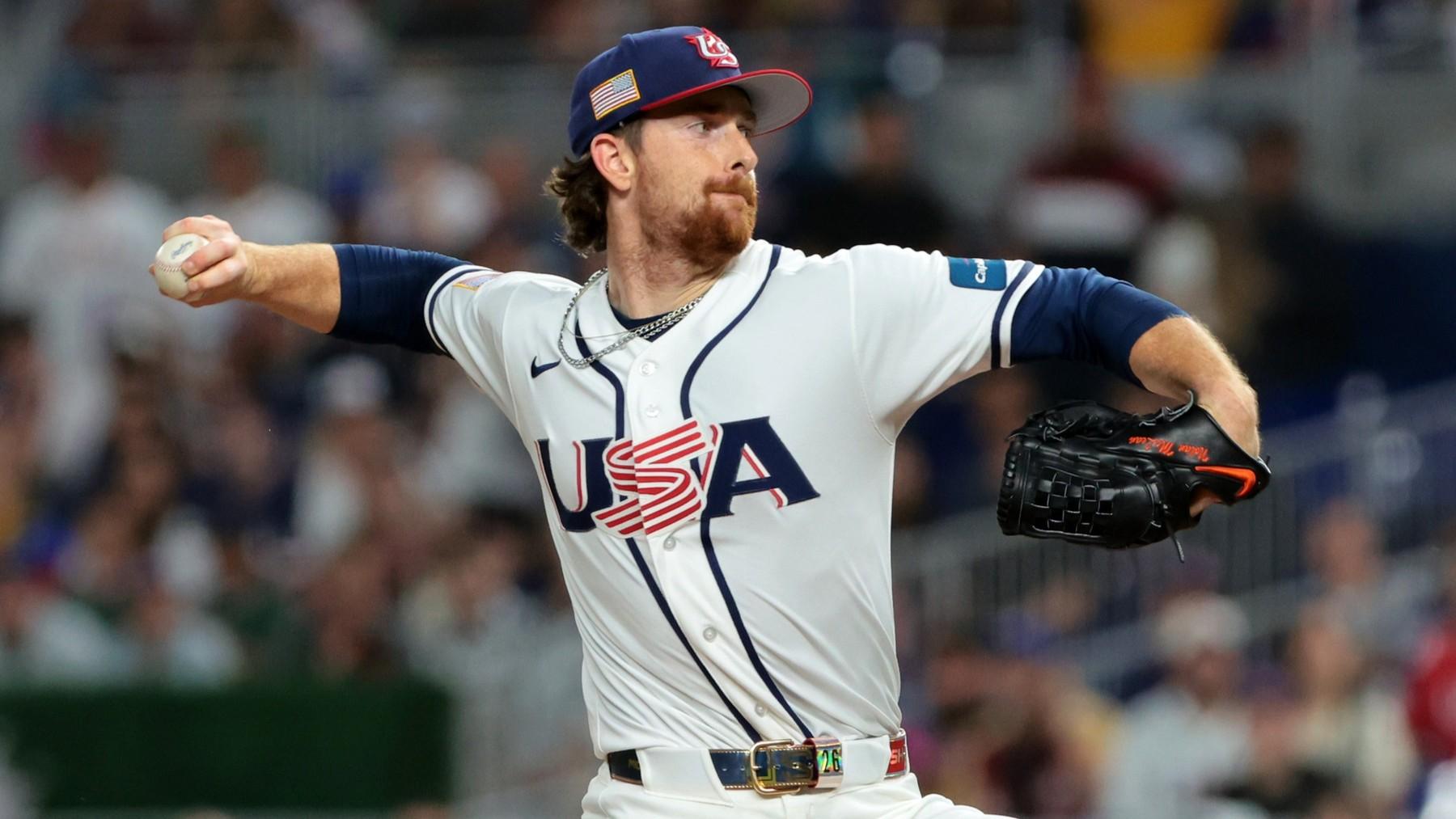
Eight major league starts. A 2.06 ERA. A 2.97 FIP. And then the ball for the World Baseball Classic Championship game. Nolan McLean's trajectory from Oklahoma State two-sport athlete to Team USA's Game 4 starter is one of the most statistically fascinating pitcher development stories in recent memory. The numbers tell a compelling story about what happens when elite raw stuff meets accelerated development, and what it all means for the Mets' 2026 rotation.
The Raw Numbers: McLean's 2025 MLB Debut by the Data
When McLean was called up in mid-August 2025, there was reasonable skepticism about a pitcher with barely 110 minor league innings making a meaningful impact at the major league level. The data from his eight starts silenced that skepticism in a hurry. His 2.06 ERA placed him fourth among all MLB starters from his debut onward, trailing only Paul Skenes, Tarik Skubal, and Yoshinobu Yamamoto. That's not a list you sneak onto by accident.
| Metric | Value | MLB Rank (Aug+ Starters) |
|---|---|---|
| ERA | 2.06 | 4th |
| FIP | 2.97 | 11th |
| xFIP | 2.78 | Top 15 |
| K/9 | 10.69 | Elite tier |
| BB/9 | 3.00 | Avg |
| WHIP | 1.04 | Top 10 |
| K% | 30.3% | 9th |
| HR/9 | 0.75 | 12th |
| WAR | 1.2 | 48 IP only |
The gap between McLean's ERA (2.06) and FIP (2.97) raises the natural question: was he getting lucky? The answer, based on the underlying data, is "partially, but not as much as you'd think." His .275 BABIP was slightly below league average, suggesting some batted-ball fortune. His 84.1% LOB% was elevated, which typically regresses. But here's what's critical: his xFIP of 2.78 actually sits below his FIP, meaning his home run rate (0.75 HR/9) may have been slightly unlucky relative to his fly ball tendencies. The peripherals are genuinely elite. A 30.3% strikeout rate ranked ninth among all starters during his stretch. Combined with an 8.5% walk rate, that 3.56 strikeout-to-walk ratio is the kind of command profile that sustains success over a full season sample.
The Arsenal: Six Pitches, Zero Weaknesses
What makes McLean's profile so unusual for a pitcher with barely any major league seasoning is the depth and quality of his pitch arsenal. According to FanGraphs' Stuff+ model, McLean owns at least six pitches that grade out as average or better. Only two other active MLB starters can claim that distinction: Tarik Skubal and Max Fried. That's the company he's keeping before his 25th birthday.
The headliner is the curveball, which breaks a major league-best 26 inches of vertical drop. In his MLB debut, McLean averaged 3,279 RPMs on the curve, a spin rate that led all major league pitchers at the time of measurement. No one had a better average curveball spin rate. That's not a small-sample artifact. That's a pitch that generates swings at balls dropping out of the zone at a rate hitters simply cannot adjust to in a single at-bat.
McLean Pitch Arsenal Breakdown: 4-Seam FB: 97-98 mph (up 2 mph from 2025) // Sweeper: 85.8 mph, 2,995 RPM, 13" glove-side run // Curveball: 79-81 mph, 3,279 RPM, 26" break (MLB best) // Changeup: 85-88 mph // Cutter: 89-92 mph // Stuff+ grade: 117 (100 = avg)
His sweeper is the other elite offering, averaging 2,995 RPM and running 13 inches of glove-side horizontal movement at 85.8 mph. That's three mph harder than the average MLB sweeper, giving hitters less time to identify the pitch while it still generates the same sweeping action. Only three regular MLB starters featured higher average sweeper spin rates during the 2025 season. The sweeper runs horizontally across the full 17-inch width of home plate, creating what amounts to an impossible decision for right-handed hitters who also have to account for the curveball dropping out of the zone. It's a tunneling nightmare.
Then there's the fastball, which sat 97-98 mph during spring training 2026, approximately two mph harder than the previous year. In the WBC Championship game, McLean touched 99 mph. That velocity gain, combined with a 117 Stuff+ grade (where 100 is league average), suggests his raw stuff is continuing to develop even as he refines his command at the highest level.
WBC Championship Game: The Biggest Stage, the Smallest Sample
Team USA manager Mark DeRosa slotted McLean fourth in his WBC rotation, behind Logan Webb, Tarik Skubal, and Paul Skenes. That sequencing is telling. It placed McLean in the championship game slot, a deliberate decision that reflected the staff's confidence in a 24-year-old with eight career starts. Whether that confidence was rewarded depends on how you read the box score.
McLean's final line against Venezuela: 4.2 innings pitched, four hits, two earned runs, four strikeouts, one walk, on 63 pitches. Venezuela won the championship, but McLean's struggles were less about his stuff and more about a star-studded Team USA lineup that generated zero run support. His fastball was electric, touching 99 mph. His curveball continued to generate swings and misses. The two runs he allowed came in a game where the U.S. offense was held in check by Venezuela's pitching staff, not because McLean was hittable.
| WBC Championship Stat | Value |
|---|---|
| Innings Pitched | 4.2 |
| Strikeouts | 4 |
| Walks | 1 |
| Hits Allowed | 4 |
| Earned Runs | 2 |
| Pitch Count | 63 |
| Max Fastball Velocity | 99+ mph |
The four strikeouts in 4.2 innings might look modest, but the 63-pitch count reflects a controlled outing where McLean was economical with his offerings. He was not wild, issuing just one walk. For a pitcher making only his ninth career start (counting the WBC), on the biggest stage in international baseball, the composure is the data point that matters most for projection models.
Prospect Pedigree: The Two-Sport Anomaly
McLean's path to this moment defies conventional prospect development timelines. The Baltimore Orioles selected him in the third round of the 2022 draft, but he did not sign after medical concerns surfaced during his team physical. The Mets grabbed him with the 91st overall pick in 2023, betting on a 6-foot-2, 214-pound athlete who had been splitting time between quarterback and pitcher at Oklahoma State.
Yes, quarterback. McLean was recruited by Mike Gundy to play football at Oklahoma State, where he competed on the scout team as a freshman before committing fully to baseball during his sophomore year. That dual-sport background shows up in his athleticism and his ability to generate elite arm speed. During his college baseball career, McLean slugged 19 home runs in 242 at-bats as a sophomore, including a 472-foot opposite-field bomb against Seton Hall. He was a legitimate two-way talent before the pitching development took over.
The acceleration of his development timeline is remarkable. From his 2023 draft to Triple-A in 2025 (2.78 ERA, 10.06 K/9) to the majors by August, McLean compressed what typically takes three to four years of minor league seasoning into barely two. Baseball America now ranks him as the eighth-best prospect in baseball and the top pitching prospect. MLB Pipeline slots him sixth overall and, again, the No. 1 pitching prospect in the game.
2026 Season Projections: What the Models Say
Projecting a full season for a pitcher with 48 MLB innings requires caution, but the convergence of McLean's advanced metrics points in one direction. His 2.78 xFIP suggests his true talent level sits in the high-2s to low-3s for ERA, even after regression. The strikeout rate (30.3% K%) is sustainable given his pitch arsenal depth, and the walk rate (8.5% BB%) is average enough to not be a concern.
The key variable for McLean's 2026 is workload management. He threw 113.2 minor league innings in 2025 plus 48 MLB innings, for a combined 161.2 innings. Add the WBC workload (63 pitches in the championship game, plus his earlier tournament appearances), and the Mets are managing a pitcher who is adding significant March mileage to an arm that has never pitched a full professional season of 180+ innings. Historical data consistently shows that pitchers who add meaningful WBC innings show measurable declines in September effectiveness.
If the Mets manage his innings carefully, the ceiling is staggering. A 117 Stuff+ with six above-average pitches, velocity trending upward, and a curveball spin rate that leads all of baseball projects to a sub-3.00 ERA in a full season sample. McLean's 1.2 WAR in 48 innings extrapolates to roughly 4.0 WAR over a full 180-inning campaign, putting him in Cy Young conversation territory. That projection comes with the caveat of a small sample, but the underlying data is as clean as it gets for a pitcher this young.
McLean enters 2026 as the Mets' most exciting rotation piece alongside Freddy Peralta. The numbers say he is not a fluke. The stuff says he is barely scratching the surface. And the WBC experience, pitching in a championship game before most prospects have faced their 100th major league batter, adds a competitive data point that projection systems cannot quantify but scouts will remember.
The data is loud, and it says Nolan McLean is the real thing.