WBC 2026 Analytics Breakdown: What the Advanced Stats Reveal About the Upcoming MLB Season
Published March 15, 2026 | Advanced Metrics Deep Dive | WBC Data Lab
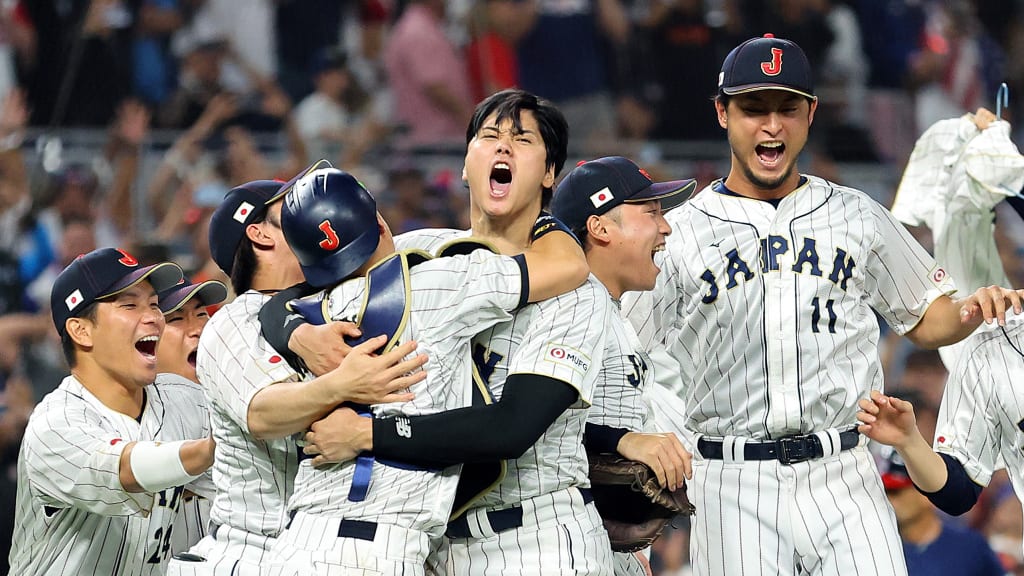
The 2026 World Baseball Classic has delivered chaos, upsets, and a treasure trove of data. With the semifinals now underway, the numbers from this tournament paint a fascinating picture of which MLB players are primed for big regular seasons and which front offices should be quietly concerned about pitcher workloads. Let's dig into what the data is actually telling us.
Venezuela's Upset of Japan: The Numbers Behind the Stunner
Venezuela's 8-5 quarterfinal victory over defending champion Japan was the biggest story of the tournament, and the data reveals it was less of a fluke than the headlines suggest. Venezuela entered that matchup hitting .305 as a team through pool play, with six extra-base hits from Luis Arraez alone. When you combine elite contact rates with situational hitting, you get what happened in the sixth inning: a three-run homer from Wilyer Abreu, launched 409 feet off Hiromi Itoh, to flip a 5-4 deficit into a 7-5 lead.
The Red Sox outfielder has been hitting .294 with six RBIs across five games. The more interesting number for Abreu heading into the MLB regular season is his ability to punish fastballs in high-leverage situations. He hammered a 2-1 four-seam fastball for that go-ahead blast, consistent with a hitter who has refined his pitch selection. If that carries into his Red Sox season, his expected wOBA should climb.
Venezuela WBC Key Data: Team BA through QF: .305 // Arraez: 7-for-14, 2 HR, 4 2B, 9 RBI (.500 BA) // Abreu: .294, 6 RBI, 409-ft go-ahead HR // First semifinal since 2009
Arraez's WBC stat line is staggering: .500 batting average through pool play on 7-for-14 hitting with two home runs and four doubles. The man who led the American League with a .314 average in 2024 is showing power development that could genuinely shift his 2026 projection. Six extra-base hits in a tournament setting, against elite international pitching, suggests this is not a small-sample mirage. If Arraez adds even modest power gains to his historically elite contact rates, his wOBA could push above .370 this season.
Paul Skenes' Workload Projection and the Pirates' Dilemma
Skenes has been the best pitcher in the tournament for Team USA, and therein lies the problem for Pittsburgh. In his pool play start against Mexico, Skenes fired four scoreless innings on 60 pitches, punching out seven batters against just one hit and one walk. That's a 41.2% strikeout rate in that outing alone. In the semifinal against the Dominican Republic, he went 4 1/3 innings, allowing six hits and one run (a solo home run to Junior Caminero) with two punchouts on 71 pitches.
| Metric | Value |
|---|---|
| WBC Innings Pitched | 8.1 |
| Total WBC Pitches | 131 |
| Strikeouts | 9 |
| Runs Allowed | 1 |
Historical WBC data shows that starting pitchers who log meaningful tournament innings have suffered a decline equivalent to roughly 1.5 fantasy points per outing in scoring leagues, a proxy for decreased effectiveness across a full MLB season. Skenes himself downplayed the concern, telling ESPN "I think that's an excuse. You can mitigate risk by working harder." Bold words, but the data consistently shows that added March innings correlate with diminished September performance. The Pirates will need to monitor his pitch counts carefully through the summer, especially given that he could pitch the WBC final on Tuesday as well.
Italy's 5-0 Run: Small Sample, but the Process Is Real
Italy's Cinderella run to the semifinals deserves analytical attention. Coming into 2026, Italy had a combined 7-13 WBC record across five tournaments with just 98 total runs. This year? Five wins and 40 runs through the quarterfinals. The transformation is not random.
In their 8-6 quarterfinal win over Puerto Rico, Italy drew eight walks, stole five bases, and went 5-for-13 with runners in scoring position. That's a team playing disciplined, process-driven baseball. Vinnie Pasquantino's three-homer performance against Mexico (the first in WBC history) grabs headlines, but the underlying approach is what matters: plate discipline, baserunning aggression, and situational execution. Pasquantino plays for the Royals, and if his WBC power surge (three solo homers in one game) reflects genuine mechanical refinement, Kansas City's lineup projections need an update. Aaron Nola pitched five innings for Italy in pool play and could log more innings with the team advancing deep, something Phillies fans should track heading into April.
Spring Training Statcast Data Intersects with WBC Performers
The WBC is not happening in a vacuum. Spring training Statcast numbers are rolling in simultaneously, and the overlap between WBC performers and spring standouts is where projection models get interesting.
Chase Burns, not in the WBC but dominating spring camp, is posting a 36% strikeout rate and a 32% swing-and-miss rate across his first two outings. His fastball is averaging 97.4 mph with a 41% whiff rate, and his slider at 90.2 mph is generating a 75% whiff rate. That's elite swing-and-miss stuff that projects to a sub-3.00 FIP if it holds over a full season sample.
Meanwhile, top prospects like Konnor Griffin (111.2 mph, 440-foot homer in spring) and Jordan Lawlar (.348/.483/.783 slash line in camp) are flashing tools that suggest the 2026 rookie class could be special. Lawlar's 20.7% walk rate in camp is particularly encouraging for his projected on-base floor.
Spring Training Statcast Standouts: Burns: 97.4 mph FB avg, 75% slider whiff rate // Griffin: 111.2 mph exit velo HR // Lawlar: .348/.483/.783, 20.7% BB rate // Condon: 115.3 mph HR (hardest of spring)
Workload Red Flags for Fantasy and Projection Models
Beyond Skenes, several MLB starters who pitched deep into the WBC warrant monitoring. Brayan Bello went five innings for the Dominican Republic in pool play, and Nola did the same for Italy, with both teams advancing to the quarterfinals and beyond. Every additional outing adds to the cumulative spring workload that projection models typically don't account for.
Mason Miller's closing duties for Team USA are a different kind of workload concern. High-leverage, short-burst outings carry their own stress profile. Miller sealed the 2-1 semifinal win over the Dominican Republic with a controversial strikeout of Geraldo Perdomo. For the Padres, having their closer operating at peak intensity in mid-March is a variable that doesn't show up in traditional FIP or xFIP calculations but absolutely factors into late-season fatigue curves.
Yoshinobu Yamamoto allowed a first-inning homer to Ronald Acuna Jr. in Japan's elimination loss, and his workload coming off Japan's domestic competition last fall was already a concern. That extra WBC mileage could show up in the Dodgers' rotation planning. Combined with Kyle Tucker's presence in their lineup, the Dodgers have multiple players whose WBC participation needs careful load management as the regular season ramps up.
What This All Means for Your MLB Season Models
The core takeaway from this WBC is threefold. First, Arraez's power development is legitimate and needs to be baked into San Diego's offensive projections. A .500 WBC batting average with two homers and four doubles is not noise when it comes from a player with his track record of elite contact. Second, pitcher workloads from the WBC will create a measurable drag on regular-season performance, particularly for starters who pitch deep into the tournament. The historical data on this is consistent. Third, Italy's process-driven approach has implications for its MLB-rostered players. Pasquantino and Nola are playing with confidence and mechanical sharpness that could translate directly.
With the WBC final still to come on Tuesday and spring training camps breaking in two weeks, the data pipeline is just getting started. The numbers don't lie, but you have to know where to look.