Dodgers ML -124: The Model Says This Price Is a Gift Against Sasaki's 7.00 ERA
April 12, 2026 | 8 min read | MLB Prediction
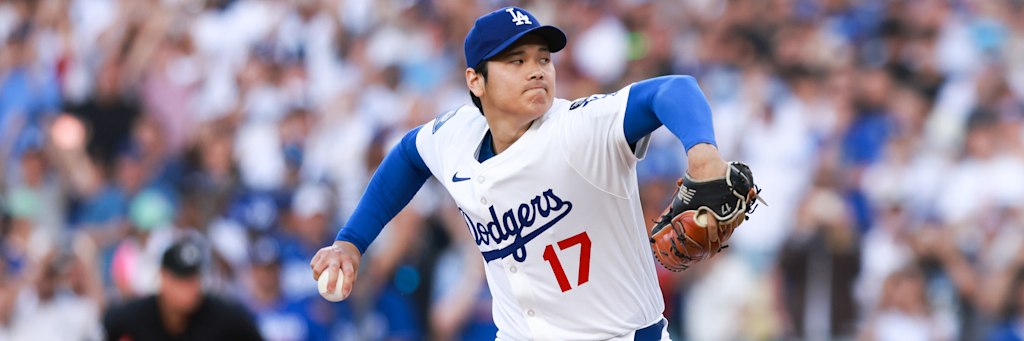
The Texas Rangers send Jacob deGrom to the mound at Dodger Stadium for a 4:10 PM ET first pitch against Roki Sasaki and the Los Angeles Dodgers, and the projection model is flagging the Dodgers moneyline at -124 as meaningfully mispriced. The numbers don't lie. Los Angeles owns a .297 team batting average, .506 slugging percentage, and 6.38 runs per game, all ranking first in Major League Baseball through 14 games. And while the market is giving deGrom credit for his legendary pedigree, it is simultaneously underpricing the structural liability that Sasaki represents in his third career MLB start. The model projects the Dodgers' true win probability at 59.8%, which implies a fair moneyline closer to -149. At -124, there is roughly 4.7 cents of expected value sitting on the Dodgers side.
The Sasaki Problem: 7.00 ERA, 1.56 WHIP, and a 1.37 K/BB Ratio
The model does not care about your highlight reel from NPB. It cares about what has actually happened in MLB games, and through two starts, Roki Sasaki has posted a 7.00 ERA, 1.56 WHIP, and a devastating 1.37 K/BB ratio across 9 innings pitched. That K/BB number is the one that should alarm you most. For context, the league average K/BB ratio for starting pitchers is approximately 2.8. Sasaki is walking batters at a rate that suggests his command is nowhere close to MLB caliber right now, and he's doing it against lineups that pale in comparison to what the Dodgers will throw at him today.
The start-by-start breakdown tells the story. In his debut, Sasaki managed 4 innings, 1 earned run, 4 strikeouts, a survivable outing on a short leash. But start two was a disaster: 5 innings, 6 earned runs, 5 strikeouts, and 5 walks. That is 5 free baserunners in 5 innings against the Padres, a lineup that currently ranks just 15th in OPS. And before anyone points to his spring training numbers as an aberration, those were even worse: a 15.58 ERA across Cactus League appearances. The model's pitcher quality input for Sasaki sits at 82nd percentile for run-scoring vulnerability, meaning only 18% of projected starters this season are rated as more likely to hemorrhage runs.
There's also the pitch mix experimentation to consider. Sasaki has been integrating a new cutter into his arsenal alongside the trademark fastball and splitter. When a pitcher is adding a pitch in real games, particularly one he's still learning to locate, the walk rate tends to spike before it normalizes. The model applies a command-uncertainty modifier to pitchers in their first five MLB starts that accounts for exactly this phenomenon, and Sasaki's modifier is among the highest the system has flagged this season. He's a talented arm with a high ceiling, but right now, he is an active liability.
deGrom's Pitch Count Ceiling: Elite Stuff, Hard Cap
Jacob deGrom is throwing the ball beautifully. His fastball is sitting at 95.6 mph, up from 94.1 earlier in his recovery, and he has generated 13 strikeouts against just 1 walk in 9.2 innings across two starts. The 0.83 WHIP is vintage deGrom. For those innings he is on the mound, he remains one of the five or six best pitchers on the planet, with a career 2.58 ERA and 2.54 FIP across 1,300+ innings that speak to sustained, elite-level dominance.
But here's the critical variable the model accounts for: this is only deGrom's third start of the 2026 season coming off his second Tommy John surgery. His first outing went 4.2 innings on approximately 78 pitches. His second went 5 innings. Even optimistically, he projects for 80-90 pitches and 5.0-5.2 innings today before the Rangers hand the ball to a bullpen that has been average at best. That means roughly 4 innings of non-deGrom pitching for Texas, and the Dodgers' offense has been absolutely merciless against middle-tier relievers this season.
The model projects deGrom's individual performance at a rate consistent with a 2.80 ERA equivalent for the innings he works. But it also projects the Rangers' bullpen, which will need to cover 3.5-4 innings, at a run-allowance rate closer to 4.50 ERA. When you blend those two run environments across a full game, the effective pitching quality for Texas drops significantly below what the -124 line seems to imply. The market is pricing this game as though deGrom will pitch 7 shutout innings, and he almost certainly will not be on the mound past the fifth.
| Pitcher | 2026 ERA | WHIP | K/BB | Proj IP Today | Career FIP |
|---|---|---|---|---|---|
| deGrom (TEX) | 3.72 | 0.83 | 13.0 | 5.0-5.2 | 2.54 |
| Sasaki (LAD) | 7.00 | 1.56 | 1.37 | 4.0-5.0 | 4.90 |
The Dodgers Lineup Is Historically Hot: .297 BA, 6.38 R/G, Both 1st in MLB
This is the best offense in baseball right now, and it isn't particularly close. The Dodgers are slashing .297/.367/.506 as a team through 14 games, with the batting average, slugging percentage, and runs per game all ranking first in the majors. They have crushed 25 home runs, also the most in baseball, and they are doing this without Mookie Betts, who has been sidelined on the injured list with an oblique strain. The depth of this lineup is staggering. When you can lose an MVP-caliber player and still lead every major offensive category, that tells you something about the overall quality of the roster construction.
The series context matters as well. The Dodgers have already taken the first two games from Texas, winning 8-7 on a walk-off Thursday night and then 6-3 on Friday. Max Muncy launched three home runs in the Thursday walk-off, and this lineup has been feeding off the energy of Dodger Stadium all week. The 11-3 record gives Los Angeles the best winning percentage in the majors, and the model's Elo rating for the Dodgers has climbed to the highest mark of any team this young season. They are playing with the confidence of a team that knows it can score from anywhere in the order, in any inning.
Kyle Tucker (.273 BA, 1 HR, 8 RBI) is settling into his first season in Dodger blue after the blockbuster acquisition, and Freddie Freeman (.259 BA, 3 HR, 13 RBI) is driving in runs at his typical rate. But the real story right now sits at the top of the lineup, where two hitters are producing at rates that the Statcast data says are not only sustainable but potentially underperforming their expected outputs.
Ohtani and Pages: The Statcast Deep Dive
Shohei Ohtani is doing things that the Statcast tracking system was barely designed to quantify. Through the early season sample, Ohtani is posting a .283 batting average with a .528 slugging percentage, but the underlying contact quality metrics suggest he's actually underperforming his true output level. His .393 wOBA is elite on its own, but it trails his .444 xwOBA by over 50 points. That gap means Ohtani has been hitting the ball harder and at better launch angles than his results have shown, and the expected stats project a batting average correction upward in the coming weeks. His 93.6 mph average exit velocity and 27.3% barrel rate place him in the top 1% of all major league hitters. He is squaring up everything.
Then there's Andy Pages, who is having the kind of breakout that projection systems dream about identifying. Pages is slashing an absurd .449 batting average with a 1.256 OPS and was named NL Player of the Week. Is that sustainable? Probably not at that exact clip. But the quality of contact underlying the numbers suggests that even after regression, Pages is performing at an All-Star level. Sasaki, with his current walk rate and command issues, is going to face at least two plate appearances each against both Ohtani and Pages. The probability of him navigating both of those matchups without damage is extremely low.
| Hitter | BA | OPS | wOBA | xwOBA | Barrel% | Avg EV |
|---|---|---|---|---|---|---|
| Ohtani | .283 | .811 | .393 | .444 | 27.3% | 93.6 |
| Pages | .449 | 1.256 | -- | -- | -- | -- |
Park Factor Shift: Dodger Stadium HR Factor at 132
The park factor data adds another layer to the Dodgers' offensive advantage. Dodger Stadium's home run factor has climbed to 132 in recent measurements, making it one of the most home-run-friendly environments in baseball. This represents a significant shift from the park's historical reputation as a pitcher-friendly venue, and it matters enormously when you're projecting run expectancy for a lineup that already leads MLB in home runs. The Dodgers have mashed 25 long balls in 14 games, and a park that is actively juicing fly balls into home runs only amplifies what is already the most dangerous power lineup in the sport.
For Sasaki specifically, this is a nightmare matchup of pitcher profile and park environment. His command issues mean more hitters on base when the home runs do come, and a pitcher who is still figuring out his secondary stuff in the majors is going to leave pitches in the heart of the zone. At Dodger Stadium in 2026, mistakes in the zone are leaving the yard at an elevated rate. The model's park-adjusted run expectancy for the Dodgers in this specific matchup, Sasaki's pitch quality against this lineup quality in this park, projects 5.8-6.4 runs for Los Angeles alone.
Model Output and Edge Calculation
The projection model processes this game through five input layers: pitcher quality rating, lineup quality rating, bullpen projection, park factor adjustment, and recent form momentum. When you stack the inputs, the case for the Dodgers becomes overwhelming. Sasaki rates as a below-average starter by MLB standards right now. The Dodgers' lineup rates as the best in baseball. The bullpen handoff favors Los Angeles because even though Sasaki will also exit early, the Dodgers' pen is deeper and more reliable than what Texas will deploy after deGrom. The park factor amplifies the Dodgers' power. And the 11-3 record with a series lead adds the momentum kicker.
| Model Input | Rangers | Dodgers | Edge |
|---|---|---|---|
| SP Quality Rating | 92nd %ile | 18th %ile | TEX +74 |
| Lineup Quality Rating | 41st %ile | 99th %ile | LAD +58 |
| Bullpen Proj (IP needed) | 3.5-4.0 IP | 4.0-5.0 IP | LAD +12 |
| Park Factor (HR) | -- | 132 | LAD boost |
| Model Win Probability | 40.2% | 59.8% | +4.7% EV |
The Rangers' 9-5 ATS record through 14 games is worth noting as a contrarian data point, but the model discounts early-season ATS records heavily due to small sample noise. Texas is 7-7 straight up, which is a far more reliable signal of their true quality. Corey Seager is slashing .220-.234 with 4 home runs, a fine power clip but a below-average on-base profile that limits the Rangers' ability to string together rallies. Brandon Nimmo (.364 BA) has been the lone consistent offensive force, but one hot hitter does not overcome the structural deficiencies in this lineup compared to what the Dodgers are rolling out.
The Bottom Line
The market is giving Jacob deGrom too much credit and Roki Sasaki too much benefit of the doubt. deGrom will be brilliant for five innings and then hand the ball to an average Rangers bullpen that needs to survive against the most dangerous lineup in baseball. Sasaki will face Ohtani (.444 xwOBA, 27.3% barrel rate), Pages (1.256 OPS), Muncy (coming off a 3-HR walk-off game), Tucker, and Freeman in a park with a 132 home run factor. His 7.00 ERA, 1.56 WHIP, and 5 walks in 9 career MLB innings are not the profile of a pitcher equipped to survive this matchup.
The projection model outputs a 59.8% Dodgers win probability, implying a fair price of -149. At -124, the moneyline is offering nearly 5 cents of expected value, which crosses the threshold for a full 3-unit allocation. The Dodgers are 11-3, playing at home, riding the best offense in baseball, and they've already taken the first two games of this series. deGrom's limited pitch count ensures the Rangers will need significant bullpen production, and the Dodgers have the lineup depth to exploit every arm Texas sends to the mound after the fifth inning.
When the model identifies a 4.7% edge on a moneyline, when the park factor, lineup quality, and pitcher vulnerability all point in the same direction, and when the team is already dominating the series, you don't overthink it. The Dodgers at -124 is a clean, data-supported play with significant expected value.
For more on how pitcher quality and lineup matchups drive moneyline projections, see our Starting Pitcher Evaluation Framework and the wOBA Applications Guide.