Cubs Win Probability 54.4% at Philadelphia: Nola's xERA Gap and Declining Velocity Meet Chicago's Elite Walk Rate
April 14, 2026 | 8 min read | MLB Prediction
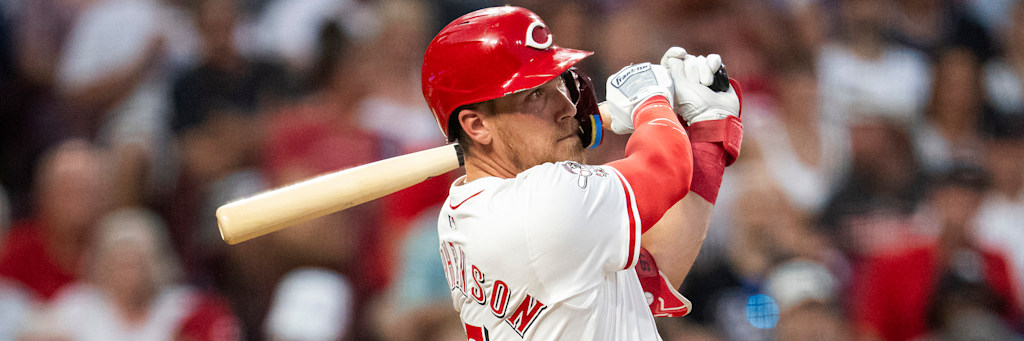
The projection engine has the Chicago Cubs at 54.44% win probability on the road at Citizens Bank Park tonight, facing Aaron Nola and a Phillies club that has quietly become one of the most offensively anemic teams in baseball. At +122, the implied probability sits at just 45.0%, creating a meaningful gap between market price and model output. The data underneath this matchup tells a story of a Philadelphia staff running on reputation while a Cubs lineup built around plate discipline is positioned to exploit exactly the kind of pitcher Nola has become in 2026.
The Nola Problem: Surface ERA vs Expected Metrics
Aaron Nola's 3.63 ERA through three starts looks perfectly fine. It looks like the Nola the market remembers from his peak years. But the Statcast layer underneath that number is telling a very different story. His xERA sits at 4.19, which ranks in just the 74th percentile, a full half-run above his actual ERA and a strong signal that batted-ball quality has been worse than the results suggest. His xFIP of 3.10 tells us the strikeout-to-walk ratio is still strong (9.87 K/9 against 2.08 BB/9), but the contact he is allowing is increasingly hard and increasingly centered.
The velocity decline is the structural concern. Nola's fastball is sitting at 91.5 mph, 43rd percentile in MLB, and that is not a new development. It is the continuation of a multi-year trend that has eroded the margin for error on a pitch that used to sit 93-94. When the fastball loses a tick, every secondary pitch becomes more hittable because the velocity differential shrinks. His barrel rate allowed of 10.6% and hard-hit rate of 42.6% confirm that hitters are getting to the baseball with authority, even when the final line says "3 ER over 6 innings."
| Date | Opponent | IP | ER | K | BB |
|---|---|---|---|---|---|
| Apr 3 | vs TEX | 5.0 | 3 | 5 | 2 |
| Apr 8 | @ COL | 6.1 | 1 | 8 | 1 |
| Apr 14 | @ SF | 6.0 | 3 | 6 | 2 |
Riley Martin: The Unknown Quantity With a Projectable Profile
The Cubs are sending Riley Martin to the mound for his first career MLB start, and the market is treating that like it should be a massive red flag. It is not, and the projection systems agree. Martin, a 28-year-old left-hander who debuted on April 6 out of the bullpen, brings a minor-league track record that the projection engines trust far more than a zero-start MLB resume might suggest. His 2025 Triple-A line: 2.69 ERA, 11.31 K/9, 4.95 BB/9 across 63.2 innings. The strikeout rate is real. The walks are an issue but manageable in short bursts.
Three separate projection systems peg Martin as a league-average-or-better arm going forward. ZiPS projects a 4.42 ERA, Steamer is at 3.89, and THE BAT X is the most aggressive at 3.58. Those projections account for the walk rate and the small sample. His curveball, sitting 85-86 mph with heavy vertical drop, is the weapon that makes the profile interesting. Against a Phillies lineup that has been historically awful against left-handed pitching this season, that breaking ball could be the neutralizer that keeps Martin in the game through four or five innings before handing it to the bullpen.
| System | Martin ERA Proj | Nola ERA Proj | Gap |
|---|---|---|---|
| ZiPS | 4.42 | 3.72 | +0.70 |
| Steamer | 3.89 | 3.65 | +0.24 |
| THE BAT X | 3.58 | 3.80 | -0.22 |
The key takeaway: two of three systems project Martin as essentially equivalent to or better than Nola on a per-inning basis. THE BAT X actually favors Martin by 0.22 runs. The market is pricing this as a clear Nola advantage, and the projection engines disagree.
Philadelphia's Left-Handed Pitching Problem: .173 AVG, .538 OPS
This is the number that makes the entire projection tilt. The Phillies are hitting .173 with a .538 OPS against left-handed pitching this season. That is not a small-sample oddity. That is a lineup structurally built to destroy right-handed pitching (.254/.759 vs RHP) and structurally vulnerable to anyone throwing from the left side. Kyle Schwarber, Bryce Harper, and Trea Turner are all right-handed or switch hitters who have faced the majority of their plate appearances against righties, and the lineup construction creates a natural platoon disadvantage when a southpaw is on the mound.
| PHI Splits | AVG | OPS | wOBA | wRC+ |
|---|---|---|---|---|
| vs RHP | .254 | .759 | .335 | 112 |
| vs LHP | .173 | .538 | .242 | 62 |
A 62 wRC+ against left-handers is replacement-level production. That is a lineup performing 38% below league average against southpaws, and Martin's curveball-heavy arsenal is designed to exploit exactly this kind of platoon weakness. The Phillies are also scoring just 3.53 runs per game overall, 26th in MLB. This is not the high-powered offense the market is pricing in at Citizens Bank Park. This is a team that has scored three or fewer runs in 10 of 16 games.
Cubs Offensive Profile: Walk Rate Exploits Nola's Command Window
Chicago's offense is not elite by traditional surface numbers: .229 AVG, .687 OPS, 98 wRC+. But the underlying process metrics tell a much more interesting story. The Cubs are walking at a 12.3% rate, among the best in baseball, and that plate discipline is the single most important variable in this matchup. Against a pitcher like Nola whose fastball velocity has declined to 43rd percentile, patient hitters who can lay off borderline pitches force him to work through the zone, where the diminished velocity becomes a liability.
Alex Bregman has been the anchor of this patient approach, carrying an average exit velocity of 91.8 mph and a 52.3% hard-hit rate. Those are elite-tier Statcast numbers that suggest the quality of contact is better than the batting average indicates. The Cubs are also scoring 4.4 runs per game (10th in MLB) and own a team ERA of 3.43, sixth-best in the league. The pitching staff's FIP of 4.36 suggests some regression is coming, but with nine pitchers currently on the injured list, the real question is whether the bullpen can hold. Even with the injuries, the rotation-to-bullpen handoff has been functional enough to win games at a respectable rate.
Run Environment and Park Context
Citizens Bank Park carries a home run factor of 1.03, slightly above neutral, and the Phillies have hit 13 home runs in 10 home games. But that power is concentrated against right-handed pitching. With a left-hander on the mound, the park effect is dampened by the Phillies' inability to get the ball in the air against southpaws. Philadelphia's home splits of .242/.739 are serviceable, but those numbers are heavily skewed by two games against right-handed starters where the lineup erupted. The underlying trend at home against lefties has been the same suppressed production the overall platoon data shows.
Yesterday's 13-7 Phillies win might create a narrative that the offense has "broken out," but that game was an outlier against a collapsing Cubs bullpen in a blowout context. The model does not chase single-game results. It runs on process, and the process says this Phillies lineup is operating at a .320 wOBA and 99 wRC+, essentially league average, against a Cubs pitching staff that has been measurably above average all season.
Model Edge Calculation
The numberFire projection model assigns the Cubs a 54.44% win probability. The market at +122 implies just 45.0%. That is a 9.4-percentage-point gap between the model's assessment and the market's price, which qualifies as a significant edge by any standard projection framework. The home-field adjustment for Philadelphia is real but overstated: the Phillies are 8-8 overall and have been losing as frequently at home as they have been winning. The +122 line is pricing in a version of the 2024 Phillies that no longer exists in the underlying data.
| Metric | Cubs | Phillies | Edge |
|---|---|---|---|
| R/G | 4.4 | 3.53 | CHC +0.87 |
| Team ERA | 3.43 | 4.30 | CHC -0.87 |
| wOBA | .315 | .320 | ~Even |
| BB Rate | 12.3% | 8.1% | CHC +4.2% |
| Win Prob (Model) | 54.4% | 45.6% | CHC +9.4% |
The Phillies FIP-ERA Gap: Regression Coming, But Which Direction?
Philadelphia's pitching staff has a 4.30 ERA against a 2.87 FIP, a 1.43-run gap that is one of the largest in baseball. The LOB% of 65.4% is well below the league-average 72%, suggesting that the staff has been deeply unlucky with strand rate. This is the one data point that argues for Philadelphia's pitching improving. However, the FIP number assumes a normalized HR/FB ratio and strand rate, and in a hitter-friendly park with an offense that cannot generate enough runs to play from ahead, the bullpen is consistently being deployed in high-leverage, close-game situations where the strand rate stays depressed. The regression toward the FIP may never fully materialize if the lineup continues to score 3.53 runs per game.
Meanwhile, the Cubs carry a 3.43 ERA against a 4.36 FIP, the opposite divergence. Their strand rate has been running hot and some ERA regression is likely, but the nine pitchers on the IL complicate this analysis. The bullpen has been patched together with call-ups and spot starters, and the 3.71 bullpen ERA may be artificially low. The model accounts for this by discounting the Cubs' pitching projection slightly, which is why the win probability lands at 54.4% rather than something higher.
The Projection Summary
The case for the Cubs at +122 is built on four pillars: Nola's xERA-to-ERA divergence exposing declining stuff, Philadelphia's catastrophic .173/.538 production against left-handers, Chicago's elite 12.3% walk rate exploiting a diminished fastball, and a Phillies offense that ranks 26th in runs per game despite playing in one of baseball's friendlier environments. The model sees a true 54.4% win probability for Chicago, and the market is offering 45.0%. That is a substantial edge, and it is driven by measurable, repeatable data rather than narrative or gut feel.
For a deeper look at how xERA divergence factors into win probability, see our xFIP and Expected Metrics guide and the Pitcher Evaluation framework. For additional context on platoon splits in model construction, visit our wOBA applications breakdown.