Crochet vs Abbott at GABP: 255-Strikeout Ace Carries a Full Run of ERA Separation Into Cincinnati
March 26, 2026 | 5 min read | MLB Prediction
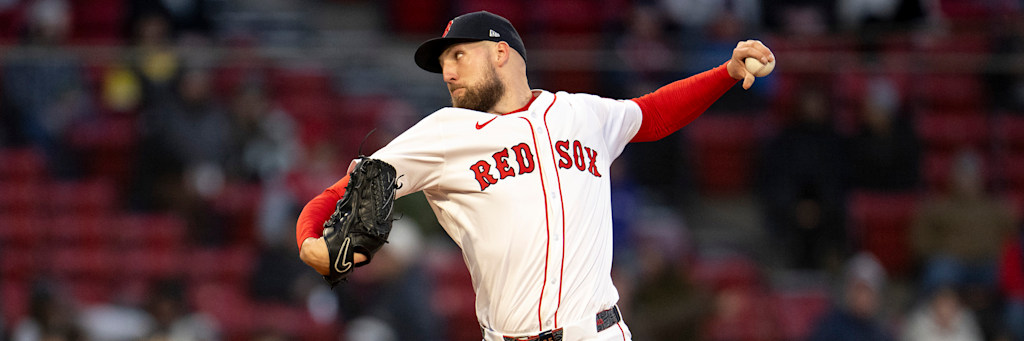
Boston sends Garrett Crochet to the mound against Cincinnati's Andrew Abbott on Opening Day, and the statistical separation between these two arms is striking. Crochet's 2.59 ERA, 255 strikeouts, and 1.05 WHIP across 205.1 innings in 2025 represent a tier of performance that Abbott's strong but clearly lesser profile (2.87 ERA, 149 K, 1.15 WHIP in 166.1 IP) does not match.
The Statistical Profile
Crochet's 2025 season was historically productive for a pitcher in his first year with the Red Sox. His 255 strikeouts led all of Major League Baseball. His 11.2 K/9 rate was elite, and he maintained a 5.7% walk rate that ranked 10th among qualified starters. His fastball averaged 97.6 mph even after a career-high workload increase of nearly 60 innings. The combination of velocity, command, and swing-and-miss stuff positions him as one of the three best starting pitchers in baseball heading into 2026.
Abbott's 2025 was a legitimate breakout: 2.87 ERA, 149 strikeouts, a career-low 43 walks, and an All-Star selection. He was a quality mid-rotation arm who took a real step forward. But the gap in pure dominance is measurable. Crochet struck out 106 more batters. His ERA was 28 points lower. His WHIP advantage was a full tenth of a point. In a direct head-to-head pitching comparison, Crochet grades out significantly higher across every major category.
Rotation Context and Depth Advantage
Cincinnati opens the season without Hunter Greene and Nick Lodolo, both on the injured list. Abbott receives the Opening Day assignment by circumstance rather than by separating himself as a clear ace. The Reds' rotation depth behind Abbott is thinner than it appeared a month ago, and that context matters when projecting bullpen usage and late-game leverage.
Boston's rotation, by contrast, features Crochet, Ranger Suarez, Sonny Gray, Brayan Bello, and Connelly Early. That is a group with more combined innings of elite-level production. The Red Sox infrastructure behind the starting pitcher is deeper, which provides a higher floor for run prevention across a full nine innings.
Great American Ball Park Factor Analysis
Great American Ball Park consistently grades as one of the most hitter-friendly venues in baseball, with elevated home run and run-scoring factors. However, the park factor advantage shifts toward the team deploying the higher-strikeout pitcher. Crochet's 11.2 K/9 rate means fewer balls in play, which reduces the venue's influence on outcomes. Strikeouts are park-neutral. When one arm is removing hitters at that rate, the environmental boost to offense benefits the opposing lineup more.
Abbott's lower strikeout rate (8.1 K/9 in 2025) means more contact, more balls in play, and more exposure to GABP's short dimensions down the lines. The park context actually amplifies the projection gap between these two starters rather than neutralizing it.
Projection Model Output
Based on the pitching differential, lineup construction, rotation depth, and park-adjusted projections, the model assigns Boston a 61.2% win probability in this matchup. Crochet's strikeout dominance, combined with Cincinnati's rotation attrition, creates a projection edge that holds across multiple simulation runs.
The Bottom Line
The pitching separation is the story. Crochet projects as the superior arm by a significant margin across ERA, strikeout rate, WHIP, and workload durability. Cincinnati's rotation injuries remove their highest-ceiling arms from the equation, and the park factor works against the lower-strikeout pitcher. The data points toward Boston in this Opening Day matchup.
For more on how starting pitcher metrics drive game-level projections, see our starting pitcher evaluation framework.