MLB Picks, August 16, 2026 | Team total under
The Number That Stabilizes Before ERA Does
Published August 16, 2026 | Command-Rate Decomposition | MLB Prediction Data Lab
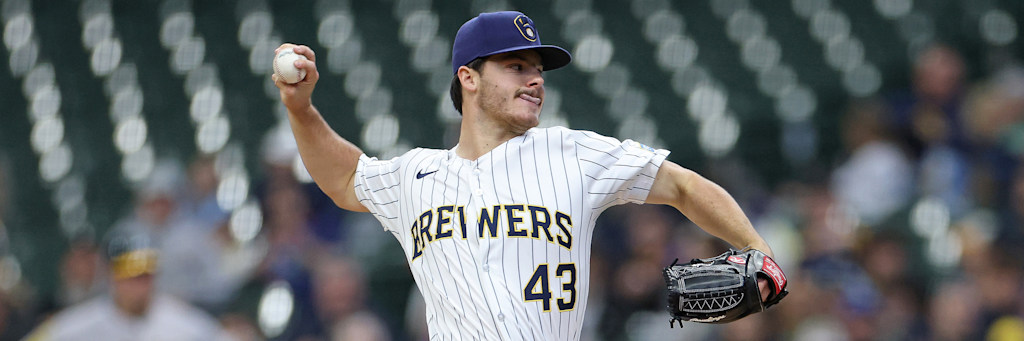
Tarik Skubal has thrown eleven innings for the Dodgers this season. Cody Bradford has thrown eleven and a third for the Rangers. Both numbers are too small for ERA to mean anything, and both pitchers start today. That is the problem this audit exists to solve. Rather than trust a rate stat that needs sixty or eighty innings to settle down, every arm on today's three-play card gets measured on strikeouts minus walks per nine, a number that separates signal from noise in a fraction of the sample ERA requires. Three prices, three units, and one command gap wide enough to carry a half-unit team total by itself.
Why Command Rate And Not ERA
Earned run average is a counting stat wearing a rate stat's clothes. It depends on sequencing, on defense, on which three batters happened to come up with runners on. Strikeout rate and walk rate depend on almost none of that. A strikeout is a strikeout regardless of who is standing at shortstop, and a walk is a walk regardless of the score. That is why analysts have leaned on strikeout-minus-walk rate for years as an early-season command indicator: it needs far fewer innings to stop bouncing around than ERA does, which matters enormously on a night when two of the six starters involved have a combined 22.1 innings of major league work this year.
The math is simple. Take strikeouts per nine innings, subtract walks per nine innings, and the result is a single number that describes how often a pitcher settles an at-bat on his own terms instead of putting the ball in play or handing out a free base. Every figure below comes directly from each pitcher's 2026 season line: innings, strikeouts and walks, computed the same way for all six arms.
| Starter | Team | IP | K/9 | BB/9 | K-BB/9 |
|---|---|---|---|---|---|
| Logan Henderson | Milwaukee | 56.1 | 11.02 | 1.76 | 9.26 |
| Bryan Woo | Seattle | 132.1 | 8.98 | 1.90 | 7.08 |
| Tarik Skubal | Los Angeles Dodgers | 11.0 | 9.82 | 3.27 | 6.55 |
| Hunter Brown | Houston | 63.2 | 9.47 | 4.95 | 4.52 |
| Jacob Lopez | Athletics | 82.0 | 8.23 | 4.83 | 3.40 |
| Cody Bradford | Texas | 11.1 | 4.76 | 2.38 | 2.38 |
Rank the six by that last column and a clean split appears. Henderson, Woo and Skubal all clear 6.5. Brown, Lopez and Bradford all sit below 4.6. Two of today's three plays sit exactly on top of that split, and the third explains why the market believes what it believes about the Rangers even without a starter who has thrown enough innings to be sure of anything.
Dodgers Team Total Under 4.5, -140, 0.5 Units
Start with the play the command number supports hardest. Logan Henderson's 9.26 strikeout-minus-walk rate is not close to the second-best mark on the board. Across 56.1 innings and 11 starts he has walked 11 batters and struck out 69, a 1.76 walk rate that leaves almost nothing behind for a Dodgers defense to clean up. His season ERA, 2.88, is a believable number precisely because it sits behind a command profile this strong rather than in front of one.
The Dodgers offense supplies the other half of the case. Los Angeles has scored 45 runs across its last ten games, a 4.5 runs-per-game clip, and arrives at this series 2-8 over that stretch. Dodger Stadium is not neutral ground for this bet either. Its 2026 park factors run 102 for runs and 128 for home runs, both above the league-average line of 100, which means the building itself is not doing the Dodgers offense any favors that Henderson has to overcome. He is working uphill against a hitter-friendly park and still carries the best command number on the entire card.
The honest counterpoint
Half a unit is a small stake, and there is a reason for that beyond conservatism. Henderson's opponent is Tarik Skubal, and Skubal's own strikeout-minus-walk rate of 6.55 is the third-best mark on the board, built on 12 strikeouts against 4 walks in his 11 innings for Los Angeles. That sample is a third the size of Henderson's, so it deserves a third the trust, but it is not nothing. If Skubal pitches to that early form, the Brewers' own lineup, which has scored 47 runs in its last ten games, keeps this from being a one-sided script. The team total protects against exactly that scenario, since it settles on Los Angeles alone regardless of how many runs Milwaukee scores.
Astros/Mariners Under 7.5, -105, 1.0 Unit
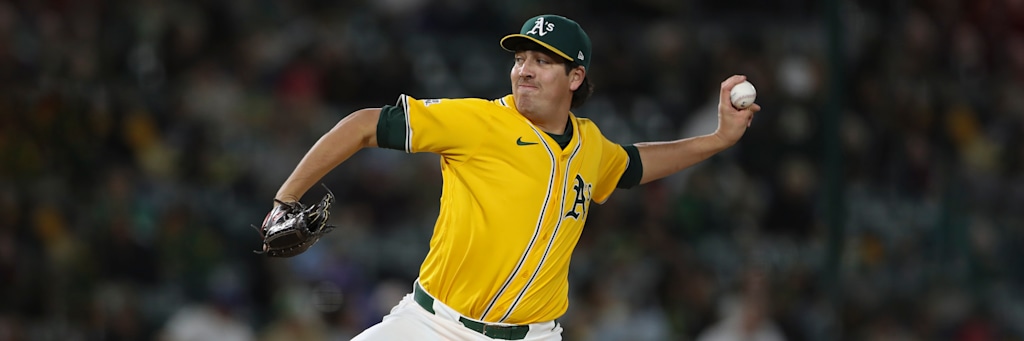
Bryan Woo is the more disciplined arm in this game by a wide margin. His 132.1 innings this season carry a 1.90 walk rate, the second-lowest on the card, against a 8.98 strikeout rate, producing a 7.08 command gap. Hunter Brown counters with the second-highest strikeout rate on the board, 9.47, but his 4.95 walk rate erases most of that advantage, leaving a 4.52 gap that is barely half of Woo's.
The two offenses are moving in opposite directions right now. Houston has scored 53 runs across its last ten games, a 7-3 stretch and a 5.3 runs-per-game pace. Seattle has scored 45 in the same span. But the two clubs have a recent history that cuts the other way: Seattle is 8-2 against Houston in their last ten meetings, a reminder that head-to-head familiarity and season-long form do not always point the same direction, and one more reason this ticket is sized at a single unit rather than more.
Daikin Park is not a pitcher's building either, with a 2026 runs factor of 102 and a home run factor of 115. The under here is not a bet that the park suppresses scoring. It is a bet that Woo's command holds up better than Brown's does across six or seven innings, in a game total set at 7.5 for two offenses that have combined for 98 runs in their last twenty games apiece.
The honest counterpoint
Brown's strikeout rate is real, and a strikeout-heavy pitcher having an off night with the walk rate can still miss enough bats to keep a total down on pure swing-and-miss alone. And Houston's own offense, scoring at a 5.3 runs-per-game clip over its last ten, is the hottest of any lineup involved in today's three games. If that heat continues into the evening window, the under needs Woo specifically to be sharp rather than merely present.
Rangers Moneyline, -132, 1.5 Units
This is the play where the command numbers argue against both pitchers and the price still makes sense. Cody Bradford's 2.38 strikeout-minus-walk rate is the lowest on the board, but his sample is 11.1 innings across two starts, not enough to draw a real conclusion either way. Jacob Lopez's 3.40 gap is built on a much larger foundation, 82 innings, and it is the second-worst mark on the card behind only Bradford. The difference is that Lopez's number is trustworthy and Bradford's is not.
A 4.83 walk rate over 82 innings is not a slump. It is a full season's worth of evidence that Lopez gives away baserunners at a rate that ranks him near the bottom of this six-man group, and Texas has scored 49 runs in its last ten games, a 4.9 runs-per-game pace that gives that command leak somewhere to go. The Rangers price at -132 needs a 56.90 percent win rate to break even. Texas is 61-63 on the season and the Athletics are 48-75, the widest record gap of any game on the card, and Lopez's walk profile is the specific mechanism behind that gap rather than an abstraction about record.
The honest counterpoint
Bradford's own command number is the worst on the board, and two starts is too small a sample to rule out that his early results simply have not caught up with a shakier underlying process yet. The Athletics have scored 48 runs in their own last ten games, essentially matching Texas's 49, which means recent offensive form is not the edge here. This ticket rests entirely on one pitcher's proven walk problem being larger than the other pitcher's unproven one, sized at 1.5 units rather than more because that unproven half of the equation is real risk, not a footnote.
What The Gap Explains And What It Cannot
Three plays, three units, and a clean divide: the two tickets built around a pitcher with a strong, well-established command number, Henderson's 9.26 and the structural case behind Woo's 7.08, are sized conservatively at 0.5 and 1.0 units. The one ticket built around exploiting an opponent's poor command number rather than trusting your own side's small sample, the Rangers moneyline off Lopez's 4.83 walk rate, carries the largest stake on the board at 1.5 units, because a proven weakness is easier to lean on than an unproven strength.
What this framework cannot do is replace the sample it was built to work around. Skubal's 6.55 gap and Bradford's 2.38 gap are both drawn from two starts, and two starts can still be wrong about the pitcher underneath them no matter how the arithmetic reads today. Every innings, strikeout and walk figure in this piece was pulled live from official league statistics during this session, computed the same way for all six arms, and printed beside the sample size that supports or limits it.