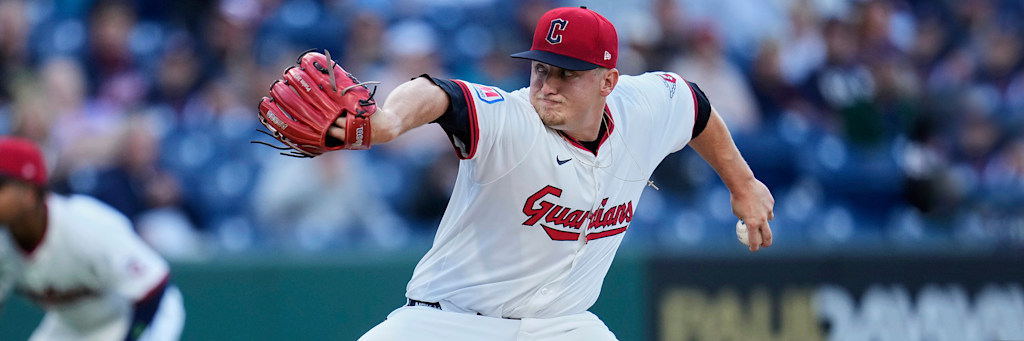
The most counterintuitive output a run-prevention model produces is an under in a game featuring one of the highest-scoring offenses in the sport. The June 18 board hands us exactly that. The Milwaukee Brewers are scoring 5.37 runs per game, the second-best mark in baseball, and the model still grades the Guardians versus Brewers under 7.5 at -115 as the cleanest edge on the slate for 2.5 units. The reason is a single pitcher whose changeup is bending the run distribution far enough to override an elite lineup. Around it sit the Red Sox team total under 4.5 at -114 for 3 units and the Mariners moneyline at -135 for 1.5 units, two more outputs where the starter does the heavy lifting.
The Framework: When One Pitcher Overrides A Hot Offense
A team total projection is a weighted sum of two distributions: the hitting club's baseline run rate, and the opposing starter's run-suppression profile. For most games those two terms are roughly balanced, and the projection lands near the market line. The exceptions, the games where a model finds real edge, are the ones where the starter's strikeout rate and contact suppression are extreme enough to dominate the offensive baseline. A 5.37-run offense is a strong prior, but a prior is not a posterior. Feed in an arm that misses bats at the top of the league and limits hard contact, and the projected run output collapses well below what the offense's season rate alone would suggest. The whole art is knowing when the pitcher term outweighs the hitter term, and June 18 has a textbook case.
Guardians Brewers Under 7.5: The Messick Changeup Variable
| Team | Probable starter | 2026 line | Record |
|---|---|---|---|
| Guardians | Parker Messick (LHP) | 2.68 ERA, 1.09 WHIP, 82 K / 80.2 IP | 39-35 |
| Brewers | Shane Drohan (LHP) | 3.59 ERA, 1.17 WHIP | 45-26 |
The dominant variable in this projection is Parker Messick, the Cleveland rookie left-hander carrying a 2.68 ERA and a 1.09 WHIP over 80.2 innings with 82 strikeouts. His signature pitch is a changeup the model treats as an outlier input. Public pitch-tracking data credits it with roughly 41 inches of vertical break and a 44 percent whiff rate, and it has held opposing hitters to a .120 average against. A whiff rate in that range is the kind of strikeout-generating input that compresses the right tail of a run distribution, and earlier this season Messick took a no-hitter into the seventh inning against Baltimore, walking two and matching a career-high nine strikeouts. That start is not a stake in the projection by itself, but it is the empirical confirmation that the changeup plays at the level the metrics imply.
Against the Milwaukee offensive baseline of 5.37 runs per game, the model still projects the combined run total beneath 7.5. The Brewers counter with Shane Drohan, a 3.59-ERA left-hander whose own contact-suppression line is solid enough to hold the Cleveland bats, who are themselves scoring just 3.97 runs per game, near the bottom of the league. Two left-handers with usable run-suppression profiles, one elite, facing a strong offense and a weak one respectively, is precisely the matchup where the under clears the line. The 2.5-unit stake reflects a projection that beats the implied break-even with margin while respecting that a 7.5 is a thin number where a single Brewers rally can flip it.
Red Sox Team Total Under 4.5: The Lowest-Variance Output
| Team | Probable starter | 2026 line | Record |
|---|---|---|---|
| Blue Jays | Trey Yesavage (RHP) | 3.78 ERA, 1.26 WHIP | 36-38 |
| Red Sox | Sonny Gray (RHP) | 3.03 ERA, 1.20 WHIP, 8-1 | 29-42 |
Heaviest stake on the board, 3 units, sits on the Red Sox team total under 4.5, and it is the lowest-variance output the model generates. Boston is scoring 3.93 runs per game, the second-lowest figure on the entire slate, with a .695 OPS that grades near the floor of the league. A team total isolates a single club's run column, which strips out the noise of the opposing offense and leaves only the question of whether a bottom-tier bat can clear 4.5 runs against Trey Yesavage and his 3.78 ERA. The projection says it cannot, comfortably and repeatedly.
Mechanically, a team total earns the biggest stake because of variance, not edge size alone. A single team's run column has a tighter distribution than a full nine-inning game total, so even a moderate projected edge translates to a higher-confidence output. With Boston's run rate already sitting below the line and a competent arm opposing it, the model treats the under 4.5 as the most contained bet on the slate, which is exactly the profile a 3-unit stake belongs on.
Mariners Moneyline: A Win-Probability Edge Built On WHIP
The lone win-probability output among the headliners is the Mariners moneyline at -135. Seattle, at 38-37, hosts the Baltimore Orioles, at 35-40, in a game the records call close. The model does not. The separating input is the starter WHIP gap: Bryan Woo carries a 1.04 WHIP across 14 starts and 82 innings, while Baltimore's Shane Baz sits at 1.39 over his own 14 starts. WHIP is the most direct proxy for baserunner volume, and baserunner volume is the largest driver of run scoring. A 0.35 gap in WHIP between the two starters is a meaningful win-probability lever, and it tilts the model's projection toward Seattle by more than the price implies. The 1.5-unit stake reflects a real but not overwhelming edge, appropriate for a single-game moneyline where one swing can decide a one-run result.
The Full Projection Board
Beyond the three headline outputs, the model touches the rest of the June 18 slate, each sized by the width of its projected edge.
| Projection | Line | Units | Primary input |
|---|---|---|---|
| Guardians/Brewers game total under | 7.5 (-115) | 2.5 | Messick changeup whiff rate vs hot Milwaukee bat |
| Red Sox team total under | 4.5 (-114) | 3.0 | Below-line Boston run rate, contained variance |
| Mariners moneyline | -135 | 1.5 | Woo 1.04 WHIP vs Baz 1.39 WHIP gap |
| Yankees moneyline | -161 | 3.0 | Team-quality gap, MLB-leading 109 home runs |
| Giants team total over | 3.5 (-115) | 2.0 | League-best .258 contact rate vs a pitch-to-contact arm |
| Cardinals/Royals game total over | 8.5 (-125) | 2.0 | Liberatore 1.50 WHIP inflates baserunner volume |
| Angels/Athletics game total under | 10 (-110) | 1.0 | An inflated number relative to two average offenses |
The Cardinals versus Royals over 8.5 is the board's clearest example of the framework producing an over rather than an under. Matthew Liberatore brings a 1.50 WHIP to the mound for St. Louis, the highest baserunner-volume input among the night's featured starters, and the model reads that as a signal that the Cardinals will allow traffic. With Kansas City's Noah Cameron grading as merely average at a 4.11 ERA and two middle-tier offenses on the field, the projected combined run total clears 8.5. The model has no directional bias toward unders; it follows the inputs, and here the WHIP input points up.
How The Model Sizes Each Output
Stake size is a direct function of the gap between projection and market line, scaled by the variance of the bet type. The Red Sox team total under at 3 units carries the heaviest stake because a team total is the lowest-variance output the model produces. The Yankees moneyline matches it because a first-place club at home against a weaker opponent is similarly low-variance. The Guardians/Brewers under earns 2.5 units, a strong edge tempered by the wider variance of a full-game total. The Mariners moneyline and the Angels/Athletics under sit lighter, at 1.5 and 1 unit, where the projected edge is real but the result hinges on a single swing or a single inning. The unit ladder is the model's confidence interval made explicit.
The Honest Counterpoint
A projection model is a distribution, not a guarantee, and the model names its own failure modes. The Guardians/Brewers under is the one to watch: a 5.37-run offense is fully capable of breaking a 7.5 with a single three-run inning, and if Messick's changeup is not landing, the entire run-suppression case for the game collapses to the Milwaukee baseline. The Red Sox under leans on Boston staying cold, which is the likeliest assumption on the board but never a certainty. The Mariners moneyline carries no plus-money cushion at a minus price. Lineups were not all confirmed at publication, so the projections assume the listed regulars. A model that respects variance sizes for it, which is the entire purpose of the unit structure.
What Beats It
An early multi-run inning beats the run-prevention board. The Guardians/Brewers under assumes Messick's changeup suppresses the Milwaukee bats as graded; the night that pitch flattens, a hot offense punishes a 7.5 quickly. The Red Sox team total under falls only if a bottom-tier offense picks the worst night to find four runs. The Mariners win-probability edge falls to a quiet Seattle lineup or a Woo command lapse. The model is favored on its outputs, but favored is a probability, not a result.
Final Verdict
The June 18 projection model outputs the Guardians versus Brewers under 7.5 at -115 for 2.5 units behind Parker Messick's changeup, the Red Sox team total under 4.5 at -114 for 3 units, and the Mariners moneyline at -135 for 1.5 units as its headline edges, with the full board sized by projected gap and variance. The throughline is run prevention read through starter strikeout rate, contact suppression, and WHIP, with the Cardinals/Royals over the lone upward signal. For more model work, see the advanced stats hub, the latest projections, and the prediction archive.
Picks and odds come from the BetLegend daily tracker. Probable starters, records, matchups, and venues were verified against MLB Stats API data for June 18, 2026.
Related Projection Models
More daily run-prevention and run-suppression reads built on the same strikeout-rate, WHIP and park-factor framework:
- June 19 run-prevention read: Padres team total under 3.5 versus deGrom
- June 17 run-prevention model: Rays team total under and a Yankees win-probability edge
- June 20 run-prevention model: Rockies and Orioles team total unders
- June 16 total projection: Red Sox vs Blue Jays under 7.5 on Cease's strikeout rate
For the inputs behind every projection, read how the MLB prediction model works, and review the model's public track record and graded results.