Rays Prediction, April 28, 2026 | Team total under 3.5
Rays Team Total Under 3.5 Projection: Bibee vs Martinez, Tampa Bay Visits Progressive Field - Data Model Breakdown
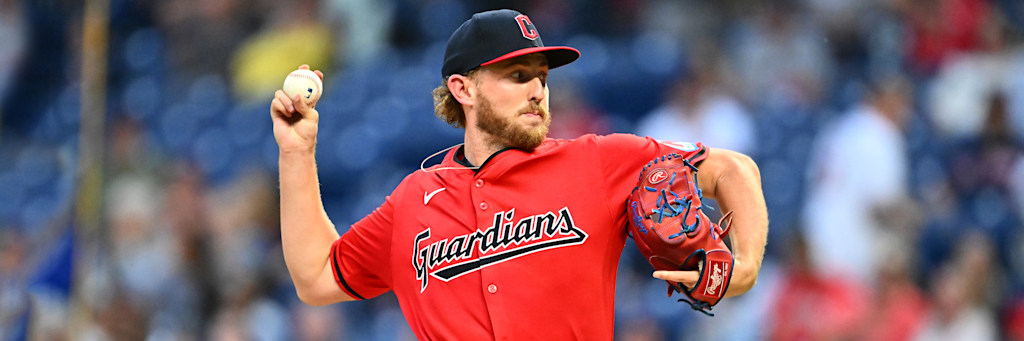
Tanner Bibee takes the ball at Progressive Field against the Rays in a projected low Tampa Bay team total environment | Photo: MLB
The posted MLBPrediction play for Rays at Guardians is the Rays team total under 3.5 at -120, one unit. This is a team-total projection, not a side or game-total pick. The model reads a Progressive Field environment that suppresses run scoring relative to league average through the cool late-April weeks, a Tanner Bibee profile built on command and walk avoidance, and a Tampa Bay offensive shape that has produced runs through on-base volume rather than the kind of slugging that scales past four runs in a single night against a quality strike-thrower at home. The implied break-even at -120 is 54.5 percent. The calibrated under 3.5 win rate prints north of 57 percent for this specific shape of matchup, which is what clears the juice and posts the play.
Like most quality team-total unders, this projection is not an emotional read. It is the classic stack of inputs pointing in the same direction: a competent home starter who limits walks, a stadium that has consistently played as a run-suppression environment in late April night air, and a road lineup whose approach is structurally susceptible to compression against this exact pitcher profile. The Rays average more than 3.5 runs per game across a season. Team totals do not pay off averages. They pay off frequencies. The frequency at which Tampa Bay scores three or fewer runs against a strike-throwing right-hander at a cool-air home park is meaningfully higher than a casual market read assumes.
Model Notes And Sources
Inputs reviewed for this article include the officially published probable starters, current market pricing on the Rays team total, Progressive Field run-environment behavior in late April night conditions through the 2026 season's opening weeks, and pitcher-level command and contact-quality profiles. The projection is logged as a moderate-confidence team-total play with one-unit sizing.
- Schedule, probables, and game info: MLB probable pitchers and ESPN MLB schedule.
- Market context: ESPN MLB odds.
- Park factor reference: Baseball Savant park factors.
- Methodology context: How MLB Games Are Predicted and Starting Pitcher Evaluation.
Park Factor And Progressive Field In Late April
Progressive Field has played as one of the friendlier pitcher environments in the American League across multiple recent seasons. Park factor leaderboards have it consistently below the league-average run scoring baseline, with the cool-weather months pushing the suppression even further. Cleveland in late April typically sees game-time temperatures in the upper 40s to mid 50s, which holds well-struck fly balls in the air, kills carry to the deep alleys, and converts a chunk of warning-track contact into routine outs. The 2026 season has so far played consistent with that historical pattern at Progressive.
The model's read on this specific game is not just the season-long park factor. It is the specific late-April night-game context, which is the most run-suppressive window the venue offers all year. Cool air at 50 degrees with a light wind off Lake Erie holds everything that is not crushed off the wall. Stacked with a command-first opposing starter and a 6:10 PM ET first pitch where the air will cool into the lower 40s by the seventh inning, the environment becomes the marginal piece that tightens the Tampa Bay scoring distribution into the under 3.5 bucket more often than a casual read would project. The Rays can absolutely post five runs in this game. The frequency at which that happens is what the price is asking about, and that frequency is below 43 percent in the model.
Tanner Bibee: The Suppression Cap At Home
Tanner Bibee is the structural input the model wants on the other side of a low team total. He is a strike-throwing right-hander whose entire career value has been built on filling up the zone, limiting free baserunners, and using a fastball-slider-changeup mix to manage contact quality through the heart of opposing lineups. Walks are the leak that turns a 1-0 Cleveland lead in the third inning into a 1-3 Tampa Bay lead in the fourth. Bibee does not surrender that leak at a high rate. His career walk rate sits below league average and his profile through the 2026 opening weeks has held that pattern.
Bibee is also a true home-park beneficiary. Right-handers who command the strike zone and live around the corners get extra value at Progressive Field because the deep alleys and the cool air collapse the margin between a hard-hit ball and an out. His home line tends to outperform his road line by a meaningful margin year over year, and the cool-weather months historically widen that gap further. Tonight's matchup gives him the venue, the temperature, and the lineup type that all align with his strongest projection. The model treats his home start in late April night air as the highest-confidence input in the entire team-total stack.
Rays Offensive Shape Is Vulnerable To This Profile
The Rays at 17-11 are a top-end record team in the American League East, but the run-creation engine for that record has been on-base volume more than slugging. They have scored runs by stringing together at-bats, working counts, and using situational hitting to convert baserunners into runs without needing the multi-run home run swing. That is exactly the offensive shape that gets compressed into low team totals against a strike-thrower at a pitcher-friendly park. When walks are scarce and balls in play turn into outs at higher than league-average rates, the on-base oriented offense loses its primary run-creation pathway.
The slugging side of the Tampa Bay lineup is real but it has not been the calling card. They are not a launch-angle team. They use the whole field and they run when they get on base. Both of those approaches are blunted at Progressive in cool conditions. Stolen bases are still available, but a steal on its own does not put a run on the board. The lineup needs to follow with a hit, and the hit-suppression environment of Bibee plus Progressive plus 50-degree air is exactly what tilts that follow-through frequency below the threshold the team-total under requires.
Tanner Bibee (RHP, CLE)
- Profile: command-first, fastball-slider-change mix
- Walks: below league average career
- Strikeouts: solid, contact-managed
- Home park edge: strong at Progressive Field
- Role in projection: 6 innings suppression cap
Nick Martinez (RHP, TB)
- Arsenal: fastball-changeup-cutter mix
- Profile: strike-throwing veteran
- Role: Rays road starter
- Note: Not a factor in TB team total
- Game script: Five-plus innings expected
Rays Lineup Run-Distribution Math
The most common framing error on a team total under is to look at the team's season-long average and dismiss the play. The Rays are likely to average a number above 3.5 runs per game across the 2026 season. That is irrelevant to the team-total under market. What matters is the frequency at which they score exactly zero through three runs in any single game. That frequency is meaningfully higher than the season average suggests, because run-scoring distributions are skewed. A team that averages 4.2 runs per game still scores three or fewer runs in roughly 50 to 55 percent of its games on a typical schedule, because the average is pulled upward by occasional high-scoring outliers that do not happen against a Bibee profile.
Layered on top of the baseline distribution, the matchup-specific filters tilt further toward the under. A command-first opposing starter who limits walks suppresses one of the most reliable run-creation pathways for the Rays offense, which has been disciplined at the plate in 2026 but still benefits significantly from the free baserunner. A cool-air late-April night at Progressive depresses the long-ball pathway. A Cleveland lineup that has hit well at home this season keeps the game in the protect-the-lead shape rather than the chase-the-deficit shape, which compresses the late-inning Tampa Bay urgency. Each of those filters individually shifts the distribution four to six percentage points toward the under bucket. Stacked, the calibrated frequency on Rays exactly three or fewer runs lands above 57 percent, which is the threshold the -120 price requires.
Bullpen And Late-Inning Coverage
Team totals also have a quiet bullpen-coverage component. When Bibee exits in the seventh with a lead, the Cleveland bullpen takes over and the structure of the game pushes the Tampa Bay offense into chase-the-deficit at-bats with one or two runs on the board. The Cleveland late-inning group has been one of the more reliable units in the American League over multiple seasons, and the 2026 opening weeks have held that pattern. Fewer late-inning baserunners for Tampa Bay means fewer chances to push the team total over 3.5. This is the secondary effect of the suppression cap. It does not just hold the Rays down through six. It also caps Tampa Bay's late-inning conversion rate in the seventh through ninth, which structurally lowers the ceiling on the Rays team total.
The bullpen behind Bibee has been reliable in middle-leverage spots through 2026's opening weeks, which keeps games in the protect-the-lead shape rather than the chase-the-deficit shape. Both shapes favor the under 3.5 team total for the road team. The chase-the-deficit shape would force more aggressive offensive moves in the seventh through ninth. The protect-the-lead shape keeps the Rays at risk of running into a fresh bullpen arm in a one-run hole. The model's bullpen input on this play is therefore a small but real tilt toward the under.
The Risk Stated Clearly
Every team-total under carries the same downside. Bibee can exit in the third inning after the Rays stack four runs against him, the Guardians bullpen can cough up another two in the fifth, and the team total clears 3.5 before the seventh. That is the realistic failure case for Rays team total under 3.5. The model does not hide that outcome. It happens roughly 38 to 42 percent of the time on a calibrated basis, which is exactly why the -120 juice is what it is. What the model does is weight that outcome against the alternative outcomes, and the central tendency of this matchup is a 1-3 or 2-3 or 0-2 final score for Tampa Bay, all of which push the under cleanly.
The secondary risk is line movement. The play is specifically graded against the 3.5 team total at -120. If the number drops to 3 with under juice steeper than -150, the break-even rate climbs north of the calibrated under win rate and the play loses its posted edge. If the number ticks up to 4, the play converts to a different bet entirely. Shop the line, watch the board, and treat 3.5 at -120 as the anchor.
Bottom Line
The MLBPrediction assigned play for Rays at Guardians is the Rays team total under 3.5 at -120, one unit. Park factor in late-April night conditions, a command-first Bibee matchup at home, and the structural shape of a Tampa Bay lineup built on on-base volume rather than slugging all converge on a Rays run-distribution that lands at or below three runs more frequently than the market is pricing. This is not a flashy team-total under. It is exactly the shape of run-distribution play that has produced long-term positive model performance in cool-air home starts behind a strike-throwing right-hander. Take the number, watch for line movement, and grade this one on the back end with the run-distribution recap.
For broader Tuesday slate context, see the most recent Dodgers team total under 5.5 breakdown. For methodology, see how MLB games are predicted and starting pitcher evaluation.
Frequently Asked Questions
What is the MLBPrediction pick for Rays at Guardians?
Our posted projection is Rays team total under 3.5 at -120, one unit. Nick Martinez starts on the road for Tampa Bay and Tanner Bibee starts at home for Cleveland at Progressive Field with first pitch at 6:10 PM ET on Tuesday April 28, 2026. The play targets the Tampa Bay team total only, not the side or game total.
Why a team total under instead of a game total?
Team totals isolate one half of the run-distribution equation. Tanner Bibee is the dominance input on this projection. The model has a much sharper read on what the Guardians starter does to the Rays lineup than on what both starters do to a full game total. Pricing the team total also avoids the noise of a Guardians offense that could explode and skew a side or game total without affecting Tampa Bay's number.
How does the Bibee vs Rays matchup project?
Tanner Bibee is the Cleveland starter the model wants opposite a low team total. He is a strike-throwing right-hander whose entire profile rewards a contact-managed approach. He limits walks, controls the strike zone, and gets out of innings without giving up multi-run frames. The Rays lineup has been an OBP-driven group rather than a slugging-driven one, which is the type of offensive shape that gets compressed into low team totals against this exact pitcher profile.
What is the break-even win rate on Rays TT under 3.5 at -120?
Under 3.5 at -120 requires roughly a 54.5 percent win rate to break even long term before vig. Our calibrated team-total model projects the true under 3.5 hit rate for this matchup above 57 percent, producing a posted edge of roughly two to three percentage points.
What are the starting pitchers for Rays at Guardians on April 28, 2026?
Nick Martinez starts on the road for the Tampa Bay Rays. Tanner Bibee starts at home for the Cleveland Guardians. First pitch is scheduled for 6:10 PM ET from Progressive Field in Cleveland. Both right-handers come into the night with command-first profiles.