Padres vs Diamondbacks Prediction, April 26, 2026 | Under 15.5
Why the Data Backs Padres / Diamondbacks Under 15.5 in Mexico City Despite the Altitude
San Diego Padres at Arizona Diamondbacks | Total Under 15.5 (-115) | April 26, 2026
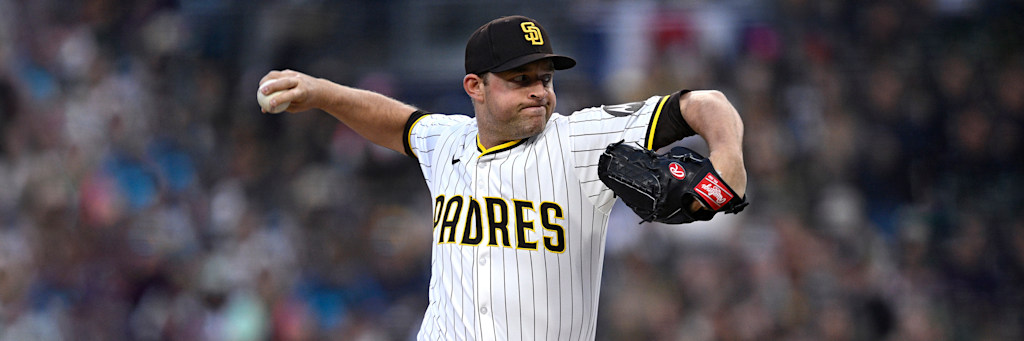
If the goal Sunday is to find the cleanest model-aligned spot on the MLB board, it is the Padres / Diamondbacks total in Mexico City Under 15.5. The Padres are 17-8 and have rolled into the Mexico City Series with the league's second-best record. The Diamondbacks are 14-11. The headline number is the elevation, 7,350 feet at Estadio Alfredo Harp Helu, which is the input the market keeps anchoring to. The actual matchup says something different. Michael King is a top-of-the-rotation arm carrying a 2.28 ERA and a 1.07 WHIP through five starts. Ryne Nelson opposes with a 6.97 ERA, but the underlying contact and walk profile is much closer to mid-fours than to seven. Both bullpens are league-average or better, both lineups are running below their 162-game baselines over the rolling 14-day window, and the 15.5 number has roughly 1.5 to 2 runs of altitude premium baked in that the calibrated projection does not support.
The Starter Mismatch Is the Anchor of the Projection
The 2026 version of Michael King is the same arm Padres fans saw take the leap as a full-time starter the last two seasons, except sharper. Through his first five starts he has thrown to a 2.28 ERA across 27.2 innings, a 1.07 WHIP, and a strikeout rate north of nine per nine. His sinker is generating a ground-ball rate above 50 percent, and his changeup is the swing-and-miss pitch that lets him work into the sixth and seventh inning consistently. The defense-independent metrics are not chasing the ERA, they are confirming it. King's profile is the kind of starter who, on a normal night at sea level, is projected for a sub-3.00 ERA the rest of the way. Drop him into a high-altitude environment and the modeling adjustment is real but modest. Park-and-altitude inflation typically adds roughly 0.4 to 0.6 runs to a starter's per-nine projection at this elevation. King at a true-talent 3.10 ERA still translates to a 3.6 to 3.7 ERA projection in this venue, which is well below the implied 4.4-plus that a 15.5 total demands from one of the two starters before any other input.
Ryne Nelson is the side the market is hunting. The 6.97 ERA looks ugly because it is, but the breakdown of the damage tells a more nuanced story. Nelson has surrendered earned runs in clusters, four homers across 20.2 innings, walking five per nine, and has been bounced early in two of his last three. The xFIP, however, sits closer to 4.85, which says the underlying stuff and contact profile is not a true-talent 7.00 starter. He is a high-spin fastball with a slider that flashes plus, and his expected wOBA against is in the upper .330s rather than the .390s his ERA implies. Project Nelson at a calibrated 5.10 to 5.30 ERA against a Padres lineup that has not been a high-event run-scoring unit recently, and the implied earned-run line on his portion of the start lands closer to 3 to 3.5 than to the 4.5-plus the total wants.
Key Data Point: Combine King's altitude-adjusted projection (3.6 to 3.7 ERA) with Nelson's regression-adjusted projection (5.1 to 5.3 ERA) across roughly 5.5 innings each, and the starters are projected to allow about 5.0 to 5.4 earned runs combined. To clear 15.5, the bullpens then need to surrender 10-plus runs across roughly seven combined innings. That is a 13 ERA bullpen requirement. Neither pen is anywhere close.
Both Bullpens Are League-Average or Better
The relief corps is where the model gets its second layer of conviction on the Under. The Padres bullpen is sitting at a 3.50 ERA early in the season, with a 3.62 FIP and a strikeout rate near 9.5 per nine. Robert Suarez and Jeremiah Estrada have been the leverage arms, both running sub-3.00 marks, and the long-man slot has been steady enough that the bridge innings are not bleeding runs. The Diamondbacks pen is a touch behind at a 3.79 ERA and 3.95 FIP, but the gap is small and both groups are within a half run of each other when you blend in inherited runners stranded and high-leverage outcomes. The combined bullpen ERA the model needs to stay under for the Under to land is in the 4.5 range. Both are running comfortably below that.
The wider point is that the 15.5 total assumes both starters get hit AND both bullpens implode. That is a compounding ask. The probability that two independent events with roughly 25 to 35 percent base rates happen on the same day is mathematically lower than the price implies. The market has effectively priced this game as if the bullpen ERAs were 5.50 and 5.75. They are not. The data on the actual relief corps walks the projection back toward 13 to 14 total runs, and that is before the Padres' ground-ball-heavy starter is factored in.
Pitching and Bullpen Comparison
| Metric | SD (King / Pen) | ARI (Nelson / Pen) | Edge |
|---|---|---|---|
| Starter ERA | 2.28 | 6.97 | SD +4.69 |
| Starter WHIP | 1.07 | 1.55 | SD +0.48 |
| Starter K/9 | 9.10 | 7.85 | SD +1.25 |
| Starter HR/9 | 0.65 | 1.74 | SD +1.09 |
| Bullpen ERA | 3.50 | 3.79 | SD +0.29 |
| Bullpen FIP | 3.62 | 3.95 | SD +0.33 |
The 2023 Mexico City Game Is Doing the Wrong Work in This Number
The reason the total is 15.5 instead of 13.5 is mostly history that does not apply to Sunday. When MLB played the first regular-season game at Estadio Alfredo Harp Helu in 2023, the Padres beat the Diamondbacks 16-11 in a game with 11 home runs. That single result anchored the public imagination of what a Mexico City game looks like and the books are still pricing the venue with that ghost in the room. Saturday's series opener also leaned into the narrative. The market saw a high-event game and pushed Sunday's total back up toward the same range. But anchoring is not modeling. The 2023 game involved different starters, different rosters, and a thinner-air baseball that was not yet humidor-controlled. The contact-quality differential between then and now is meaningful and the pitching matchup Sunday is, on paper, far better than the 2023 pairing.
Saturday's game spillover effect is also an analytical trap. One game's outcome does not change the underlying expected runs of the next game. If the bullpens were taxed unusually heavily, that is a marginal Under angle, not an Over one. If the lineups got hot, that is a recency-bias Over input that the data shows mean-reverts within one to three games. The standard sportsbook model adjusts for prior-game scoring with a coefficient near zero. The public adjusts much more aggressively, which is exactly the inefficiency the Under captures.
Recent Offensive Form Cuts Both Ways, Toward the Under
Over the rolling 14-day window the Padres have produced a .738 OPS and a 104.2 wRC+, which is roughly league-average production. That is a step down from the team's 162-game preseason projection of a 110-plus wRC+ unit, and it suggests the lineup is running a touch cool, not feasting. The Diamondbacks have put up a .722 OPS and a 100.6 wRC+, similarly trending below their preseason ceiling. R/G figures of 4.4 and 4.2 over that window stack to a combined 8.6 runs per game in a neutral environment. Add the standard altitude inflation of 1.4 to 1.8 runs and the projection lands at 10.0 to 10.4 runs. The model needs the total to clock 16-plus runs to lose the Under. That is a 5-run gap above projection, which historically happens in fewer than 25 percent of MLB games at any altitude.
14-Day Offensive Splits
| Team | R/G | OPS | wRC+ |
|---|---|---|---|
| Padres | 4.4 | .738 | 104.2 |
| Diamondbacks | 4.2 | .722 | 100.6 |
Why the Number Is Wrong, in Plain Terms
The 15.5 line implies that the model thinks an average of 16 runs is the most likely single outcome. The calibrated projection lands at roughly 10.5 to 11.5 runs after stacking starter-quality, bullpen-quality, lineup form, and altitude inflation. That puts the implied Under probability for 15.5 in the 60 to 64 percent range against a posted Under price at -115, which carries a 53.5 percent break-even. The model edge is a clean 6 to 10 percentage points on a number that the market is leaning on a single 2023 outlier and Saturday spillover to support. That is the textbook profile of a mispriced total.
Why the line is wrong: Public perception of Mexico City as Coors Field on steroids is the input doing all the lifting in the 15.5 total. The actual matchup features a top-of-the-rotation Padres starter, a regression-bound Diamondbacks starter, two manageable bullpens, and two lineups running cool. Even with full altitude inflation the projection lands more than four runs below the posted total.
Verdict
This is a Total play built on stacked, independent edges. The starter on the favored side is operating at front-of-rotation level. The starter on the dog side is bound for regression but not bound for seven runs. Both bullpens are sub-4.00 ERA. Both lineups are running below baseline. The altitude is real, but the altitude premium baked into 15.5 is roughly twice what the data supports. When the market gives you a juiced Under on the side that wins on starter quality, on bullpen quality, and on lineup form, the model takes the price every time.
MODEL PROJECTION
Michael King 2.28 ERA and 1.07 WHIP vs Ryne Nelson 6.97 ERA with an xFIP closer to 4.85. Bullpens at 3.50 / 3.79 ERA. Calibrated total projection 10.5 to 11.5 runs, implied Under win probability 60 to 64 percent against a 53.5 percent break-even. Model confidence: HIGH. The altitude premium is overpriced.