Fried vs Webb on Opening Day: Why the Pitching Data Points to Under 7 Runs at Oracle Park
Published March 25, 2026, 12:00 PM ET | Opening Day Analytics | MLB Prediction Data Lab
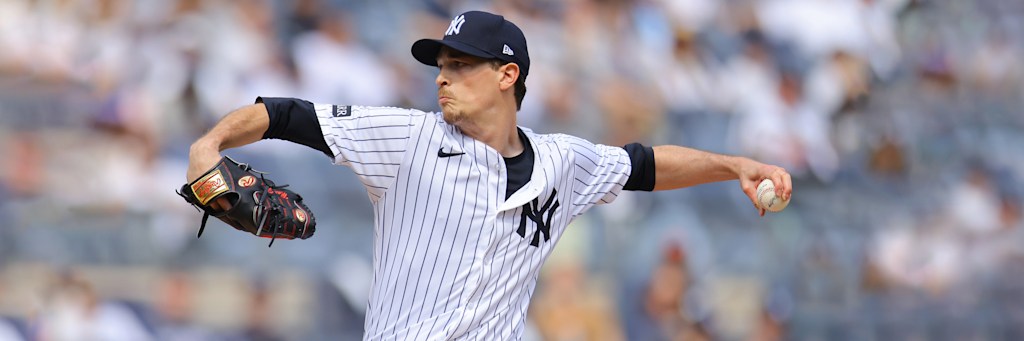
Max Fried takes the mound for the Yankees on Opening Day at Oracle Park
This is the Opening Day pitching matchup the analytics community has been circling for months. Max Fried, the crown jewel of New York's offseason rotation overhaul, makes his first start in pinstripes against Logan Webb, San Francisco's Statcast darling who posted a 2.56 FIP at home in 2025. The venue is Oracle Park, where the marine layer eats fly balls for dinner and the HR park factor sits at a brutal 76, a full 24% below league average. The total is set at 7 runs. Every meaningful data point in this matchup, from the pitching peripherals to the park environment to both bullpens entering fully rested, points in one direction. Under.
The Fried Profile: Elite Ground Ball Generation Meets Pinstripe Debut
Fried's 2025 season was the best of his career by nearly every peripheral metric that matters. His surface numbers were excellent on their own, 19-5 with a 2.86 ERA across 195.1 innings, but the underlying data tells an even more compelling story. His 3.07 FIP indicates his ERA was earned rather than luck-driven, and the gap between the two numbers is small enough that there's no significant regression flag here. When a pitcher's ERA and FIP are within two-tenths of each other, you're looking at legitimate performance rather than sequencing noise.
What makes Fried particularly interesting for this matchup is his ground ball profile. His career 54% ground ball rate is elite territory, sitting in the top 10% of qualified starters league-wide. Ground ball pitchers thrive in environments where the ball doesn't carry, and Oracle Park is precisely that environment. When a pitcher generates grounders at Fried's rate and the park is suppressing fly ball damage at Oracle's rate, you get a compounding effect that makes run scoring extremely difficult. His 6.9% Barrel rate allowed is another critical number here. Barrels are the hardest-hit, best-angled batted balls in Statcast's database, and Fried limited them to a rate that ranks among the stingiest in the American League. At Oracle Park, even the barrels that do get hit face headwinds from the cold, dense marine air rolling in off McCovey Cove.
The strikeout and walk numbers round out the profile. Fried posted an 8.7 K/9 with a 3.7 BB/9 in 2025. The walk rate is the one blemish, it's above the 3.0 threshold that separates elite command pitchers from merely good ones, but in the context of a 7-run total at a pitcher's park, it doesn't change the calculus. Free baserunners matter more in high-leverage, high-scoring environments. In a game where both starters are projected to limit hard contact, a few walks aren't going to produce crooked numbers by themselves. Fried's 1.10 WHIP confirms the overall picture: baserunners were scarce, and when they did reach, they rarely came around to score.
The Webb Profile: San Francisco's Zone Commander at Home
If Fried is elite, Webb at Oracle Park is borderline untouchable. His 2025 season produced a 3.22 ERA, but his 2.56 FIP tells you the real story: Webb was significantly better than his ERA indicated. That 0.66 gap between ERA and FIP suggests that either sequencing, defensive miscues, or bad luck inflated his run prevention numbers beyond what his stuff deserved. The 2.56 FIP is ace-level production, full stop.
Webb's home splits amplify the case for the under. In 19 starts at Oracle Park in 2025, he posted a 3.10 ERA across 116 innings with 126 strikeouts. That's a pitcher who dominated in this specific park, against major league lineups, for an entire season's worth of home data. The sample is large enough to be meaningful, and it tells you that Oracle Park doesn't just help Webb, it transforms him into one of the most difficult matchups in baseball. His 9.7 K/9 rate means he's generating whiffs at an above-average clip, and his 26.3% K rate tracks with that. But here's where the data gets really interesting: Webb's BB rate of 5.3% is tight enough that he's not giving away free passes to compensate for the strikeout aggression. He's commanding the zone and making hitters put the ball in play on his terms, in a park that punishes fly ball contact.
Webb's 8.3% Barrel rate allowed is slightly higher than Fried's 6.9%, but context matters. At Oracle Park, barrel rate is a less meaningful predictor of damage than it is at, say, Coors Field or Great American Ball Park. A barreled fly ball that clears the fence at a neutral park dies on the warning track in San Francisco. Webb's 1.24 WHIP is respectable if unspectacular, but in a park where baserunners need multiple hits to string together runs, it's more than sufficient to keep scoring depressed. He also won a Gold Glove in 2025 and made the All-Star team, so we're talking about a pitcher who was recognized as one of the best in baseball across the full spectrum of his contributions.
| Pitching Metric | Max Fried (NYY) | Logan Webb (SF) |
|---|---|---|
| 2025 ERA | 2.86 | 3.22 |
| 2025 FIP | 3.07 | 2.56 |
| Innings Pitched | 195.1 | 207.0 |
| Strikeouts | 189 | 224 |
| WHIP | 1.10 | 1.24 |
| K/9 | 8.7 | 9.7 |
| Barrel% Allowed | 6.9% | 8.3% |
| Webb Home ERA (Oracle) | 3.10 in 19 starts, 116 IP, 126 K | |
Oracle Park: The Statistical Case for Suppressed Scoring
Oracle Park's reputation as a pitcher's haven is well-earned, but the specific dimensions of its run suppression matter for modeling this total. The park's overall park factor of 99 looks neutral at first glance, ranking 15th in MLB. But that top-line number masks the real story. Oracle Park's HR park factor is 76, which means home runs occur here at a rate 24% below the league average. That's the 25th-ranked park in baseball for home run production. In a sport where a disproportionate share of runs come via the long ball, a park that suppresses homers by nearly a quarter is functionally a much stronger pitcher's park than the overall 99 factor suggests.
The physics are straightforward. Oracle Park sits on the San Francisco Bay, and evening games, tonight's first pitch is 8:05 PM ET (5:05 local), get the full effect of the marine layer. Cold, dense air rolling in off the water increases air resistance on batted balls, reducing carry on fly balls and turning would-be home runs into warning track fly outs. On a March night game, the temperature at Oracle typically sits in the low-to-mid 50s with fog drifting in during the later innings. These aren't abstract environmental factors. They're measurable variables that directly reduce the expected distance on fly balls by an estimated 3-5 feet compared to the same exit velocity at a neutral park in warmer conditions.
For a game featuring two pitchers who suppress hard contact and generate grounders (Fried's career 54% GB rate) and weak fly balls, Oracle Park on a cold March night is the ultimate force multiplier. The offensive ceilings for both lineups are materially lowered by the venue, and the data on Oracle's March/April splits historically shows even more pitcher-friendly conditions than the full-season park factor captures.
Offensive Context: Two Lineups Facing Elite Starters
The Yankees finished 2025 at 94-68, a strong regular season that ended in an ALDS loss to the Blue Jays. Their lineup is anchored by Aaron Judge, who won the AL MVP with a staggering .331 AVG, 53 HR, and 114 RBI. Judge is a legitimate force, the kind of hitter who can single-handedly alter a game total. But Judge's power is precisely the type that Oracle Park suppresses most aggressively. He's a fly ball hitter who generates elite exit velocity, and while some of those balls will still leave any park, a meaningful percentage of his marginal home runs, the ones that barely clear fences at Yankee Stadium's 314-foot right field porch, die in Oracle Park's 309-to-421-foot outfield dimensions in the cold night air.
Cody Bellinger, who re-signed with the Yankees on a 5-year, $162.5 million deal, provides lineup depth with his .272/.334/.480 slash line, 29 home runs, and 98 RBI from 2025. His 4.9 fWAR confirms he's a legitimate middle-of-the-order threat. But Bellinger will be facing Webb, a right-hander who limits hard contact and commands the zone. On the other side, the Giants finished 81-81 in 2025, a .500 club that didn't generate consistent offensive output. They'll be facing Fried, a left-hander who generates ground balls at an elite rate and limited opposing hitters to a 1.10 WHIP across nearly 200 innings.
Neither lineup is positioned to produce a crooked number in this matchup. The Yankees have the superior top-end talent in Judge and Bellinger, but Webb at home at Oracle is a different animal than what they'll see in most road parks. The Giants don't have the offensive firepower to consistently push runs across against a pitcher of Fried's caliber. When two elite starters go deep into a game, which both bullpens being fully rested on Opening Day incentivizes, the scoring windows are narrow and the margin for error is razor-thin.
Bullpen Factor: Fresh Arms, Low Leverage
Opening Day is unique in the analytical calendar because it's the one game where every reliever on both rosters is fully rested. There are no back-to-back usage concerns, no "he threw 30 pitches yesterday" situations, and no bullpen fatigue from a long series. Both managers can go to their best arms in any situation, and the depth of each bullpen is at its maximum for the entire season. This matters for the under because it eliminates one of the primary mechanisms for late-game scoring: tired middle relievers getting exposed in the 6th and 7th innings. Both Fried and Webb are 200+ inning workhorses, which means they're likely to go 6-7 innings each. When they do hand it off, the freshest version of every bullpen arm is available. Late-inning run prevention is at its seasonal peak on Opening Day, and that further compresses the expected run total.
The Market: Where the Total Sits and Why
The total is set at 7 with the under juiced to -112 and the over at -108. The Yankees are -122 on the moneyline with the Giants at +104, and the run line is Yankees -1.5 at +146. The market is already acknowledging this as a low-scoring environment, but the juice on the under tells you the sharp side of the market agrees. A total of 7 in a game featuring two sub-3.00 FIP starters at a park that suppresses home runs by 24%, on a cold March night with fully rested bullpens, is a number that should go under more often than the -112 price implies.
The statistical projection model for this game starts with both starters' expected run allowance. Fried's 3.07 FIP translates to roughly 3.0 runs per 9 innings in a neutral park. Apply Oracle Park's pitcher-friendly adjustment and you're looking at something closer to 2.6-2.8 expected runs per 9. Webb's 2.56 FIP at home, where his actual ERA was 3.10, gives you a range of 2.5-3.1 expected runs per 9 at Oracle. If each starter goes 6 innings and allows 2 runs on the high end of their projected range, you're at 4 runs from the starters. Add in an expected 0.5-1.0 runs from each bullpen across the remaining 6 total innings, and the expected game total lands in the 5-6 run range. Getting 7 in a spot where the model projects 5-6 is a clear edge.
| Market Line | Number |
|---|---|
| Yankees Moneyline | -122 |
| Giants Moneyline | +104 |
| Run Line (Yankees -1.5) | +146 |
| Total (Over 7) | -108 |
| Total (Under 7) | -112 |
The Projection: Under 7 Total Runs
Every variable in this game aligns toward suppressed scoring. Two elite starters with sub-3.10 FIPs. A park that kills home runs at one of the highest rates in baseball. A cold March night game where the marine layer off the bay adds measurable drag to batted balls. Fully rested bullpens on both sides. Fried's career 54% ground ball rate in a park that makes fly balls irrelevant. Webb's 3.10 home ERA across 19 starts and 116 innings of data, proving this isn't a small-sample fluke but a repeatable pattern.
The Giants went .500 last year and don't have the offensive firepower to reliably push runs across against Fried. The Yankees have Judge and Bellinger, but Oracle Park at night is the great equalizer, the park where elite power hitters watch their best swings die in the cold air. When two aces are dialed in and the environment is working against the offenses, games like this routinely come in at 4-5 total runs. Getting 7 is a gift from the market.
PROJECTION Under 7 Total Runs (-112) Yankees at Giants, 8:05 PM ET, Oracle Park, Netflix