The Wednesday board reads as a study in two variables that rarely point the same way: strikeout rate and park factor. The model frames every game as a projected distribution of runs rather than a winner, and on July 1 those two inputs dominate. One matchup at Citizens Bank Park collapses a full-game distribution to its narrowest band of the week, and one matchup in Denver blows a distribution so wide that the model refuses to price the total at all and takes the win probability instead. Everything else on the card sits between those poles, ranked by the gap between the model line and the market, adjusted for the variance each bet type carries.
The Framework: Strikeout Rate And WHIP As The Run-Suppression Engine
A run-environment model answers a narrow question before anything else. Given this park, this starter and this lineup, where does the median run total land, and how wide is the band around it. Strikeout rate is the single most predictive input, because a strikeout carries a run expectancy near zero and removes the ball in play, the most dangerous outcome, from the distribution. WHIP is the companion metric: it measures how often a starter allows the baserunners that scoring requires in the first place, and a sub-1.00 WHIP is the signature of a collapsed run projection. Park factor sets the baseline the whole distribution rides on, and it is the one input that can override an elite arm entirely. The reason five of today's eight outputs are unders or team totals is that isolating run prevention is the lowest-variance bet shape available when the best strikeout arms are concentrated on one side of several matchups.
Phillies-Pirates Under 8: The Narrowest Band On The Board
| Item | Model detail |
|---|---|
| Run environment | Full game, Citizens Bank Park |
| Starters | Paul Skenes (3.10 ERA, 0.97 WHIP, 114 K) vs Zack Wheeler (2.03 ERA, 0.86 WHIP, 74 K) |
| Records | Pirates 43-43, Phillies 48-38 |
| Model line | Under 8 (-110) |
This is the cleanest full-game suppression input on the slate, and it is rare because both sides supply it. Paul Skenes takes the ball with a 3.10 ERA, a 0.97 WHIP and 114 strikeouts in 93 innings, an arm allowing fewer than one baserunner per inning while missing bats at an elite rate. Zack Wheeler answers with a 2.03 ERA, a 0.86 WHIP and an 8-1 record, an even tighter run-prevention profile. When the model finds two starters who both hold WHIP under 1.00, the projected distribution for the whole game compresses toward a low number, because neither offense gets the free traffic that crooked innings are built from. Two mid-tier offenses, a 43-43 Pittsburgh bat and a 48-38 Philadelphia bat, further lower the ceiling, and the median full-game total lands under 8 with the tightest band on the card.
The honest counterweight is that a full-game under exposes you to both offenses at once, so a single mistake from either ace reopens the distribution. A 5-3 game can appear on two swings. But the band here is the tightest on the board precisely because both starters suppress, which is why the model ranks the full-game under above the two team totals that share the matchup.
Pirates And Phillies Team Totals: Isolating One Run Column
| Output | Opposing starter | Model line |
|---|---|---|
| Pirates team total (bat vs Wheeler) | Wheeler 0.86 WHIP, 2.03 ERA | Under 3.5 (-115) |
| Phillies team total (bat vs Skenes) | Skenes 0.97 WHIP, 114 K | Under 4.5 (-145) |
The two team totals strip the matchup down to a single run column each, and they separate on the strength of the opposing arm and the price. The Pirates under 3.5 is the sharper of the two: a 43-43 Pittsburgh offense projected against Wheeler and his 0.86 WHIP is being asked to produce four runs off a starter who barely permits baserunners, and the model outputs a Pittsburgh run column that lands below four with room to spare, priced at a reasonable -115. The Phillies under 4.5 is nearly as clean on the projection, with Skenes and 114 strikeouts capping a 48-38 lineup, but it ranks a notch lower for two reasons: the number is a full run higher, and the juice at -145 requires the under to clear roughly 60 percent to beat the vig, the steepest break-even on the card. Both team totals carry the one-swing tail, where a single three-run inning busts the number before the bullpen appears, but the suppression inputs are the strongest on the board.
The Marlins Coors Edge: When Park Factor Overrides The Total
| Item | Model detail |
|---|---|
| Run environment | Coors Field, the highest park factor in the sport |
| Starters | Max Meyer (2.60 ERA, 1.11 WHIP, 107 K) vs Kyle Freeland (7.50 ERA, 1.61 WHIP) |
| Records | Marlins 46-40, Rockies 33-53 |
| Model line | Marlins moneyline (-158), total left untouched |
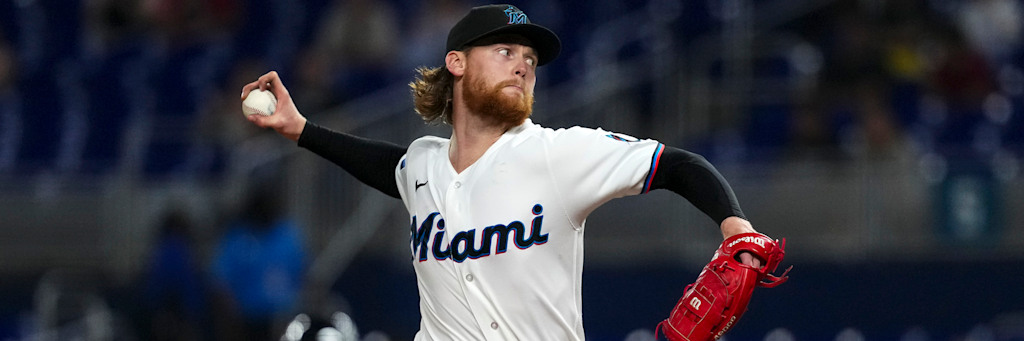
This is the one game on the board where the model discards the total entirely. Coors Field carries the highest park factor in baseball by a wide margin, and altitude widens the projected run distribution so far that neither the over nor the under holds a reliable edge: the band is simply too fat to price. What altitude does not erase is the win-probability gap between the two starters. Max Meyer has been elite, unbeaten at 9-0 with a 2.60 ERA, a 1.11 WHIP and 107 strikeouts, while Kyle Freeland sits at 1-7 with a 7.50 ERA and a 1.61 WHIP, one of the widest single-game starter gaps the model has flagged in weeks. The output is the Marlins moneyline at -158, a bet on the better roster and the vastly better arm to win a high-variance game, with the total deliberately blank.
The counterpoint is the park itself. Coors can erase a pitching edge in a single inning, and Meyer's 2.60 ERA is a road-and-neutral figure that altitude will inflate for one night. A -158 favorite in Denver is the riskiest chalk on the card because the environment, not the opponent, is the threat. The model still lands on Miami because the win-probability gap survives even a widened distribution, but it ranks below the low-variance unders for exactly that reason.
The Braves And Rays Moneylines: Where Projection And Standings Agree
Two more moneylines close the ranking, each a game where the model's win-probability output sits above the implied price and the standings reinforce it.
| Output | Line | Primary input |
|---|---|---|
| Braves moneyline | -129 | 49-34 roster over a 44-38 Cardinals club, Lopez 3.47 vs McGreevy 3.12 |
| Rays moneyline | -131 | 49-33 club, McClanahan 3.30 over Lugo 4.18 |
The Atlanta output is a roster-quality read more than a pitching one. Reynaldo Lopez at a 3.47 ERA and Michael McGreevy at a 3.12 ERA roughly cancel on the mound, so the model leans on the gap between a 49-34 Braves club and a 44-38 Cardinals team, where bullpen depth and lineup quality decide a starter-neutral night. The Tampa Bay output layers a pitching edge on top of a talent edge: a 49-33 Rays club sends Shane McClanahan at a 3.30 ERA and a 1.22 WHIP against a 35-51 Kansas City host and Seth Lugo at a 4.18 ERA. That same suppression input feeds the last team total on the card, the Royals under 4.5 at -110, where a struggling offense faces McClanahan's 1.22 WHIP. Both moneylines are side bets, which carry the fattest tail on the card because a single swing settles the result outright, so they anchor the lower half of the ranking despite clean win-probability edges.
The Full Model Card, Ranked
| Rank | Output | Line | Why it ranks here |
|---|---|---|---|
| 1 | Phillies/Pirates under | 8 (-110) | Two sub-1.00 WHIP aces, narrowest band, near-even price |
| 2 | Pirates team total under | 3.5 (-115) | Strongest opposing-starter input, reasonable juice |
| 3 | Phillies team total under | 4.5 (-145) | Clean projection, but a higher number and steep juice |
| 4 | Reds/Brewers under | 9 (-115) | Abbott 3.90 and Drohan 3.12 cap two quiet bats |
| 5 | Royals team total under | 4.5 (-110) | 35-51 bat vs McClanahan, one-swing tail |
| 6 | Marlins moneyline | -158 (Coors) | Widest starter gap, but altitude fattens the band |
| 7 | Braves moneyline | -129 | Roster edge, starter-neutral, side-bet tail |
| 8 | Rays moneyline | -131 | Talent plus pitching edge, but a side bet flips on one swing |
That order tracks distribution width, not preference. The Phillies-Pirates under leads because two sub-1.00 WHIP arms collapse the band and the price is near even. The two team totals follow as single-column isolation plays separated by their juice. The Reds-Brewers under and Royals team total sit in the middle as competent suppression reads with wider bands. The Marlins moneyline ranks below them despite the largest starter gap on the board, because Coors fattens the distribution enough to raise the variance, and the two remaining moneylines anchor the bottom because a side bet flips on one swing. Favored is a probability across all eight, and sizing should track the spread of each projection rather than the confidence of the headline.
What Beats This Card
A single crooked inning beats a run-prevention board every time. The Phillies-Pirates under loses if either ace hangs one and a mid-tier lineup turns a grind into a track meet. The two team totals fall to one swing from an average bat, and the Phillies number at -145 leaves little margin. The Marlins moneyline is the boldest output on the card because Coors can erase Meyer's edge in an inning, and altitude makes any lead unsafe. The Reds-Brewers under needs both offenses to stay quiet, the Royals under rides one struggling bat, and the Braves and Rays moneylines each carry the plain truth that any favorite loses outright more often than its price admits. Lineups were not all confirmed at publication, so the projections assume listed regulars and probable starters. The model is favored on its outputs, but favored is a probability, not a result.
Final Verdict
The July 1, 2026 model breakdown outputs the Phillies-Pirates under 8 as its anchor, two sub-1.00 WHIP aces collapsing the projected distribution to its narrowest band of the week. The Pirates team total under 3.5 and Phillies team total under 4.5 follow as single-column isolation plays separated only by their juice, and the Reds-Brewers under 9 and Royals team total under 4.5 add two more suppression reads. The Marlins moneyline at -158 is the park-factor special, the widest starter gap on the board taken as a win-probability bet because Coors makes the total unpriceable, and the Braves moneyline at -129 and Rays moneyline at -131 close as roster-driven side bets. The through-line is strikeout rate and WHIP measured through park factor and bet-type variance. For more model work, see the June 30 run-prevention model, the advanced stats hub, the daily MLB breakdown picks, how the MLB prediction model works, and the public graded results.
Related Model Breakdowns
More daily run-environment reads built on the same strikeout-rate, WHIP and park-factor framework:
- June 30 run-prevention model: Tigers-Yankees under and two team totals
- June 29 run-prevention model: Rangers and Dodgers unders and a Mariners run line
For the inputs behind every projection, read how the MLB prediction model works, and review the model's public track record and graded results.