The Sunday board reads as a study in run environment. The model frames every game the same way, as a projected distribution of runs rather than a winner, and on June 28 that distribution clusters hard toward suppression. Five of the seven outputs are unders of one shape or another: three full-game totals and two isolated team totals. The two overs are not contradictions, they are the same engine pointed at the parks and matchups where the run distribution shifts the other way. One moneyline rounds out the card, the Milwaukee Brewers at home, where the projection and the standings happen to agree. The thread is not a feeling about who wins. It is where the median run total sits, and how fat the tail is on either side of it.
The Framework: Park Factor, Run Distribution And Variance
A run-environment model answers a narrow question before it answers anything else: given this park, these two starters and these two lineups, where does the median total land, and how wide is the band around it. Park factor sets the baseline, raising or lowering the expected run total before a pitch is thrown. Starter quality and handedness tilt it from there, and lineup depth sets the width of the tail. The reason the board leans under is that several of today's games stack a run-suppressing park on top of at least one capable arm, which pulls the median down and tightens the distribution. The reason two team totals go over is the mirror image: a park and a matchup that widen the band toward scoring on one specific side. Below, the seven outputs are ranked by the gap between the model line and the market, adjusted for the variance the bet type carries.
Braves/Giants Under 7.5: The Headline Run-Prevention Output
| Item | Model detail |
|---|---|
| Matchup | Atlanta Braves at San Francisco Giants, Oracle Park |
| Starters | Chris Sale (LHP) vs Robbie Ray (LHP) |
| Records | Braves 49-32, Giants 34-48 |
| Model line | Under 7.5 (-120) |
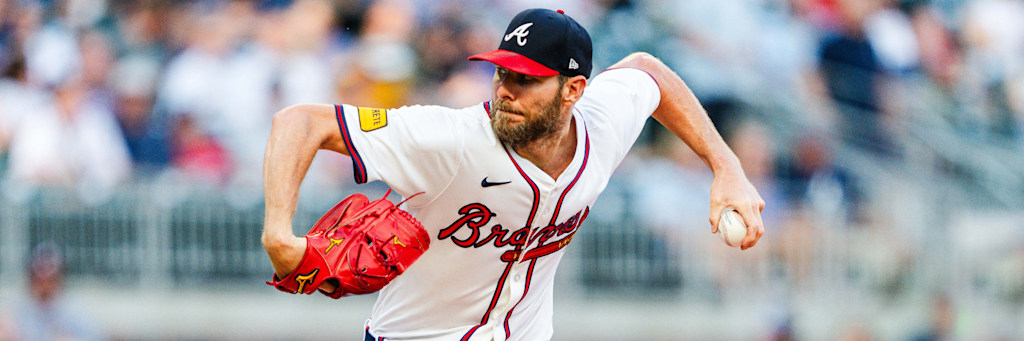
This is the cleanest suppression input on the slate. Oracle Park sits near the bottom of the league in run scoring, a marine-air venue where fly balls die on the warning track, and the model stacks two left-handed starters on top of it in Chris Sale and Robbie Ray. Both are swing-and-miss arms, which matters because a strikeout carries a run expectancy near zero and removes the most dangerous outcome, the ball in play, from the equation entirely. When the park already compresses the distribution and both starters can erase innings with the bat on the shoulder, the median total drops well under eight. The model lands the under 7.5 at -120 as its headline output because the inputs agree from every direction: the park, both arms, and the price the market has set.
An honest counterweight is the Atlanta lineup. At 49-32 the Braves are one of the deeper offenses in the league, and a deep lineup is exactly the profile that can post a crooked inning even in a pitcher's park. The other failure mode is an early exit by either starter that hands innings to a bullpen with a different, more hittable profile. But the projection asks a narrow question, whether two strikeout arms in the league's friendliest pitcher's park keep the combined total under eight, and the median answers no comfortably. The variance is real but the band is narrow, which is why this sits on top.
Mariners/Guardians Under 7.5: Two Even Clubs In A Pitcher's Park
| Team | Probable starter | Key input |
|---|---|---|
| Mariners (42-42) | Emerson Hancock (RHP) | Contact arm, average road offense |
| Guardians (43-40) | Gavin Williams (RHP) | Power arm in a total-suppressing park |
This second full-game under leans on the offenses as much as the arms. Seattle sits at 42-42 and Cleveland at 43-40, two clubs hovering around .500 with middling run production, and Progressive Field has historically held totals down. Gavin Williams brings the swing-and-miss for Cleveland and caps the Seattle ceiling, while Emerson Hancock is a contact-oriented right-hander whose job in this projection is simply to keep the Guardians from breaking the line open early. Two even offenses in a pitcher-leaning park is the textbook profile for a total that settles in the sixes or low sevens, and the -115 price on the under 7.5 tells the same story the model does.
A looser input here is the contact profile on the Seattle side. A pitch-to-contact arm gives up harder balls in play than a strikeout starter, and that is the single most likely path over the number, a three-run frame that the park cannot fully absorb. A full-game total also stacks the variance of two run columns rather than one, which is why this output ranks a notch below the Oracle under despite strong inputs. It is a directional read on park and offense quality, and the sizing reflects the wider band.
Yankees/Red Sox Under 8: Fenway Demands Respect
| Item | Model detail |
|---|---|
| Matchup | New York Yankees at Boston Red Sox, Fenway Park |
| Starters | Carlos Rodon (LHP) vs Sonny Gray (RHP) |
| Records | Yankees 48-34, Red Sox 35-46 |
| Model line | Under 8 (-115) |
This is the lowest-conviction of the three full-game unders, and the model is transparent about why: Fenway Park is not a pitcher's park. The reason the under survives anyway is the quality of the two arms. Carlos Rodon is a strikeout left-hander and Sonny Gray is a veteran right-hander who misses bats and limits hard contact, and two starters of that caliber can hold a total down even in a hitter-friendly venue. The number itself, a full eight rather than the more common seven and a half, gives the projection an extra half-run of cushion, and at -115 the price is fair for a lean rather than a lock.
Working against it is the park and the Yankees lineup at 48-34, a high-end offense that can turn Fenway's short left field into runs in a hurry. This is the output most exposed to a single crooked inning, and the model treats it accordingly, as a lighter under that rides the arm quality rather than the venue. If either starter exits early, the Fenway tail gets fat fast. It clears the bar as a play because two quality starters plus a slightly elevated number is enough, but it sits behind the Oracle and Progressive unders by design.
Diamondbacks Team Total Under 3.5: Isolating One Run Column In The Trop
| Team | Probable starter | Key input |
|---|---|---|
| Diamondbacks offense (41-41) | Facing Drew Rasmussen (RHP) | Average road bat in a dome that suppresses |
| Rays (47-33) | Drew Rasmussen (RHP) | Quality arm, deep home bullpen behind him |
A team total is the lowest-variance bet the model offers because it isolates exactly one run column and strips out the noise of how the other side scores. Here the column is Arizona's, and it sits inside Tropicana Field in St. Petersburg, a domed venue that removes weather entirely and historically suppresses scoring, against Drew Rasmussen and the deep Tampa Bay bullpen behind him. The Diamondbacks are a .500 club at 41-41, an average offense rather than a juggernaut, and an average bat in a suppressing dome against a quality arm is precisely the profile that struggles to reach four runs. The model outputs the under 3.5 at -140, and the price reflects how firmly the inputs agree.
Risk on this one is the same every team total under carries: a single swing clears 3.5 before the bullpen ever appears, and a .500 offense is still a major league offense capable of a three-run inning. The other path over is an early Rasmussen exit, though the Rays at 47-33 own one of the better relief units to inherit those innings. The bet lives on the run column because that is the only variable the model reads with confidence, and a dome plus a quality arm is the lowest-variance way to project a single offense quiet.
The Two Overs: Where The Run Distribution Shifts
The same engine that lands five unders also flags two team totals where the distribution leans the other way. These are not hedges against the theme, they are the theme applied honestly to the matchups where park and pitching point toward scoring.
| Output | Line | Primary input |
|---|---|---|
| Athletics team total over | 4.5 (-130) | A's bats vs Sam Aldegheri (LHP), Angel Stadium |
| Twins team total over | 4.5 (-125) | Twins bats vs Ryan Feltner (RHP), Target Field |
The Athletics team total over 4.5 isolates the A's run column against Sam Aldegheri, a young left-hander, with Aaron Civale taking the ball for Oakland on the other side. The Angels at 35-49 own one of the league's weaker pitching profiles behind their starter, and the model projects the Athletics offense, even at 40-43, to push past four and a half runs more often than not against that staff. The Twins team total over 4.5 follows the same logic at Target Field, where Minnesota's bats face Ryan Feltner, a contact-prone right-hander, with Connor Prielipp on the mound for the Twins. Colorado at 33-50 carries a thin staff, and the model sees the Minnesota run column clearing 4.5 as the value side at -125. Both overs are the run-environment model working in the positive direction: the park and the opposing pitching widen the band toward one specific offense, exactly as the unders narrow it.
Caution on both is the same as on every team total: a single quiet game by an average offense busts the over, and neither Oakland nor Minnesota is a lineup that posts five runs on demand. These rank below the unders precisely because reaching a number carries a wider tail than failing to reach one. The model favors both, but as positive-distribution leans rather than anchors.
Brewers Moneyline -155: When The Projection And The Standings Agree
The lone side bet on the card is the Milwaukee Brewers at home against the Chicago Cubs, with Brandon Woodruff taking the ball against Ryan Rolison. At 50-30 the Brewers own the best record on the board and host a 45-38 Cubs club at American Family Field, and for once the projection and the standings point the same way. The model weights the matchup, a steady right-hander in Woodruff at home against a beatable left-hander, and lands the Brewers win probability above the implied price even at -155. This is not a park-driven output, it is a straightforward read that the better team with the better starter is correctly favored, and the model agrees with the market rather than fighting it.
An honest note is the price. A -155 favorite must win 60.8 percent of the time just to break even, and any moneyline carries the fattest tail on the card because a single swing decides the result outright. The Cubs at 45-38 are a real team, not a tomato can, and Rolison only needs to keep the game close for the variance to take over. The model includes the Brewers as a confident side, but a side bet is always the highest-variance output, which is why it anchors the card by quality rather than by safety.
The Full Model Card, Ranked
| Rank | Output | Line | Why it ranks here |
|---|---|---|---|
| 1 | Braves/Giants under | 7.5 (-120) | Two strikeout lefties in the league's best pitcher's park |
| 2 | D-backs team total under | 3.5 (-140) | One run column, dome, quality arm, deep pen |
| 3 | Mariners/Guardians under | 7.5 (-115) | Two even offenses in a total-suppressing park |
| 4 | Yankees/Red Sox under | 8 (-115) | Quality arms carry it despite Fenway |
| 5 | Athletics team total over | 4.5 (-130) | A's bats vs a thin Angels staff |
| 6 | Twins team total over | 4.5 (-125) | Twins bats vs a contact arm and thin Rockies staff |
| 7 | Brewers moneyline | -155 | Best record, better starter, but a side bet's fat tail |
That order tracks distribution width, not preference. The Oracle under leads because park and both arms agree and the band is narrow. The Arizona team total follows because isolating one offense in a dome is the lowest-variance bet shape available. The two remaining unders carry the wider band of full-game totals, the two overs add the tail that comes with reaching a number rather than missing it, and the Brewers moneyline anchors the bottom because a side bet flips on one swing. Favored is a probability across all seven, and the sizing should track the spread.
What Beats This Card
A single crooked inning beats the run-prevention board, every time. The Oracle under assumes both lefties work deep; an early exit hands innings to a different relief mix. The Arizona team total under loses to one swing from a .500 offense that is still major league. The Fenway under is the most park-exposed of the three full-game unders and busts fastest on a Yankees rally. The two overs fail if Oakland or Minnesota goes quiet for a night, the ordinary outcome for an average offense. The Brewers moneyline falls to the plain truth that any favorite loses outright more often than its price admits. Lineups were not all confirmed at publication, so the projections assume listed regulars and probable starters. The model is favored on its outputs, but favored is a probability, not a result.
Final Verdict
The June 28, 2026 model breakdown outputs the Braves/Giants under 7.5 as its anchor, two strikeout left-handers in the league's friendliest pitcher's park, with the Diamondbacks team total under 3.5 as the lowest-variance isolation play in the Tropicana Field dome, the Mariners/Guardians under 7.5 and Yankees/Red Sox under 8 as the supporting full-game suppression reads, and the Athletics and Twins team total overs at 4.5 as the positive-run-environment plays where park and opposing pitching widen the band. The Brewers moneyline at -155 is the lone side, the rare game where the best record and the better starter line up with the market. The through-line is run environment measured through park factor, run distribution and bet-type variance. For more model work, see the advanced stats hub, the advanced stats guide, the daily MLB breakdown picks, and the MLB futures board.
Picks and odds come from the BetLegend daily tracker. Probable starters, records, matchups, and venues were verified for June 28, 2026.
Related Model Breakdowns
More daily run-environment reads built on the same park-factor and run-distribution framework:
- June 27 run-prevention model: Braves under and a Giants win-probability edge
- June 26 run-suppression model: Cubs and Padres team total unders
- June 24 run-prevention model: Twins under and an Orioles under
For the inputs behind every projection, read how the MLB prediction model works, and review the model's public track record and graded results.