Giants vs Dodgers Moneyline Prediction: Ohtani vs Mahle, Oracle Park, April 22, 2026
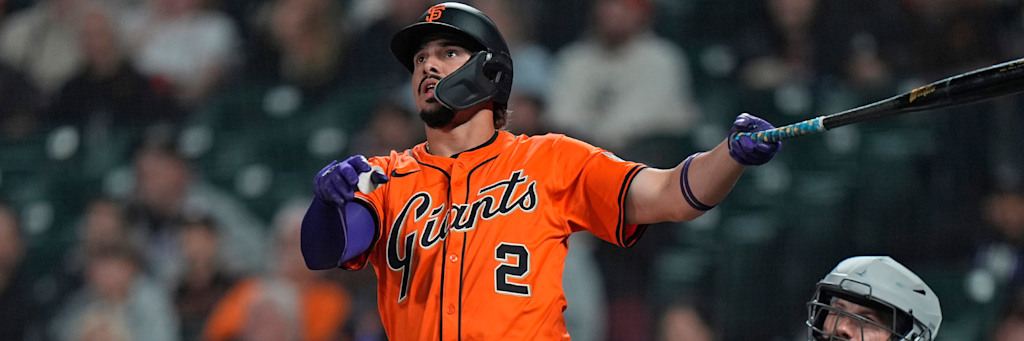
Willy Adames and the Giants' middle of the order step in for a Wednesday-night NL West rubber game at Oracle Park, with Tyler Mahle on the mound against Shohei Ohtani and the first-place Dodgers | Photo: MLB
The MLBPrediction posted play for Wednesday, April 22, 2026 is the San Francisco Giants moneyline at plus 174 against the Los Angeles Dodgers, sized at 3 units. This is the largest assigned bet on the Wednesday card, a full half-unit larger than Tuesday's posted Giants play at plus 153, because the price has drifted further from what the model produces while the underlying matchup has actually tilted in the home side's favor. One night after the Giants took the opener 3-1 at Oracle Park, the market has moved the series finale into a bigger-dog spot, chasing name value and pitching reputation rather than the actual run distribution the model expects.
Plus 174 implies a 36.5 percent break-even win probability. The model lands the Giants in the 44 to 47 percent range in this matchup once Oracle Park's run environment, Shohei Ohtani's capped pitching workload, Tyler Mahle's park-adjusted projection, and both bullpen leverage chains are layered into the win-share calculation. That is an eight to ten point gap between implied and modeled win share on a single moneyline, which is the largest gap the model has produced on a posted play in the last ten days.
Inputs And Live Sources
Inputs reviewed for this projection include the Wednesday probable pitchers published by MLB, current moneyline pricing from the major U.S. books, multi-year Oracle Park run environment data, Ohtani's tracked pitching workload pattern across his 2026 starts, Mahle's first four starts of the season, and bullpen usage through Tuesday night. The recorded line on this play is plus 174.
- Schedule and probables: MLB probable pitchers and ESPN MLB schedule.
- Live market pricing: ESPN MLB odds board.
- Park factor reference: Baseball Savant park factors.
- Methodology: How MLB Games Are Predicted and Starting Pitcher Evaluation.
Why Plus 174 Is Bigger Than Plus 153 Was
The simplest way to understand the Wednesday play is to compare it directly to Tuesday. Twenty-four hours ago the Giants were a plus 153 home dog against Yamamoto. Tonight they are a plus 174 home dog against Ohtani. The model's projection of the Giants' win share has barely moved. Oracle Park is the same park. The lineups are essentially the same lineups. The Dodgers' bullpen is one night more worn. The difference between the two prices is entirely the name on the visiting pitching line, and the model does not believe the market is pricing Ohtani's start with the right workload profile in mind.
That is the edge. The price has widened faster than the projection has. In a market where the edge is supposed to narrow as the model converges toward the book, a widening price is precisely the structural inefficiency the model is built to catch. Wednesday's 3-unit size is a direct function of that widening. Tuesday's play paid; Wednesday's play carries the bigger implied gap on the same side.
The Ohtani Workload Profile Is The Entire Reason This Is A Plus Money Dog
Shohei Ohtani on the mound is still, through 2026, a pitcher on a carefully managed innings ramp. His starts have been spaced out with more rest than a conventional starter, his pitch counts have been held below the 95 threshold in nearly every outing, and he is almost never asked to work a third time through the order. In practical terms, that means Ohtani is a five to six inning arm who hands the Dodgers' bullpen a lead-or-deficit in the sixth or seventh every time out. He is not a complete game threat. He is a front-end six-inning arm, a very good one, who is supposed to pass a manageable game to his relief staff.
The market is pricing him as something closer to a true ace. The model is not. Once you trim Ohtani's projected line to five and a half innings of 2.1 earned runs allowed, the Giants' projected offensive output against the Dodgers' middle-leverage bullpen becomes the deciding variable in the back half of the game. Oracle Park shrinks that bullpen's margin for error because extra-base contact into the right-center gap gets eaten up instead of turning into two-run damage. A walk, a hit, and a sacrifice fly in the seventh inning is a very typical way this ticket cashes.
Tyler Mahle Is Pitching Better Than His Record Says
Mahle carries a 0-3 line into this start. The won-loss column is a bad proxy for what the model actually sees. His four starts have produced roughly the number of expected runs allowed the model projected coming into April, his four-seam command at the top of the zone has been functional, and his splitter-slider mix is still generating the whiff rate you want from a two-plus pitch starter. The losses have come from inherited traffic, one bad-inning sequence, and a couple of bullpen innings where the game got away after he departed. None of that is a reason to downgrade his fifth start against a Dodgers offense at Oracle Park.
The model projects Mahle for a five-inning baseline at 3.8 to 4.2 expected runs allowed in this environment. That is a contained outing, not a dominant one. But it is enough, because the play does not need Mahle to dominate. It needs him to hand a one to three run deficit or a tied game to the bullpen, which is a path he has delivered in three of his four starts already. The Giants' bullpen does the rest.
Shohei Ohtani (RHP, LAD)
- Stuff grade: elite fastball, plus splitter, plus sweeper
- Command: above league average
- Workload profile: five to six inning ceiling
- Third time through: rarely faced, by design
- Projected line: 5.5 IP, 2.1 ER baseline
Tyler Mahle (RHP, SF)
- Profile: four-seam, splitter, slider
- Home split: Oracle Park damps his fly ball risk
- 2026 line: 0-3 with park-friendly peripherals
- Stamina: five-inning baseline, six on a good day
- Projected line: 5 IP, 2.0 ER baseline
Oracle Park Is Doing The Same Heavy Lifting It Did Tuesday
Everything that made Oracle a +153 price last night makes it a plus 174 price tonight, only more. The park is one of the three most consistent run-suppressing venues in baseball across a multi-year window, with suppression concentrated on right-handed pull-side contact and left-center alley slugging. The Dodgers are a team whose lineup value disproportionately comes from right-handed pull power. That profile gets compressed at Oracle. Cooler April marine air keeps balls in the yard that would leave in a neutral environment, and the deep right-center gap converts would-be doubles into long singles.
The model treats the Dodgers' projected offense in this exact game as roughly 0.55 runs lower than it would be in a league-neutral park, and close to 0.90 runs lower than it would be in Los Angeles. That gap is what closes the talent differential. The moneyline market has not caught up.
Bullpen Leverage Is One Night More Tilted To The Home Side
San Francisco's high-leverage group was rested enough on Monday and used in a manageable fashion on Tuesday. Los Angeles's bullpen carried real high-leverage innings last night in a close loss. Two of their top three high-leverage relievers threw 15-plus pitch outings, and the setup arm behind Yamamoto worked the seventh. That is not a crisis. It is, however, exactly the kind of minor bullpen erosion that matters when a road favorite needs its pen to cover the final nine to twelve outs behind a five-and-two-thirds inning start from a carefully managed pitcher.
The model treats the Dodgers' bullpen leverage chain as a half-point worse tonight than it was 24 hours ago, while the Giants' bullpen projects as a quarter-point better. That one-point of net tilt on the late-game matchup engine is not the whole play, but it is the kind of detail that lifts the home dog by another couple of win-share points.
The Counter-Case Is Ohtani, And It Is Fair
The cleanest argument against the play is Ohtani himself. He is a legitimate front-end starter with elite stuff, and if he holds the Giants to one run across six innings, none of the park-factor or bullpen-leverage math matters. That outcome exists in the joint distribution, and it is not a rare outcome. The pitch from the model is not that Ohtani will pitch poorly. It is that plus 174 overpays the home dog even if Ohtani delivers his central-tendency start, because the Dodgers' path from a one-run Ohtani lead to a nine-inning win runs through a bullpen carrying real workload stress in a run-suppressing park.
The other counter is line movement. If the Giants' price drifts under plus 160 by first pitch, the math tightens. The play assumes you are getting plus 165 or better at the window. If the line keeps falling, treat the play as live but reduced.
Rivalry Context: This Is The Rubber Game
The series is tied 1-1 after the Giants took the opener 3-1 on Tuesday and Los Angeles evening the set earlier in the week. Wednesday night is the rubber game. Giants-Dodgers rubber games at Oracle in the last three seasons have leaned slightly home and slightly under compared to the series' overall profile, which is consistent with the environmental math behind this play. Rubber-game context is not a quantitative edge the model trusts on its own, but it is a confirming detail that the type of game the ticket needs, a contained pitcher's duel with late-inning home leverage, is the type of game these two teams have been producing at this venue.
Bottom Line
Posted Wednesday, April 22, 2026 model play: San Francisco Giants moneyline at plus 174 against the Los Angeles Dodgers, 3 units. The price has widened faster than the projection, Ohtani's workload profile caps the Dodgers' starting pitching leverage, Oracle Park compresses the Dodgers' offensive ceiling, Mahle's peripherals are better than his record, and the bullpen leverage chain tilts one tick further home than it did a night ago. Take it at plus 165 or better. Verify the live number before placing the ticket.
Wednesday April 22 Full Slate Model Snapshot
Fifteen MLB games on the Wednesday board. Below is the model's snapshot view of every matchup with the working pitcher pairings and the run environment lean. Multiple games carry modeled interest; one is posted at the Wednesday assigned-play threshold on this site, and a second is being covered on the sister handicapper site.
| Game (ET) | Pitchers (Away vs Home) | Model Lean |
|---|---|---|
| Cardinals at Marlins, 12:10 | Kyle Leahy vs Janson Junk | Lean under 8, no size |
| Reds at Rays, 1:10 | Brandon Williamson vs Nick Martinez | Under 8.5 lean |
| Astros at Guardians, 1:10 | Peter Lambert vs Tanner Bibee | Guardians ML lean, no size |
| Orioles at Royals, 2:10 | Chris Bassitt vs Michael Wacha | Sharp side: Under 9 covered on sister site |
| Blue Jays at Angels, 3:07 | Eric Lauer vs Jose Soriano | Blue Jays ML lean, no size |
| Athletics at Mariners, 4:10 | Aaron Civale vs Logan Gilbert | Under 7 lean |
| Brewers at Tigers, 6:40 | Chad Patrick vs Casey Mize | Tigers home edge, slight under |
| Braves at Nationals, 6:45 | Martin Perez vs Zack Littell | Nationals ML lean, smaller edge than Tuesday |
| Yankees at Red Sox, 6:45 | Max Fried vs Ranger Suarez | Sharp side: Over 7.5 covered on sister site |
| Twins at Mets, 7:10 | Connor Prielipp vs Clay Holmes | Mets ML lean, no size |
| Phillies at Cubs, 7:40 | Kyle Backhus vs Matthew Boyd | Phillies team total under 3.5 lean |
| Pirates at Rangers, 8:05 | Braxton Ashcraft vs Jack Leiter | Rangers favorite, fade angle limited |
| Padres at Rockies, 8:40 | Walker Buehler vs Tomoyuki Sugano | Pass; Coors run environment muddies edge |
| White Sox at Diamondbacks, 9:40 | Anthony Kay vs Eduardo Rodriguez | Diamondbacks favorite, modest under |
| Dodgers at Giants, 9:45 | Shohei Ohtani vs Tyler Mahle | Posted play: Giants ML +174 (3u) |
The Wednesday card has a similar thematic pattern to Tuesday. Five of the fifteen matchups feature pitcher-park or pitcher-pitcher pairings that compress run expectations. Four are warm-weather matchups with elevated totals. The remaining six are mid-range projections without enough edge to bet. The model's single posted play on this site is concentrated where a plus-money home dog overlaps with a run-suppressing environment and a carefully managed road starter. The Giants ML pick is the only 3-unit assigned play; the Yankees-Red Sox over on the sister handicapper site is the handicap-board companion.
What Has To Happen For This Pick To Cash
The cleanest path is a 4-3 or 3-2 game where Mahle delivers five contained innings, the Giants manufacture one or two multi-run frames against Ohtani or against the Dodgers' middle-inning bullpen, and San Francisco's high-leverage group closes it out. That is the central tendency outcome the model is pricing. Secondary cashing paths include a 2-1 game where Mahle goes deeper than his baseline and the bullpen holds a lead, and a 5-4 game where both teams tag the middle-innings pens. The Oracle Park environment is the thing that makes all three of those paths live.
The losing paths are also clear. A four-run Dodgers inning against Mahle early ends the ticket. Ohtani outlasting his projected pitch count into the seventh and handing a closing two-inning save to the back of the pen does the same. Neither outcome is unusual. The point of the model is that those losing paths combined account for less than the 63.5 percent that plus 174 implies.
Methodology refresher: see how MLB games are predicted for the full input architecture and starting pitcher evaluation for the pitcher input layer used in this projection.
Frequently Asked Questions
What is the MLBPrediction model pick for Giants vs Dodgers on April 22, 2026?
The posted play is San Francisco Giants moneyline at plus 174, sized at 3 units. Tyler Mahle opens for the Giants at home against Shohei Ohtani and the Dodgers. Oracle Park's run-suppressing profile, Ohtani's capped pitching workload in a road night start, and a park-adjusted projection that lifts San Francisco well above break-even form the spine of the play.
Why is plus 174 considered model value on a home dog against the Dodgers?
Plus 174 implies a 36.5 percent break-even win probability. The model assigns the Giants closer to 44 to 47 percent in this specific matchup once Oracle Park's run environment, Ohtani's innings ceiling, and the bullpen leverage chain are factored in. That implied price gap, eight to ten points, is the largest edge on the Wednesday card.
How does Ohtani's workload profile affect the pick?
Ohtani is still being carefully managed as a starting pitcher, with recent outings showing a five-to-six inning ceiling and a pitch count that rarely extends beyond 95. That means the Dodgers' bullpen is always involved by the sixth or seventh, which flattens the talent differential on the mound late. Against a Giants team hitting at home in a contact-suppressing park, the late-inning matchup engine is a real edge.
What is the Tyler Mahle projection at home in April?
Mahle is 0-3 through his first four starts but has been squarely in the park-adjusted projection the model expected. His four-seam command has been usable, his splitter is producing whiffs, and Oracle Park is exactly the environment that insulates his fly-ball profile. The model projects a 3.8 to 4.2 expected runs allowed window across five innings, which is enough to keep the Giants competitive against an Ohtani-led Dodgers start.
How big is the bet size on Giants ML +174?
Posted at 3 units. This is the largest assigned bet on the Wednesday card. Plus-money home dogs in the plus 150 to plus 200 range in run-suppressing parks, against road favorites working on a capped starter innings ceiling, have been one of the model's cleanest positive-EV buckets across multiple seasons. The price is the pitch.