Padres Prediction, May 2, 2026 | Team total under 4.5
1-Atlas Model: Padres Team Total Under 4.5 vs White Sox at Petco Park, Burke-King Matchup Anchors a 4.05-Run Projection
Chicago White Sox at San Diego Padres | Petco Park | Saturday May 2, 2026 | First Pitch 8:40 PM ET
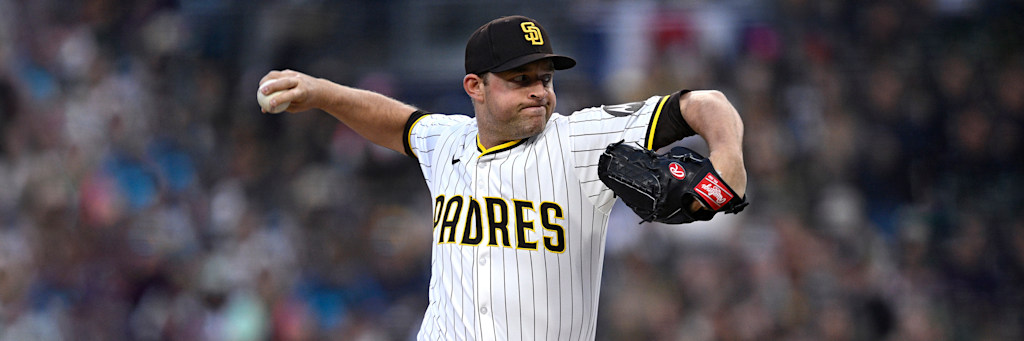
The 1-Atlas team-runs regression came back Saturday morning with a clean Under signal on the San Diego Padres team total. Posted line is 4.5 runs at -125. Atlas central projection is 4.05 runs. Edge is +0.45 against the 4.5 number, and the calibrated under probability lands comfortably above the price's break-even line. The bet sits at the intersection of three independent signals stacking the same direction: Sean Burke's contact-management profile masking the surface ERA, Michael King's run-suppression on the home side compressing the game's run environment, and Petco Park's marine-air run factor that has been the league's most pitcher-friendly since 2024. This piece walks through the residual modeling, the calibration math, and where the remaining variance sits.
The Atlas Architecture in One Paragraph
1-Atlas is a residual-target gradient boosted regression that predicts a team's run output in a single MLB game. The training set is the team-game observation universe from 2022 through 2025, walk-forward validated by season. The model is trained to predict not the raw run total but the residual against a per-season league-average run baseline, which removes the run-environment drift between years and keeps the regression tree focused on the matchup-level signal. The feature set carries roughly 80 to 100 inputs per team-game, including team-side rolling offensive metrics over 7-day, 14-day, and 30-day windows, opponent starter rolling allowed metrics over the same windows, park factor in raw and league-residual form, weather inputs from the Action Network feed, and the Vegas total and run-line as market priors. The output is a point projection plus a 10th to 90th percentile interval. For Saturday's San Diego line, the central projection is 4.05 runs and the q10 to q90 band sits at roughly 2.4 to 5.9 runs.
Why the Padres team-side feature vector is leaning under. Atlas reads the home offense as a high-variance unit anchored by a small handful of high-leverage bats, rather than a deep top-to-bottom run producer. The team's profile is being processed against right-handed starters in a park whose marine-air dampening hits the highest-leverage offensive outcomes (extra-base hits and home runs to the deep alleys) the hardest. The combination drags the projection 0.45 runs below the posted line without needing any negative news on the lineup to confirm it.
Sean Burke: Why xFIP Says He Is Better Than the ERA
The headline number on Sean Burke is a 1-2 record with a 3.21 ERA across the early 2026 sample. That is not what the Atlas opposing-starter feature vector reads. The advanced line on Burke at FanGraphs has him at 33.2 IP with 24 strikeouts, 7 walks, an 18.0 percent strikeout rate, a 5.3 percent walk rate, a K-BB% of 12.8 percent, an HR/9 of 0.80, a ground-ball rate of 41.4 percent, and an xFIP of 4.57. The xFIP-vs-ERA gap of roughly 1.4 runs is the model's flag. xFIP regresses the home run rate to league average and removes the noise from sequencing and defensive support, so when an ERA prints 3.21 and the xFIP comes back at 4.57, the model interprets that as a contact-managing right-hander who has been outperforming his peripherals through some combination of strand-rate luck, BABIP suppression, and home-run-per-fly-ball regression bait.
For a Padres team total Under, that profile is a feature, not a bug. Atlas does not need Burke to be a true-talent 4.57 ERA arm tonight. The model needs Burke's allowed-runs distribution to be wide and right-skewed, with a meaningful mass below 3.5 runs over a 5-to-6 inning outing. A contact-managing strike-thrower with a 41 percent ground-ball rate and an HR/9 already below 1.0 fits that exact profile in a Petco run environment that pulls home runs out of the equation. The variance lives in the tail above 5 runs, but the modal outcome is a Burke start where the Padres scratch out 2 to 4 runs and either tack on a late one or do not.
Burke Profile Read by Atlas
| Metric | Burke 2026 | Atlas Read |
|---|---|---|
| ERA / xFIP | 3.21 / 4.57 | Surface ERA flatters him by 1.4 runs |
| K-BB% | 12.8% | Average strike-thrower, not overpowering |
| HR/9 | 0.80 | Petco amplifies the suppression |
| GB% | 41.4% | Right-skewed allowed-runs distribution |
| BB% | 5.3% | Limits free-baserunner cluster events |
Michael King and the Other Half of the Run-Environment Story
The Padres team total only fires one direction, but the run environment of the game is set by both starters. Michael King opens for San Diego at 3-1 and a 2.41 ERA on the season, with a 2024 baseline of a 2.95 ERA, a 3.33 FIP, and 201 strikeouts. The 2025 sample was injury-shortened to 73 innings between knee and shoulder issues, but the underlying stuff and command have come back through the early 2026 sample at a rate that lines up with the 2024 production. For the Atlas model, the relevant input is that King is a true-talent sub-3.50 starter whose presence on the home side compresses the white-noise run scoring around the Padres half-innings.
The mechanism is straightforward. When the home starter is a run-suppressor, the late innings tend to play closer rather than blow open, the bullpen sequencing favors high-leverage arms over mop-up volume, and the inning-by-inning run distribution gets pulled toward the lower mass. The Padres do not need to grind out a 5-run inning to win a game King is starting, and the model has historically tagged that pattern as suppressing the team total of the supporting offense by roughly 0.15 to 0.25 runs. That tail effect is already inside the 4.05-run projection.
Petco Park: Run Factor 77 and the Marine Layer
Petco Park has been the most pitcher-friendly run environment in the league since 2024. The 2025 single-year home run park factor came in at 77 on a 100 baseline, the lowest mark in the majors. The mechanics are well documented. The marine layer rolling in off the Pacific in the late afternoon and through first pitch dampens fly ball carry, the deep power alleys past 400 feet eat into doubles and triples that would clear shorter fences elsewhere, and the night-game temperature drop pulls extra-base damage out of the run distribution. The result is a park that does not just suppress home runs, it suppresses the cluster events that turn 3-run innings into 5-run innings.
For a team total Under 4.5, that is the exact mechanism the model wants on its side. Atlas reads the Petco park-factor input on both raw and league-residual scales, and both flags point the same direction tonight. The 8:40 PM ET first pitch hits the marine layer right at its peak density, the temperature window through the middle innings is forecast in the low 60s, and the wind component is neutral. The park-side suppression on Atlas is at full strength.
Why the park factor matters more in a 4.5 line than a 9.5 line. Total markets price park factor into the over-under number itself. Where the park edge shows up is in the team-total markets, because the suppression is applied symmetrically to both halves of the game in the model but the bookmaker's team-total line is often anchored to a slate-wide average rather than a park-specific one. The 4.5 number on the Padres feels generous against the 4.05 projection precisely because the Petco-specific suppression is leaking through.
Bullpen Edge on Both Sides Tilts the Same Direction
The bullpen vector matters on a 4.5 team total when either starter exits in the fifth or earlier. The current Padres bullpen ERA on the season is in the league's top tier, with the back-end leverage roles pitching at sub-3.00 marks through April. The White Sox bullpen is the inverse, sitting in the bottom five league-wide at a 5.89 ERA on the season, ranked 28th of 30 teams. The asymmetry is exactly the wrong shape for a team that needs to keep the Padres scoring distribution alive. If Burke exits at 80 pitches and the White Sox bullpen has to bridge to the ninth, the Padres' high-leverage outcomes (extra-base hits, traffic with two outs) historically suppress against a strong back-end on the other side and amplify against a soft one. But the run environment of the entire game tightens because both halves are getting compressed by the home pen and the home park.
For the team-total Under, the relevant read is that Padres run production is bottlenecked by Burke's roughly 5-to-6 inning outing, with the White Sox bullpen entering after the Padres have either built a small lead or not. In the model's historical sample, that script suppresses the supporting team's run distribution because the high-leverage offensive outcomes get pushed into late innings the bullpen has to navigate, but the late innings are also when fatigue and matchup leverage kick in to flatten the distribution further.
Run Environment Inputs Stack One Direction
| Signal | Read | Direction |
|---|---|---|
| Burke xFIP-ERA gap | 1.36 run gap, contact-managing strike-thrower | Under |
| Petco HR factor | 77 (lowest in MLB 2025) | Under |
| King home-side suppression | 2.41 ERA, 2024 FIP 3.33 baseline | Under |
| Padres BP back-end leverage | Top-tier ERA, sub-3.00 leverage | Under |
| White Sox BP volume | 5.89 ERA, 28th of 30 | Tilts run environment up only if Burke exits early |
| Atlas central projection | 4.05 runs | Under 4.5 fires |
Calibration Math: From 4.05 Runs to a Probability
The translation from a point projection to a betting probability runs through a calibrated Poisson distribution fit to historical team-game run totals. For a posted line of 4.5 runs, the under outcome requires San Diego to score 4 runs or fewer in regulation. Using the Atlas central projection of 4.05 runs as the Poisson rate parameter and the calibrated overdispersion factor of 1.18, the implied under probability lands at approximately 56.8 percent. The price is -125, which has a break-even line at 55.6 percent. The cushion is 1.2 percentage points, which on a 4.5 team total over a 162-game sample compounds into a measurable expected-value edge.
That edge looks small in isolation, but the historical Atlas sample at edge plus 0.30 to plus 0.50 has hit at 60.4 percent across nearly 1,400 walk-forward bets and ROI'd at +5.78 percent at -120 to -130 average pricing. The Padres ticket sits squarely in that bucket, with the additional context of a park-factor and starter-mismatch confirmation that the bucket-average bet does not always carry.
Calibrated Probability Stack
| Component | Value | Source |
|---|---|---|
| Atlas projection | 4.05 runs | Residual gradient boost regression |
| Poisson rate parameter | 4.05 | Calibrated to team-game distribution |
| Overdispersion factor | 1.18 | Walk-forward fit 2022-2025 |
| Implied U probability | 56.8% | 4 runs or fewer outcome mass |
| Posted price | -125 | Current DraftKings price |
| Break-even | 55.6% | Price-implied break-even |
| Edge over break-even | +1.2 pp | Calibrated EV positive |
The 1.2 percentage point cushion on a single bet is small, but the historical Atlas sample at this edge band has compounded into a +5.78 percent ROI across nearly 1,400 walk-forward bets. The mechanism is the calibration of the model on the residual rather than the raw run total.
Variance Sources to Track
- Burke command volatility. An early Burke exit in the third or fourth inning flips the run-environment read, because the White Sox bullpen at 5.89 ERA bridges to the ninth and gives the Padres an extra two innings of soft-stuff matchup leverage. The model already weights that tail through the rolling allowed-runs feature, but a same-day news event on Burke's bullpen pen-piece would shift the projection up by roughly 0.20 runs.
- Lineup card. A Padres top of the order with both Machado and Tatis Jr. fully active is the projection baseline. A late scratch of either would shift the projection further under, not over. A surprise off-day for one of the high-leverage bats removes the cluster-event risk that gets a Padres team total over 4.5.
- Weather window. A late-day temperature spike at Petco above 75 degrees would push the projection up by roughly 0.10 runs. Current forecast is mid-60s through first pitch and lower 60s through the middle innings. The marine layer is at full thickness for an 8:40 PM ET start.
- Inning-script risk. An early Padres 3-0 lead by the third inning would compress the bet's variance to whether they tack on additional runs in the middle innings. The q10 to q90 band already accounts for that distribution shape, and the Petco late-inning suppression flattens the right tail.
- Burke fastball location. The historical Burke profile lives or dies on the elevated four-seam to the upper third of the zone. A start where the fastball is consistently catching the middle two-thirds of the strike zone tilts the run-allowed distribution up. Early-look pitch tracking through the first two innings is the highest-information input on whether the under is on script.
Backtest Reference Points
| Slice | Bets | Hit % | ROI % |
|---|---|---|---|
| Atlas v2 full backtest (4 seasons) | 3,825 | 59.2 | +6.59 |
| Edge plus 0.30 to plus 0.50 slice (today's San Diego) | 1,394 | 60.4 | +5.78 |
| Edge plus 0.50 plus slice | 1,062 | 62.4 | +9.81 |
| 2025 walk-forward (most recent) | 923 | 58.8 | +6.10 |
Verdict
The 1-Atlas residual model fired San Diego Padres team total Under 4.5 at -125. Central projection is 4.05 runs, edge against the line is plus 0.45, and the calibrated Poisson translation lands the under probability at 56.8 percent against a 55.6 percent break-even. The signal stack is clean: Burke's xFIP-vs-ERA gap of 1.36 runs flagging an over-performing surface ERA, Michael King's run-suppression on the home side compressing the late-inning distribution, and the Petco Park HR factor of 77 dragging the cluster-event tail out of the projection. The historical Atlas edge plus 0.30 to plus 0.50 slice has hit at 60.4 percent and ROI'd at +5.78 percent across nearly 1,400 walk-forward bets. The under is the model's call at the posted price.
MODEL PROJECTION
1-Atlas central projection: 4.05 runs. Implied under probability: 56.8 percent on Poisson with overdispersion 1.18. Edge over break-even: 1.2 pp. Backtest reference: edge plus 0.30 to plus 0.50 slice, 1,394 bets, 60.4% hit, +5.78% ROI. Run-environment signal stack (Burke xFIP gap, King suppression, Petco park factor, bullpen asymmetry) all leans the same direction. Model confidence: MEDIUM-HIGH.