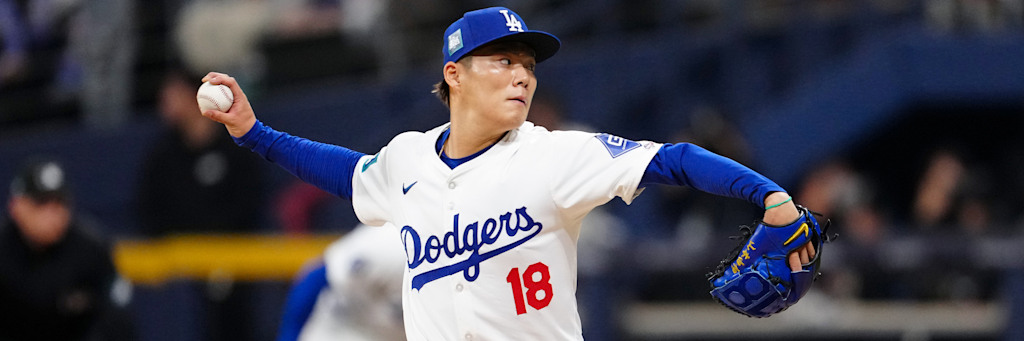
A run-environment model spends a holiday board like this one measuring baserunners. Every projected total, team total and run line traces back to how often each starter lets a man reach, because runs are the product of traffic and the sequence that follows it. The July 4 slate is unusually rich on that axis: three of the four lowest WHIP figures in the sport are on the mound at once, and the model reads each of them as a suppression input strong enough to move a market. The tightest projection belongs to a San Diego lineup facing Yoshinobu Yamamoto and a 0.89 WHIP in a game the market has set with the Padres team total at 3.5. Around it sit a win probability behind the single lowest WHIP on the board, a second team total driven by a 2.10 ERA, a run line on the best offense in the league, and a Coors output where the park overwhelms the arms. Each output below is ranked by the gap between the model line and the market, adjusted for the variance the bet shape carries.
The Framework: Runs Are Traffic Times Sequence
Before the outputs, the method. The model builds a projected run distribution for each lineup from the opposing starter's baserunner rate, strikeout rate and the park's run environment, then reads every market off that distribution. A team total isolates one distribution and asks where its median sits. A game total sums two distributions. A run line compares the two distributions and asks whether the gap between them clears a margin of a single run. A win probability compares them head to head. WHIP is the single most useful starting input because it measures traffic directly, and strikeout rate refines it by capping the sequence, since a runner who reaches with a whiff coming behind him scores far less often than one who reaches with contact behind him. Park run environment scales the whole distribution, which is why Coors sits in its own tier. The ranking that follows tracks how far each projection sits from the market, not the appeal of the headline.
Padres Team Total Under 3.5: The Tightest Column On The Board
| Item | Model detail |
|---|---|
| Run column | San Diego Padres offense, at Dodger Stadium |
| Opposing starter | Yoshinobu Yamamoto (8-5, 2.67 ERA, 0.89 WHIP, 90 K in 97.2 IP) |
| Records | Padres 43-44, Dodgers 58-31 |
| Model line | Team total under 3.5 (-138) |
This is the top output because a team total isolates one distribution and the input compressing it is elite. Yoshinobu Yamamoto carries a 0.89 WHIP over 97.2 innings, meaning the San Diego distribution shifts hard toward its low end before sequence even enters the calculation, and his 2.67 ERA confirms the traffic he allows rarely scores. The model only has to answer where the Padres run column's median sits against that profile, and a 43-44 offense facing a sub-0.90 WHIP arm projects a median comfortably below four. The under 3.5 captures it with no exposure to how Los Angeles scores. It ranks first on the widest margin between model and market, tempered only slightly by the -138 price lifting break-even near 58 percent.
Brewers Win Probability: The Lowest WHIP On The Slate
| Output | Line | Primary input |
|---|---|---|
| Brewers moneyline | -147 | Head-to-head distribution edge behind a 0.84 WHIP |
Ranked second is the board's clearest win-probability edge. Milwaukee at 54-32 owns the strongest record of any club playing today and sends Brandon Woodruff, whose 0.84 WHIP across 41.2 innings is the single lowest baserunner rate on the entire slate. Arizona counters with Merrill Kelly, a 5-8 arm carrying a 5.84 ERA and a 1.53 WHIP, one of the leakiest distributions in the model tonight. When the two are run head to head, the Milwaukee distribution clears the win-probability threshold by a comfortable margin, and the market prices it at only -147. That gap between a genuine edge and a modest number is why this ranks second despite being a moneyline, the bet shape the model normally discounts. It sits behind the Padres column only because a single-game win probability carries more variance than an isolated team total.
Mets Team Total Under 3.5: A Second Sub-1.10 WHIP Input
| Item | Model detail |
|---|---|
| Run column | New York Mets offense, at Truist Park |
| Opposing starter | Chris Sale (8-6, 2.10 ERA, 1.08 WHIP, 109 K in 90.0 IP) |
| Records | Mets 36-52, Braves 51-35 |
| Model line | Team total under 3.5 (-125) |
The third output isolates another single distribution against another elite arm. Chris Sale carries a 1.08 WHIP and the lowest ERA of any starter working today at 2.10, and his 109 strikeouts in 90 innings mean the sequence behind his traffic collapses more often than not. A 36-52 Mets offense projects a median below four against that profile, so the under 3.5 captures the New York run column cleanly. It ranks a notch below the Padres version only because the market shaded Sale's number slightly kinder at -125, which narrows the room between projection and payout even though the underlying suppression is nearly identical.
Dodgers Run Line: The Best Distribution Against A Bullpen Game
A fourth output returns to the marquee game from the other side. The Dodgers run line at -200 asks whether the Los Angeles distribution outscores San Diego's by more than a single run. Two inputs push it there. Los Angeles at 58-31 owns the deepest offensive distribution in the sport, and San Diego is not sending a true starter, lining up a bullpen game fronted by opener Wandy Peralta, which fattens the Dodgers projection because a patchwork staff rarely holds an elite lineup within a run across nine innings. The model outputs the run line as a real edge, but it ranks in the middle rather than the top because the margin-of-one requirement adds variance a straight win probability does not, and the -200 price is steep enough to demand a wide projected gap, which this game supplies.
Rays-Astros Under 7: The Plus-Money Suppression
| Item | Model detail |
|---|---|
| Run environment | Full game, Daikin Park |
| Starters | Drew Rasmussen (7-4, 2.45 ERA, 0.87 WHIP, 94 K) vs Hunter Brown (1-0, 1.78 ERA, 1.18 WHIP in 25.1 IP) |
| Records | Rays 52-33, Astros 43-47 |
| Model line | Game total under 7 (+100) |
Fifth on the board is a full-game total where both distributions compress at once. Drew Rasmussen carries a 0.87 WHIP, the second-lowest baserunner rate on the board behind only Woodruff, and Hunter Brown has been overpowering in a short return, a 1.78 ERA across 25.1 innings. The projected sum of two suppressed distributions clusters below seven, and the market is offering the under at plus money, which means the model is being paid even money to bet a projection it already favors. That combination of a tight projection and a plus price is rare, and it is why this ranks fifth despite the total being a sum rather than a single column. The one caution the model flags is Brown's sample size, which widens the confidence interval on his half of the projection.
The Middle Tier: White Sox, Braves, Giants And Cleveland
Four outputs cluster in the middle of the ranking as solid but narrower projections. The White Sox team total under 3.5 at -120 isolates a 45-42 Chicago offense against Parker Messick, a 2.85 ERA arm with a 1.06 WHIP and 106 strikeouts, in a Progressive Field environment that already suppresses, and it ranks here as a clean single column at a fair price. The Braves win probability at -164 rides Chris Sale's distribution edge over Sean Manaea, a real gap but a steep number that trims the margin. The Giants win probability at -134 backs Robbie Ray and a 3.39 ERA over Colorado rookie Sean Sullivan, whose 8.64 ERA is the leakiest distribution on the board, though Coors scales both sides up and adds variance. The Chicago-Cleveland under 7.5 at -105 sums two competent arms in a suppressing park. Each carries a projected edge, but each sits behind the leaders because the price, the park or the bet shape narrows the room.
The Bottom Tier: Blue Jays-Mariners, Marlins And The Coors Output
The final three outputs are the highest-variance reads. The Blue Jays-Mariners under 7.5 at -105 leans on Logan Gilbert, a 3.42 ERA with a 1.01 WHIP and 107 strikeouts, plus a suppressing T-Mobile Park, but the other half is Shane Bieber only two starts into a return, and a small-sample distribution widens the joint projection. The Marlins win probability at -125 backs Sandy Alcantara over Aaron Civale in Sacramento, a starter-quality edge undercut by the friendliest hitting environment on the board. The Rockies team total under 5.5 at -120 is the lowest-confidence output on the card: Robbie Ray projects to hold a weak Colorado offense down, but Coors Field scales every distribution upward, so the model outputs the under while flagging the widest confidence interval of any play. All three sit at the bottom because park or sample inflates their projected spread.
| Rank | Output | Line | Why it ranks here |
|---|---|---|---|
| 1 | Padres team total under | 3.5 (-138) | Yamamoto 0.89 WHIP, tightest single column |
| 2 | Brewers win probability | -147 | Woodruff 0.84 WHIP, lowest on the slate |
| 3 | Mets team total under | 3.5 (-125) | Sale 2.10 ERA caps a 36-52 lineup |
| 4 | Dodgers run line | -1 (-200) | Best offense vs a bullpen game, margin variance |
| 5 | Rays/Astros under | 7 (+100) | Two low-WHIP arms paid at plus money |
| 6 | White Sox team total under | 3.5 (-120) | Messick 2.85 ERA, suppressing park |
| 7 | Braves win probability | -164 | Sale distribution edge, steep price |
| 8 | Giants win probability | -134 | Ray over an 8.64 ERA rookie, Coors variance |
| 9 | Chicago/Cleveland under | 7.5 (-105) | Two solid arms, park suppression |
| 10 | Blue Jays/Mariners under | 7.5 (-105) | Gilbert and park vs a rusty Bieber half |
| 11 | Marlins win probability | -125 | Alcantara edge undercut by a bandbox |
| 12 | Rockies team total under | 5.5 (-120) | Ray projection, widest Coors interval |
That order tracks the width of each projection rather than the appeal of the headline. The two team-total unders lead because their distributions compress on the two lowest-WHIP arms available, the Padres column ahead of the Mets on a hair of price. The Brewers win probability follows as a distribution edge the market flattened, the Dodgers run line and the plus-money total sit in the upper middle, and the Coors output closes the board as the highest-variance read on the slate. Sizing should follow the spread of each projection, heaviest where the distribution clusters tightest and lightest where a park or a small sample decides it.
What Beats This Card
A single crooked inning beats a run-prevention board. The Padres and Mets team totals both bust if one lineup scratches four across against an elite arm. The Brewers and Braves win probabilities are still single games, so a leaky opposing start can turn on one swing. The Dodgers run line dies on a late one-run finish, the standard run-line tail. The Rays-Astros under leans on Hunter Brown's short sample holding up. The Coors pair is the model's largest gamble, because the park scales every distribution and can lift the Rockies over their team total on its own. The Blue Jays-Mariners under trusts a rusty Bieber half, and the Marlins edge fights a bandbox. Lineups were not all confirmed at publication, so the projections assume listed regulars and probable starters. The model is favored on its outputs, but favored is a probability, not a result.
Final Verdict
The July 4, 2026 model breakdown outputs the Padres team total under 3.5 as its anchor, the tightest projection on the board behind Yoshinobu Yamamoto and a 0.89 WHIP. The Brewers win probability at -147 follows on Brandon Woodruff and the lowest WHIP on the slate, and the Mets team total under 3.5 rides Chris Sale and a 2.10 ERA. The Dodgers run line at -200 reads the best offense in the sport against a bullpen game, the Rays-Astros under 7 at plus money pays even money for two low-WHIP arms, and the Rockies team total under 5.5 closes as the highest-variance Coors output. The through-line is that runs are traffic times sequence, and the board's lowest WHIP arms sit on the model's strongest plays. For more model work, see the July 3 run-prevention model, the advanced stats hub, the daily MLB breakdown picks, and the MLB futures board.