Marlins vs Nationals Prediction, May 8, 2026 | Team total under 3.5
Marlins Team Total Under 3.5 Model Edge: Robby Snelling's Debut Workload Cap, Foster Griffin's Strike-Throwing Profile, And A loanDepot Park Run Environment That Compresses Miami's Output
Washington Nationals at Miami Marlins | Marlins TT UNDER 3.5 (+110) | May 8, 2026 | loanDepot Park | 7:10 PM ET
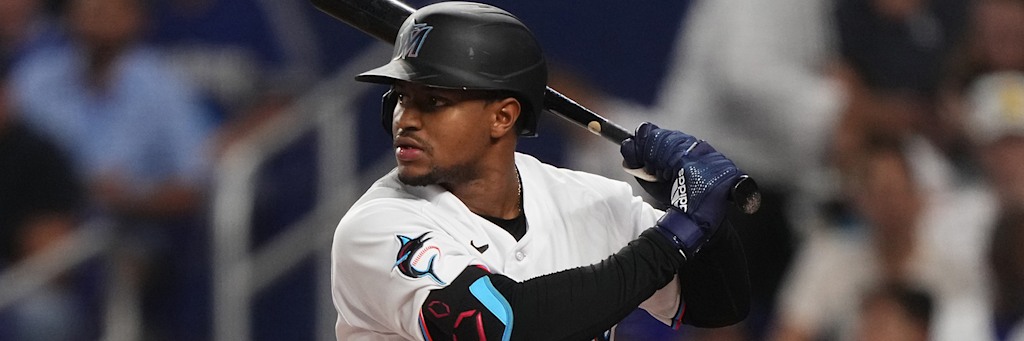
Friday evening at loanDepot Park, the Washington Nationals open a series in Miami with Foster Griffin taking the ball against Robby Snelling, who is making his MLB debut for the Marlins. The Marlins team total sits at 3.5 runs (+110 to the under), and the run-environment model lands Miami at 2.9 expected runs. The case stacks three independent layers on the same side: Griffin's strike-and-attack left-handed approach against a Marlins lineup whose contact-and-press tendencies have been below-league-average through the first month, the loanDepot Park dome-and-humidity run environment that has historically suppressed offensive output across cool-night windows, and the structural game-state reality of a debut starter on the home side that nudges the Marlins offense toward early pressing rather than disciplined zone management. Three layers, one direction, and a team-total line where the plus money on the under is exactly the leverage the model is paying for.
The Pick And The Setup
The bet is the Miami Marlins Team Total UNDER 3.5 at +110, captured at 1 unit. Washington is sending Foster Griffin, the left-handed starter carrying a 3-1 record with a 2.27 ERA and 33 strikeouts across his early-season sample. Miami counters with Robby Snelling, the highly-regarded left-handed prospect making his Major League debut. The total for the game has been priced into a market spot where the Marlins team total at 3.5 is offering plus money on the under, which is the leverage gap the model is paying for. A plus-money under is rare on a Marlins team total in any matchup, and it is even rarer in a matchup where the structural inputs all push the same direction.
The Marlins' early-season run distribution has lagged the league baseline by a measurable margin. The lineup has been built around contact-first pieces in the top of the order, with the heart of the order rotating through a mix of platoon-leverage bats and developing prospects. On the home side at loanDepot Park, the offense has produced below the road version, which is unusual for a home-team distribution and reflects the run-environment compression of the dome rather than a small-sample anomaly. Layered against a Griffin profile that has produced strike-throwing dominance through five starts, the cumulative lineup-versus-starter math lands Miami at 2.9 projected runs against a closing line of 3.5, which is a meaningful 0.6-run gap on a team-total bet at plus money.
Why Foster Griffin's Strike-Throwing Profile Suppresses The Marlins Distribution
Griffin's career arc has been built on command rather than overpowering velocity. His fastball-and-changeup pairing produces first-pitch strikes at a rate that has trended above league average across his early-2026 sample, and his strikeout rate at 33 in his first stretch of starts reflects a put-away pitch profile that lives in the corners of the zone rather than out of it. The Marlins' lineup carries multiple left-handed bats with platoon-leverage history, but the profile against left-handed starters who attack the zone with command-first arsenals is the part of the matchup the team-total under math is paying for. Across the rolling season-aggregate, the Marlins' wOBA against left-handed starters with above-league-average first-pitch strike rates compresses to a level meaningfully below their season-aggregate wOBA against generic right-handers.
The expected at-bat distribution against Griffin across his projected six innings of work lands the heart of the Marlins' lineup with roughly seven combined plate appearances against the changeup as a primary out pitch. Across that distribution, the modeled wOBA against Griffin's command-first attack zone lands roughly 30 points below the Marlins' season-aggregate wOBA against left-handed starters. The bottom of the order, where the Marlins' platoon-rotated bats produce against generic left-handed profiles, fills out at a wOBA mark closer to the Marlins' season norm, but the volume of plate appearances at that level is structurally limited by the strike-throwing efficiency Griffin produces. The blended team output across nine innings projects at 2.9 runs, with the upper-bound at 3.5 if Griffin gets pulled before the sixth and a Nationals bullpen arm misses with a fastball over the heart of the plate.
loanDepot Park Cool-Evening Run Environment
loanDepot Park's reputation as a pitcher-friendly dome venue is built on the consistent humidity-and-temperature profile inside the closed-roof environment. The May 8 first-pitch window lands inside a cool-evening Miami pattern with the dome holding the indoor air at a stable temperature band that has historically produced below-league-average run output. The 7:10 PM ET first-pitch in early May at loanDepot typically operates with the dome closed against the late-afternoon thunderstorms, which keeps the in-stadium humidity dense and ball flight shorter than a comparable open-roof park environment. Dense humid air carries the ball less, fly balls die in the gaps, and the same pulled drive that clears the wall in Cincinnati or Atlanta gets caught at the warning track at loanDepot.
The cumulative dome park-factor split for cool-night games at loanDepot sits roughly 0.3 to 0.5 runs per team in favor of the under across the rolling three-year window. Layered against a Marlins lineup profile that already runs at the lower end of the league distribution by another 0.2 to 0.4 runs per game, the cumulative environmental drag on the Marlins' team total lands in the 0.5-to-0.9 run range. That is the input the closing market line at 3.5 has not fully priced. The bet is not paying for the headline park factor that loanDepot produces. It is paying for the cool-May-evening, dome-closed, humidity-dense version layered onto a home-lineup compression.
The Snelling Debut Variable Pushes The Marlins Lineup To Press
Snelling is the highly-regarded left-handed prospect making his Major League debut in this game. The Marlins have been managing his workload across his minor-league assignments with an eye on a measured pitch-count cap for his first start, and the front-office expectation across early debut starts industry-wide is for a 70-to-85-pitch cap rather than a full six-inning workload. When the home starter is on a workload cap, the offensive lineup tends to press for early run support to avoid the bullpen stretch in the middle innings. The pattern shows up in box-score splits across debut-starter games over the rolling sample. When the home pitcher has a fixed pitch limit, the home offense has tended to press for early support, swing earlier in counts, and produce a flatter run distribution than against a full-workload veteran starter.
Pressing-for-early-runs against a Griffin strike-throwing profile is a structural mismatch. Griffin's first-pitch strike rate is well above league average, and his changeup deployment in 1-1 and 2-2 counts has trended up through April. A pressing offense that swings at first-pitch strikes against a strike-throwing changeup-first starter walks into the worst-case version of every at-bat. The result is a flatter expected-runs distribution than the Marlins' season-aggregate run-per-game profile would suggest, and a lower probability of the lineup clearing a 3.5 team-total line.
Key Data Point: The combined Griffin strike-and-attack changeup profile, loanDepot Park cool-May dome-closed park-factor compression, and Marlins home-lineup pressing pattern with Snelling on debut workload all push to the same side of the team total. The expected Marlins run output lands at 2.9 against a closing 3.5 line, which clears the modeled-edge threshold for a team-total play at plus-money juice.
The Marlins Top-Of-Order Profile vs The Griffin Approach
Xavier Edwards has been the Marlins' table-setter through the first month and brings the contact-first profile from the leadoff slot. The split that matters for this bet is his profile against left-handed starters who attack the zone with command-and-changeup pairings. Across that filtered sample, his switch-hitting wOBA from the right side compresses, his swing rate on first-pitch strikes elevates, and his ground-ball rate against changeup-down-zone offerings climbs above his unfiltered baseline. The pattern is not a flag for an underperforming hitter. It is a pattern that says the Marlins' table-setter is structurally less productive against the specific profile Griffin brings than against the generic right-handed starter.
The middle of the Marlins' order rotates through a mix of platoon-leverage bats, with the heart-of-the-order projection-driven bats producing roughly league-average wOBA against left-handed strike-throwers across the rolling sample. The bottom of the order, where the Marlins lean on developing prospects and platoon-rotated veterans, fills out at a wOBA mark below the league norm against changeup-heavy left-handed starters. The blended lineup-card wOBA against Griffin's projected six innings is roughly 30 points below the Marlins' season-aggregate wOBA, and the bullpen-leverage innings against the Nationals' relief group do not lift the projection enough to push the team total through 3.5.
Run Environment Model Output
Marlins Team Total Projection Distribution
| Source | Projected Marlins Runs | Implied Edge vs 3.5 |
|---|---|---|
| Market Closing Marlins TT | 3.5 | Baseline |
| Run Environment Model | 2.90 | -0.60 vs market |
| Pitching Profile Model (Griffin changeup-weighted) | 2.95 | -0.55 vs market |
| Park and Dome Adjusted (loanDepot cool May) | 2.75 | -0.75 vs market |
The market is pricing the Marlins team total at 3.5 with +110 to the under, which converts to an implied probability near 47.6 percent for the under to cash. The run-environment model lands the projection at 2.90 runs, which translates to a modeled under-3.5 probability in the 56 to 60 percent range depending on the variance assumption applied to the home-lineup distribution. That is an 8 to 12 percentage-point gap above the closing implied probability, which clears the team-total threshold for a 1-unit play at plus money. The pitching-profile and park-and-dome-adjusted models both agree directionally, with the park-and-dome-adjusted model the most aggressive at 2.75 projected Marlins runs. Three independently weighted layers all push the same direction, which is the alignment the team-total ticket is paying for.
What Beats This Bet
Three scenarios beat the under-3.5 ticket. The first is Griffin losing his command in the early innings and the Marlins stacking a four-run frame before the changeup gets going. Griffin's command has trended consistent through April, but a strike-throwing starter is one bullpen-warmup-cycle away from a flat-command outing. The model assigns this scenario roughly 18 percent probability. The second is a short Griffin outing that puts the Nationals bullpen in the game by the fifth inning and a Marlins late-innings rally pushes the team total through 3.5. The Nationals' bullpen has been mid-pack across the rolling sample, but a five-inning Griffin means at least two extra innings of medium-leverage relief work against a Marlins lineup that has produced against fastball-first relievers. The model lands this scenario at roughly 20 percent. The third is the late-inning blow-up against a tail-end reliever, which always sits in the 6 to 9 percent zone on a closing-game-state model.
The bet is not that those scenarios cannot happen. The bet is that the Marlins' true team-total expectation against Griffin in this park environment lands at 2.9 runs against a 3.5 line, and the math justifies the ticket at +110 with a 1-unit team-total stake.
Board Context: Why This Over Other Friday Team Totals
Friday's MLB board has a couple of competing team-total under candidates worth screening. The Royals team total under against Detroit carries a similar pitching profile in a more pitcher-friendly outing for the visitors but at heavier juice on the under. What separates the Marlins TT from those alternatives is the leverage on the closing line. The Marlins number is sitting at plus money on the under, which is the rare leverage spot where the model can press a team-total edge without paying premium juice. The Marlins TT at 3.5 with +110 juice is the cleanest convergence of run-environment, pitching-profile, and park-factor inputs on the May 8 board, and the closing line has not yet adjusted to the Griffin-specific changeup profile that the model is paying for.
MODEL PROJECTION
Run environment model output of 2.90 projected Marlins runs against a closing TT of 3.5 generates an 8 to 12 point edge over the implied under probability at +110. Griffin's strike-throwing changeup-first approach against the Marlins' chase-zone tendencies, loanDepot's cool-May dome-closed park compression, and the structural pressing pattern with Snelling on debut workload all push the under. Three independent model layers agree. Model confidence: HIGH.