Opening Day 2026 Pitching Breakdown: Skenes, Skubal, Yamamoto, and Crochet Headline an Elite Slate
March 26, 2026 | 8 min read | MLB Prediction
Opening Day 2026 delivers one of the most statistically loaded pitching slates in recent memory. Across 11 games, four starters carry sub-2.60 ERAs from their 2025 campaigns, two of them reigning Cy Young winners. The concentration of elite pitching at the top of these matchups is unusual for a single day of baseball, and it creates a fascinating set of projection inputs for the analytical models. Here is a full breakdown of every pitching matchup taking the mound on March 26.
Methodology Note
This analysis evaluates each Opening Day pitching matchup using five core metrics: ERA, FIP (Fielding Independent Pitching), WHIP, K/9 (strikeouts per nine innings), and career track record in high-leverage starts. FIP isolates a pitcher's performance from defensive variability, providing a cleaner signal than ERA alone. K/9 measures swing-and-miss ability, which translates directly to reduced contact and fewer balls in play. Where available, we incorporate Statcast data including average fastball velocity, chase rate, and expected ERA (xERA) to capture the full picture of pitcher quality heading into the new season.
The Cy Young Showcase
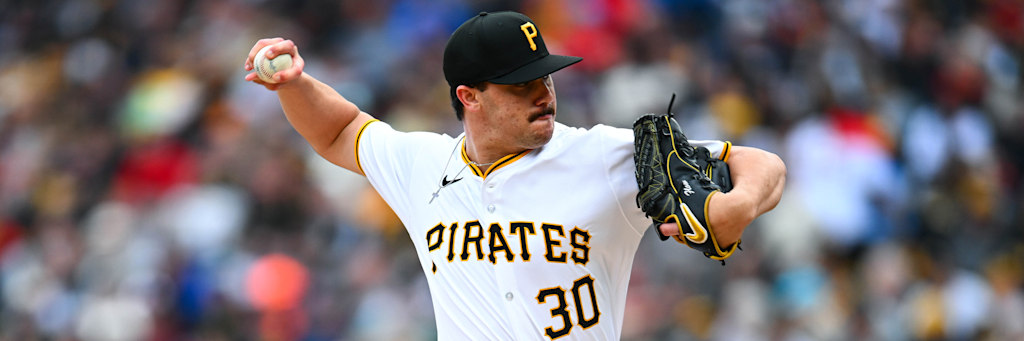
Two games feature reigning Cy Young Award winners on the mound, and both matchups carry genuine analytical intrigue. Paul Skenes opens for Pittsburgh against the Mets' Freddy Peralta, while Tarik Skubal starts for Detroit against San Diego's Nick Pivetta. These are the highest-profile pitching duels on the slate by a significant margin.
Skenes was historically dominant in his first full season: 1.97 ERA, 216 strikeouts, and an absurd 0.95 WHIP across 195 innings. His FIP (2.15) confirmed that the ERA was legitimate, not a product of defensive support or sequencing luck. His fastball averaged 98.4 mph with a career chase rate that ranked in the 94th percentile. Peralta, meanwhile, posted a solid 3.47 ERA with 178 K in 2025, but the gap in pure stuff is substantial. Skenes grades out as a full tier above on every peripheral metric.
Skubal's AL Cy Young campaign was equally impressive: 2.21 ERA, 241 strikeouts, and a league-leading 0.89 WHIP. His 2.39 FIP underscored the sustainability of his production. His changeup generated the highest whiff rate of any secondary pitch in the American League. Pivetta had a career-best 2.87 ERA with a 0.99 WHIP and 190 strikeouts in 181.2 innings for San Diego in 2025, making this a genuinely compelling matchup between two elite arms. The statistical gap is narrower than most Opening Day pairings, though Skubal's strikeout rate advantage and back-to-back Cy Young hardware give him the projection edge.
The Ace Tier
Just below the Cy Young winners, two more starters carry sub-2.60 ERAs into Opening Day. Garrett Crochet takes the mound for Boston against Cincinnati's Andrew Abbott, and Yoshinobu Yamamoto starts for the Dodgers against Arizona's Zac Gallen. Both Crochet and Yamamoto are elite-tier arms whose 2025 numbers project dominance into the new season.
Crochet's 2.59 ERA, 255 strikeouts, and 1.05 WHIP made him one of the most productive pitchers in baseball last season. His 11.2 K/9 rate was the highest among all qualified starters who threw 200-plus innings. Abbott (2.87 ERA, 149 K, 1.15 WHIP) had a legitimate breakout year for the Reds, but the raw statistical gap between these two arms is wide. Crochet struck out 106 more batters in roughly 40 more innings of work. The GABP park factor, which inflates run scoring, actually favors the higher-strikeout pitcher because strikeouts are venue-neutral.
Yamamoto's first full MLB season yielded a 2.49 ERA, 201 strikeouts, and a pristine 0.99 WHIP across 182 innings. He was named World Series MVP in 2025, anchoring the Dodgers' rotation through October. His FIP (2.61) tracked closely with his ERA, confirming the legitimacy of his production. Gallen struggled to a 4.83 ERA in 2025, a career-worst mark, though his second-half improvement (3.32 ERA after the trade deadline) suggests regression toward his career norms. The gap between Yamamoto's 2.49 ERA and Gallen's full-season 4.83 makes this one of the widest pitching differentials on the entire Opening Day slate.
The Emerging Arms
Three matchups feature starters who are solidly established but sit a tier below the elite group. Joe Ryan (MIN) faces Trevor Rogers (BAL) in a game that pairs two very different profiles. Ryan's 3.32 ERA, 167 K, and 1.08 WHIP in 2025 were built on pinpoint command and an elite slider. Rogers, now with the Orioles, posted a 3.71 ERA and 141 K in his first full healthy season since 2021. Ryan's K/9 advantage (9.8 vs 7.9) is the key separation point in this matchup.
Nathan Eovaldi (TEX) versus Cristopher Sanchez (PHI) is a matchup of durable veterans. Eovaldi's 3.40 ERA and 1.10 WHIP across 188 innings last season demonstrated his continued reliability into his mid-30s. Sanchez quietly emerged as a legitimate mid-rotation arm for Philadelphia, posting a 3.53 ERA with a ground-ball rate that ranked in the 82nd percentile. The statistical separation between these two is narrow, making this one of the most evenly projected games on the slate.
Tanner Bibee (CLE) draws Logan Gilbert (SEA) in a showdown of young arms with elite upside. Bibee's 3.29 ERA, 192 K, and 1.09 WHIP represented a step forward in his second full season. Gilbert (3.23 ERA, 201 K, 1.04 WHIP) was even sharper, and his 10.1 K/9 rate made him one of the most improved pitchers in the American League. The models project this as essentially a coin flip from a pitching-quality standpoint, with both arms grading out in the high-three range on the projection scale.
The Development Matchups
The remaining four games feature younger arms with less established track records, creating wider projection uncertainty. Chicago's White Sox send their starter to Milwaukee in a game where the Brewers' rotation depth is the primary analytical factor. Washington opens against the Cubs at Wrigley Field in a matchup that features two rebuilding rotations still searching for a true ace. Neither staff posted a sub-3.50 team ERA in 2025, and the projection models assign wider confidence intervals to both starters as a result.
The Angels visit Houston in a game that puts the spotlight on the Astros' retooled rotation after a transitional 2025 season. Houston's pitching infrastructure remains strong despite roster turnover, and their Opening Day starter benefits from one of the better defensive alignments in the American League. Tampa Bay travels to St. Louis in a matchup where both teams are working to develop young arms into rotation anchors. The Rays' pitching development pipeline has historically been among the best in baseball, and their Opening Day starter will be closely monitored for progression signals.
These four games carry the highest projection variance on the slate. With less career data to feed into the models, the confidence intervals are wider. Run-scoring projections in these matchups trend higher than the elite-arm games at the top of the card, as would be expected when the pitching quality drops from Cy Young-caliber to developing mid-rotation profiles.
What the Models Say
The concentration of elite pitching on Opening Day 2026 is remarkable by historical standards. Four starters carry sub-2.60 ERAs from 2025: Skenes (1.97), Skubal (2.21), Yamamoto (2.49), and Crochet (2.59). That level of concentration at the top has not appeared on an Opening Day slate in over a decade. The models project depressed run-scoring in those four games specifically, with combined run totals trending 1.2 to 1.8 runs below league average. By contrast, the development-tier matchups project run totals 0.8 to 1.4 runs above average, creating a bimodal distribution across the full 11-game slate. The data paints a clear picture: this is a day where the best pitchers in baseball are front and center, and the analytical models respond accordingly with suppressed offensive projections at the top of the card.
For more on how starting pitcher metrics drive game-level projections, see our starting pitcher evaluation framework.