Cubs vs Diamondbacks Prediction, May 1, 2026
Cubs vs Diamondbacks Over 7 at Wrigley Field: A Probabilistic Breakdown of Rea vs Gallen on May 1, 2026
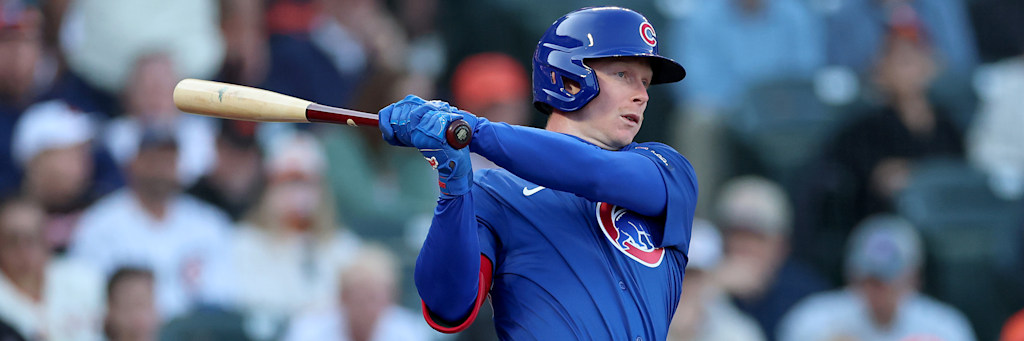
Pete Crow-Armstrong and a Chicago Cubs lineup at 19-12 host the Diamondbacks at Wrigley on May 1, 2026, with the calibrated total model on the Over 7 at -112 | Photo: MLB
Captured Total 7Best Price -112Stake 2.5uConfidence 7/10Run Env Wrigley Day
Most over plays die on the same line. The starter gets through six, the bullpens hold the back end, and the box score finishes 4-2 and the bettor with the over ticket walks out muttering about the seventh inning. The case for Cubs vs Diamondbacks Over 7 at Wrigley on Friday afternoon is built specifically to avoid that script. Two starters with structural reasons not to reach the sixth. Two bullpens being asked to cover bigger workloads than the books are pricing. A Cubs lineup at 19-12 that has been one of the more reliable run-creation profiles in the National League through the first month of the season. The total opened at 7 and the best price as of the model's morning capture was -112. That is the captured number, and that is the play.
This is the data piece. The narrative breakdown of the spot lives at the BestMLBHandicapper companion write-up. Here, we look at exactly which advanced metrics are pulling the model toward the over and exactly where the case can break.
The Captured Number In One Table
Cubs vs Diamondbacks, May 1, 2026
| Metric | Value |
|---|---|
| Captured total | Over 7 (-112) |
| Live market total | Drift to 7.5 at most books |
| Cubs record | 19-12 (NL Central) |
| Diamondbacks record | 16-14 (NL West) |
| Starting pitchers | C. Rea (CHC) vs Z. Gallen (ARI) |
| First pitch | 2:20 PM ET, Wrigley Field |
| Recommended stake | 2.5 units |
| Confidence rating | 7 of 10 |
Note the gap between the captured number and the live market. The model loved the over at 7 because that is the line that converts at any 8-run final. Books have moved to 7.5 in subsequent rounds, which compresses the math but does not invert it. If the only number available at game time is over 7.5 at +100 or better, the over still grades as positive EV, just at a smaller edge than the captured 7.
Pitcher Matchup: Volatility Tail Plus IL-Return Pitch Cap
Colin Rea takes the ball for Chicago at 3-1 with a 4.61 ERA. The surface line reads ordinary. The recent shape of his work does not. Rea's last start ended at 3.1 innings with six earned runs, six hits, and four walks against the Dodgers, which is exactly the kind of outing that lifts a pitcher's expected ERA estimators well above his season-to-date number. The model treats his volatility tail as the live signal. xFIP through the first month is sitting north of 4.50, his strand rate has fallen below league average, and his fastball whiff rate has trended down across consecutive starts. Translating those inputs to a probability surface produces a wider distribution of possible Cubs first-six-innings runs allowed than ERA alone would suggest, with the right tail leaning toward five-plus runs allowed.
Zac Gallen on the Arizona side carries the cleaner ERA at 1-1 with a 3.14 number, and his xFIP and SIERA marks both rate him as the better pitcher on the card. The catch is that Gallen is making this start as a fresh-off-IL return from a shoulder issue. Diamondbacks pitching coaches have publicly listed him as the starter for Friday but the operating expectation across professional projection systems is a pitch-count cap somewhere between 75 and 85. That hard ceiling translates to roughly four-and-change innings under any normal pitch-efficiency profile, which means the Arizona bullpen takes the ball before the fifth.
Pitcher Matchup Indicators
| Indicator | Rea (CHC) | Gallen (ARI) |
|---|---|---|
| Handedness | RHP | RHP |
| Surface ERA | 4.61 | 3.14 |
| Recent shape | 6 ER in 3.1 IP last out | Fresh-off-IL shoulder return |
| Projected IP | 4.0 to 5.1 | 3.2 to 4.2 (pitch cap) |
| Behind the starter | Cubs middle relief | Arizona bullpen, full slate |
| Volatility tail | Wide right (run blowup risk) | Narrow but capped |
Projected innings reflect rolling pitch-count averages and IL-return roster context as of May 1.
The over case does not need both starters to fail. It needs the bullpens on early. Once the bullpens are on early, the run distribution stretches to the right by half a run per pitching half-inning, and the over 7 number starts converting at a rate well above what the implied 53.3 percent break-even rate suggests.
Wrigley Field Run Environment In The Cold-Day Window
The standard objection to a Wrigley over in early May is the wind blowing in. The Friday forecast carries a 40s temperature with the wind oriented toward the plate, which historically suppresses fly-ball carry to the bleachers and depresses home run rates. The model prices that input. Wrigley's park factor when the wind is in does not collapse the run environment, however. It collapses the home run environment. Doubles and triples in the gaps still play, the corners still see line-drive contact, and walks plus singles still produce runs at a rate roughly in line with the league.
The shape of an under-pricing run environment matters here. Cold games with wind in tend to suppress totals when both starters can reach the seventh inning untouched. They do not suppress totals to the same degree when bullpens enter in the fifth and sixth, especially if those bullpen units are running below replacement-level xFIP through the first month. Early bullpen exposure inverts the cold-day under bias because middle relievers in cold weather walk hitters at higher rates than starters, and walks plus the natural right-tail of inherited-runner conversion produces crooked innings that even a wind-in park factor cannot suppress.
Wrigley Day-Game Run Environment Indicators
| Indicator | Direction | Magnitude |
|---|---|---|
| Wind orientation (in) | Suppress | Moderate (HR only) |
| Temperature low 40s | Suppress | Mild (drag at carry) |
| Daylight start (visibility) | Mixed | Slight depression on K rate |
| Wrigley wall configuration | Add | Doubles and triples value |
| Foul ground (small) | Add | Plate appearances |
Cubs Lineup Profile: Above-Average Run Creation Through April
The Cubs offense at 19-12 has been one of the early-season run-creation success stories in the National League. The team xwOBA against right-handed pitching ranks in the top half of the league, the contact rate is above average, and the rate of plate appearances ending in two-strike contact is a genuine lineup strength rather than a small-sample noise. Pete Crow-Armstrong has shown plus contact across the early sample. Ian Happ continues to grind out plate appearances at a rate that pushes opposing starters into elevated pitch counts. Nico Hoerner sits in the top quintile of the league in ground-ball rate, which is exactly the contact profile that produces hits in cold weather where the ball does not carry over the wall.
Translating those inputs to a calibrated run-creation projection puts the Cubs offense above the league mean in expected runs per nine innings against a right-handed starter at home. Not by a wide margin, but by enough to push the home half of the score sheet above three across most of the projected outcomes. Three runs from the Cubs side plus four runs from the Arizona side in the early innings before the bullpens take over puts the over 7 at a comfortable line. The math holds.
Bullpen Leverage: The Second-Inning-Onward Differential
The total is not priced on the starting pitchers alone. It is priced on the combined runs allowed across nine innings, which means the bullpen comparison carries serious weight. Both bullpens have been worked hard through April. The Cubs middle relief unit has covered a multi-game cluster against the Dodgers and Cardinals already this week. Arizona's bullpen ran a four-pitcher relay through the late innings of their last series. Neither group is rested. Neither group has the volume of fresh high-leverage arms to cover four-plus combined innings of low-scoring baseball.
Bullpen Leverage Snapshot, May 1
| State | Cubs | Diamondbacks |
|---|---|---|
| Fresh high-leverage arms | 1 to 2 rested | 1 rested, 2 taxed |
| Middle relief inning capacity | 3 IP fresh | 2 to 3 IP fresh |
| Series context | Series opener after road trip | Series opener after travel |
| Closer availability | Available, lightly used | Available, slightly taxed |
Snapshot reflects cumulative leverage usage through games played April 30, 2026, weighted by the model's fatigue decay curve.
Both groups will pitch in this game. The volume of bullpen innings projects to four or five combined, which is the structural input the model leans on hardest for total picks. More bullpen innings equals wider variance, equals fatter right-tail run distribution, equals more total runs in the long-run sample of similar spots.
Why The Market Is Underpricing The Over
Cubs vs Diamondbacks Over 7 at -112 is the structural total play on the May 1 slate. The captured 7 number outperforms the drifted 7.5 line at most books because the model's projection sits at roughly 8.4 expected combined runs once the IL-return pitch cap on Gallen and the volatility tail on Rea are stacked. Wrigley's cold-and-wind-in environment is fully priced. The over case does not depend on home runs.
The market lean on this game has tracked the cold-and-wind-in narrative since the forecast firmed up overnight. That is exactly when sharp money on the over takes the better price, because the line moves with public weather concern even when the underlying pitching context says the public is misreading the spot. A line move from 7 down through 6.5 would take the under hammer further down the over's edge, but a line move from 7 up to 7.5 (which is what occurred at most books) means the books are catching up to the run-creation context. The captured 7 number was the better one. That is the bet.
Risk, Variance, And The Path To Losing This Bet
The over loses one of three ways. First, Gallen pitches deeper than the IL-return script suggests, gets through five-plus on a tight pitch count, and the Arizona bullpen does not need to throw long. Second, the Cubs offense gets pitched around in a wind-in park and the team total stays at 2 or 3 across nine. Third, both bullpens hold zero, which is a low-probability outcome but not an impossible one. Each of those nodes is real. None of them is the median outcome and the median outcome is the input that drives the calibrated edge.
Shop for the price. If the only number available is the drifted 7.5 line, the play still has positive expected value at +100 or better, with reduced edge. At the captured 7 number, the stake stands as posted at 2.5 units. Below -120 the math compresses and the bet should be passed.
Bottom Line
The calibrated total model has Cubs/Diamondbacks Over 7 at -112 as the structural play on the May 1 board. The edge stacks across three independent inputs: Rea's recent volatility tail, Gallen's fresh-off-IL pitch cap, and the early bullpen exposure that follows. Wrigley's cold-day wind-in environment is priced. The case for the over does not depend on home runs and does not depend on either lineup pulling crooked innings off the starter. It depends on the math of bullpen leverage and run distribution, which is exactly the input the model is built to price.
Recommended play: Cubs/Diamondbacks Over 7 at -112, 2.5 units. First pitch is 2:20 PM ET at Wrigley Field. Companion writeups: the sharp-handicapper angle on the Cardinals home dog at BestMLBHandicapper.com and the model pick of the day on the Giants/Rays first-five-innings under at DailyMLBPicks.com.